

Gynocracy
The Weight of State Power Favors American Women

Forget the cultural analyses and the evidence for institutional feminization and cultural indulgence. Forget safetyism and social justice and the HR bureaucracy. Let’s look at the actual, material advantages that are built into our social structure to insulate, assist, and advantage women as a class, at the expense of men.
“…people rate fictitious studies showing that men draw better, lie less, or are more intelligent than women as lower in quality, more harmful, and more worthy of being censored than identical studies showing that women do better than men in these domains.”
I’ve noticed a trend on Substack: cultural arguments are surprisingly uncompelling, for the not-already-convinced. There’s so much ‘culture’ produced these days that it is easy for readers to simply invalidate and ignore the claims. When you consider that many readers (probably most of the readers on Substack) have no interaction with the failing structures of our society, this kind of blithe denial is understandable. How many white people live in ignorance of the chaos and failure of hundreds of black secondary schools? How many Boomers obliviously think that marriage and dating and child-rearing are ticking along normally, just as they were during their early adulthoods? How many educated people fail to grasp the heavy and stratifying effect of credentialism, which essentially locks millions of qualified and energetic applicants out of gainful employment, preserving a class-based system of rewards and privileges? You can describe all of these realities to these people but they don’t really grasp how bad things are out there. We all live in our own bubbles these days, but the nature of privilege is to make the suffering of lower-status people invisible, whereas the gains and prerogatives of the privileged are visible to all.
Is being female a privilege in our society? Not comprehensively. Not even in most cases, probably. But it is for most women in some sense or another, and it often is in the most definitive aspects of modern life (i.e., education and credentials and career and financial security). The weight of policymaking interventions certainly rest on the side of gynocracy. Some observers have called the West a ‘patriarchy,’ but our structures of power (which are still mostly run by men, less because of sexism and more personal interests and priorities and competencies) are suspiciously prone to advantaging women and disadvantaging men for a patriarchy.
But to make this case you have to list the discrete and accumulated structural detriments to men.
Cultural arguments and examples of cultural extremism (in this case, gynocentrism or anti-male discrimination or misandry) simply are not as convincing as they probably should be. “You’re cherry-picking,” doubters will say, or “you can find anything online these days.”
Emotionally Labile Men

“It's the worst thing ever when you open a script and read the words 'strong female lead.” - Emily Blunt
…This despite the fact that there are no examples of culturally validated and mainstream misogynist messaging in the manner of many primetime television advertisements and streaming service characters and shows like All’s Fair, etc..
You can give people examples of misandry in the culture all day. You can show them feminized education and organized initiatives and tell them about the Longhouse and the systematic suppression of boys’ competencies and natural impulses (a comprehensive campaign to weaken males and turn them into nice and compliant men, rather than strong and principled ones). It will avail you very little in convincing them that our system is indeed gynocentric.

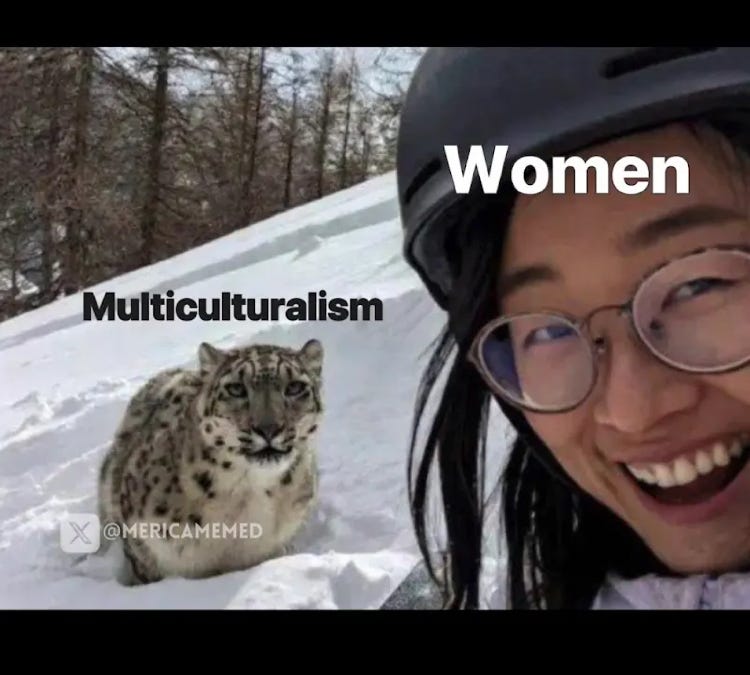
Lol
Similarly, anecdotes and statistics about dating and romance and childbirth (40% of children are now born to unmarried mothers) and female promiscuity (~14% of American women aged 18-24 are monetizing their sexuality through OnlyFans) are often futile at changing minds. When women change to be more like men (as with the culture of increasing sexual liberty), we consider it their fair due.
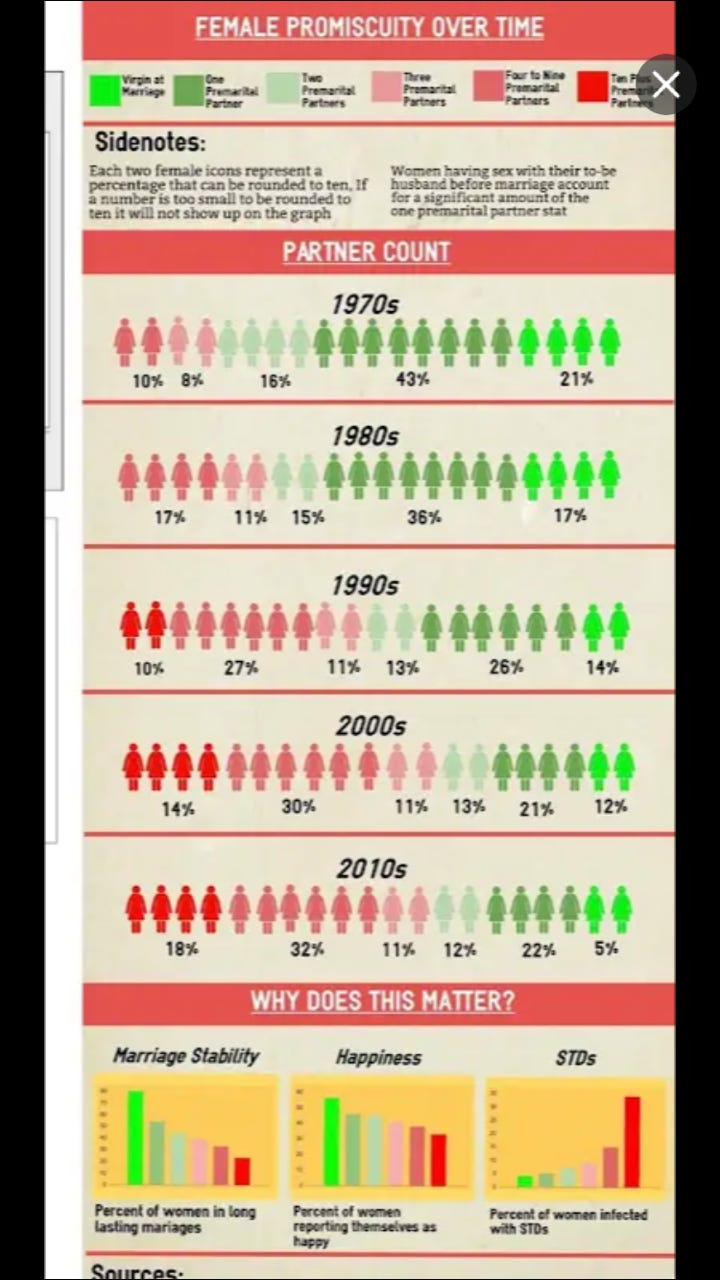
It’s notable that these figures contain a clear trendline… but stop just before the real immersion of young women in the deranged world of social media (especially TikTok), which is doing inestimable harm to social norms.
Meanwhile, when women retain their character, we intuitively accept that as well. Men and women are simply too different. At one time (a period spanning ~900,000 - 50 years ago) we recognized that fully, and assigned each sex its own roles and expectations. Now those distinctions have been muddied… but only to women’s advantage. Unfortunately, social roles cannot work like that. They’re not designed to “center” or uplift any group or person (and if they are, society quickly becomes unbalanced). They must be designed to benefit and stabilize the society overall. That is the essence of duty, which is a concept that has faded from our discourse.
It's a Woman's Duty to Choose Well

An essay in which I explore the idea that female mate choice is an essential factor for a flourishing civilization. Many cultural narratives dismiss or belittle the ideas that the value of women to society lies in their choice to have children or their choice of mates, but these are simply more instances of self-centered and unserious ideas meant to tell (female) consumers what they most want to hear: follow your impulses and
Despite the rhetoric and broad cultural shift towards “gender equality,” we all recognize that male and female traits and priorities and flaws are asymmetrical. This doesn’t fully account for the general unwillingness to criticize feminine social trends or to demand accountability from them, but these are deeply rooted cultural patterns which stretch back to a time when sex roles were clear and universally understood.
So, how to demonstrate that we live in a gynocracy? That - while they still have inordinate political and economic power - men maintain and protect systems and structures designed to selectively help and elevate women, and to redistribute resources from the class of “men” to that of “women”? It’s actually not too difficult. We must only look at the statistics.
Keep in mind: we live in a civilization which proclaims an (inconsistent) ethic of total gender equality. Can you imagine a situation in which the idea of gender inequality in competence or interests or social dynamics would ever be used against women or a woman? I cannot. Women have been integrated into the workforce at will, and even artificially advanced in many organizations.
Women have been freed from financial dependence on men, and unshackled from the stigma around childlessness or out-of-wedlock births. The cultural sanctions against female sexual liberty have been erased (even reversed; in many places female promiscuity is culturally encouraged and celebrated).
Divorce has been liberalized to the point where a woman who cheats on her husband can often stay in their home and receive alimony (no-fault divorce making groundless separations or relationship betrayals irrelevant). It’s difficult to imagine how any additional privileges or freedoms of action could be granted to women as a class without directly and severely impinging upon the rights of men. Given all of that, it’s probably time to admit that the pendulum has swung too far. But that is something that progressives (and a huge number of modern women) will never - can never - admit. Even raising the issue is treated as a kind of epistemological assault.
This isn’t just a policy debate, after all. It’s not just a discussion of costs and benefits for different roles and groups. The claim that women are pervasively privileged is an assault on the very identity of the modern progressive woman, who’s taught to see herself as a member of a victim class. If she is she’s certainly part of the most powerful victim class in the United States, and in all of history. But ultimately that self-identification must be borne out by the data. And I believe that the data we have available actually demonstrates the opposite.
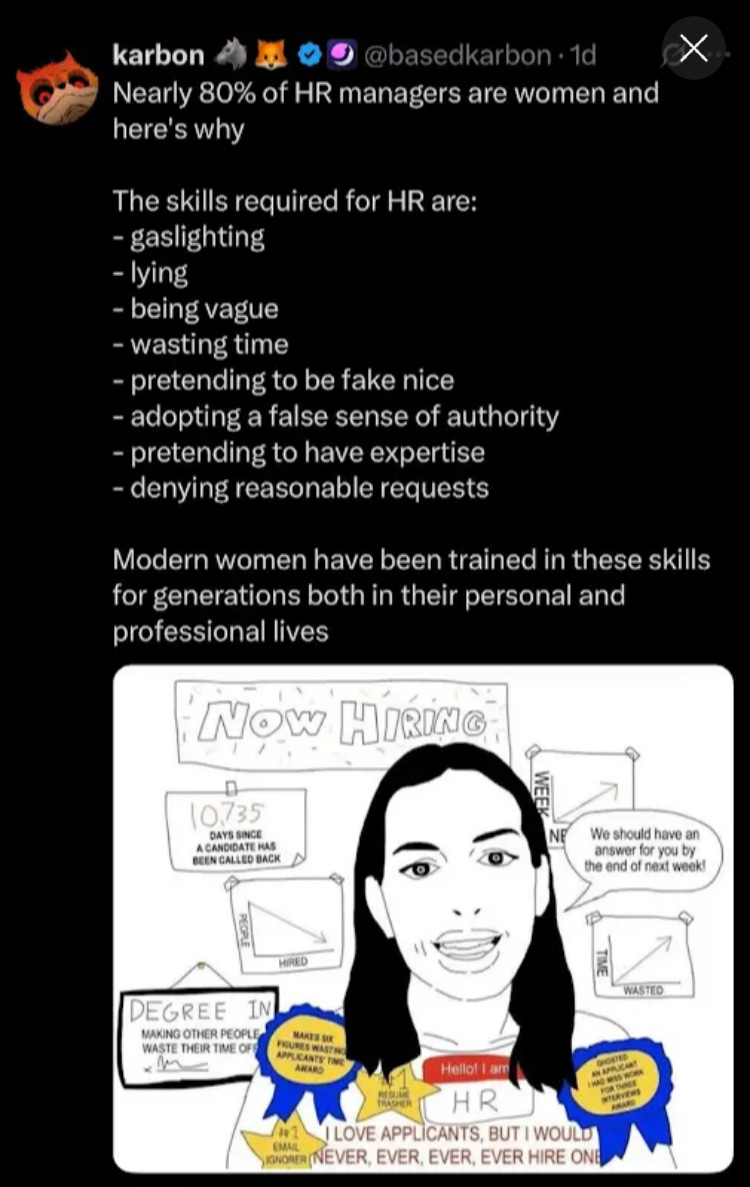
One might think (if one didn’t know better) that the structures which were designed and erected to help and favor and advantage women would have been dismantled, with the achievement of full legal and civil parity. If women are free to earn their own money (and even benefit from systemic advantages contained in the HR implementation of civil rights law) then surely men aren’t having to directly finance them? Surely there are not massive social structures designed to systemically benefit millions of women? And surely, in a society in which family arrangements are treated as a purely personal matter and in which duty and innate sex-based responsibility has been eliminated from the mainstream, such structures couldn’t be predicated on family arrangements and the duty of men and fathers?
After all, this would be equality: a nation of autonomous and interchangeable economic units, competing with each other for employment and sustaining the economy with their spending and making personal and lifestyle decisions for themselves based solely upon their own goals and values. This is the ostensible dream of the modern power structure (half bureaucratic and progressive, half profit-driven and corporate - both sides eating into the freedom and independence of the individual and the community). But things aren’t so clear. Professional women are, in a very real sense, the foot soldiers of post-modernism.
Simply by proclaiming their equality to men, joining bureaucratic and hierarchical organizations, and competing with male coworkers (thereby imprinting their feminine priorities and social dynamics on the organization) they have completely changed the institutional face of the modern West.
Women Cannot Build Things
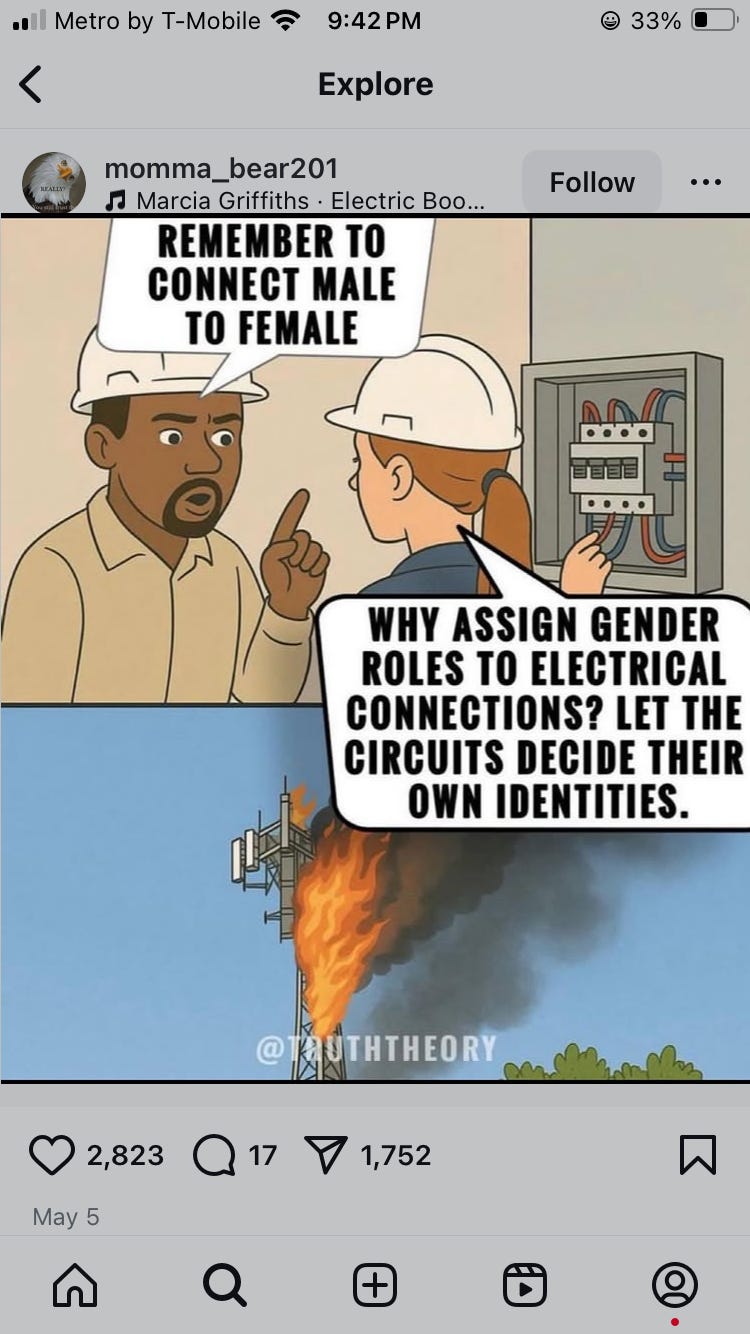
There’s one prominent and seemingly undeniable fact: women cannot build things. This is yet another claim that is trivially obvious upon examination, yet it highly offensive to many modern people (usually an indication of an invalid orthodoxy). Of course women can craft and they can run schools and they can start businesses and write books. Individually, the overlap between male and female competencies is very high in many skills. But, as far as I know, women have not demonstrated that tey are able to build social structures of sufficient complexity to generate massive social value. They haven’t demonstrated a propensity for widespread inventiveness or for the ability to make massive improvements in the physical (built) environment. This shortcoming seems to be involve individual competencies and to be an emergent property arising out of group sexual dynamics. On both counts, the sexes vary widely. Just consider: after 50 years of not just civil equality but systemic advantage and wealth redistribution (plus an intermittent message of female exclusivity and privilege), are there any police departments in the United States which can operate with only its female members? Are there any autobody shops? Are there any construction companies? Even if they hired slews of new female recruits, could women perform these functions?

There are many gynocentric institutions nowadays of course but they were built by men and taken over by women and in every case their standards have diminished and their output has degraded and the internal waste and friction has increased dramatically. (If I’m missing some relevant example here please let me know in the comments. It’s very possible). Even those institutions are housed in buildings built by men, maintained by men, protected by men. This isn’t a matter of opportunity. Women don’t want to build things in the same way as many men. I’m not talking about rising through a social hierarchy or achieving corporate promotions - which women, with their subtle organizational privilege, are nowadays quite good at. That is advancement within an existing social milieu, something that feminine psychology has been optimized for. I’m not even talking about forming businesses (which women often shy away from, due to the inherent risk), writing business plans, courting investors, creating advertising campaigns. All of this is likewise essentially social activity. Can women manufacture the products, or service the machines to do so? Can women construct the warehouse? Can they drive the materials to their retail location?
Granted, I can’t do most of these things either. No single man can. But men can, and women can’t. And there seems to be no feminine appetite to acquire the skills to do any of these things en masse.
Society, despite all of the credentials and software and information technology and human resources programs, depends upon things being built, maintained, moved, and protected. This is men’s work. It was, it is, and perhaps it always will be. But we can only deal with the reality now and in the forseeable future. So we have a profound sex asymmetry.
And this is a problem for the Blob. The Blob wants female empowerment. Charitably we could say that the Blob wants equality, but even in the areas where women have well surpassed men there seems to be no relenting on the rhetoric of female advantage and privilege. So we can say, accurately, that the Blob wants female empowerment. It wants more power, more resources, and more privileges to be taken from men (as a whole) and given to women (as a whole). Given these two things (the supreme male advantage in manipulating the physical world and maintaining law and order and the institutional drive to augment the status and fortunes of women) we would expect to see builders and police and guards and mechanics and electricians and engineers to be systemically deprioritized, for less and less public resources going towards involving and training and empowering them, and for them to be essentially used as silent (silenced) tax cattle. This is precisely what we see. How many police officers were interviewed during the unstable days of the summer of 2020, when the entire nation was aflame with indignation and millions called for police reform? I never saw such an interview, but female (and feminist male) academics and journalists and politicians were asked for their thoughts and feelings every day. This is a kind of invisible restructuring of the power and logic of our society, which is rarely noted.
Feminization & Sex-based Privilege
Much has been written about feminization and about intrasexual competition and the erosion of competitive masculine hierarchies (and the drastic social cost of these changes) but let’s leave all of that aside, and approach the question from a negative framing. Can you think of one field (education, psychology, medicine, law, academia, Hollywood, journalism) where the integration of women has not led to decreased quality, relaxed standards, and fuzzier selection criteria?
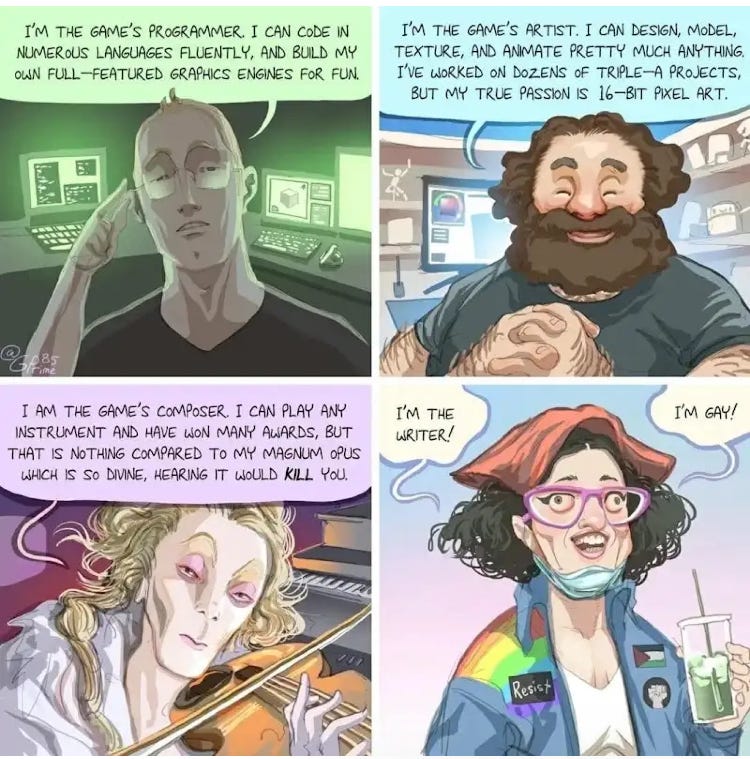
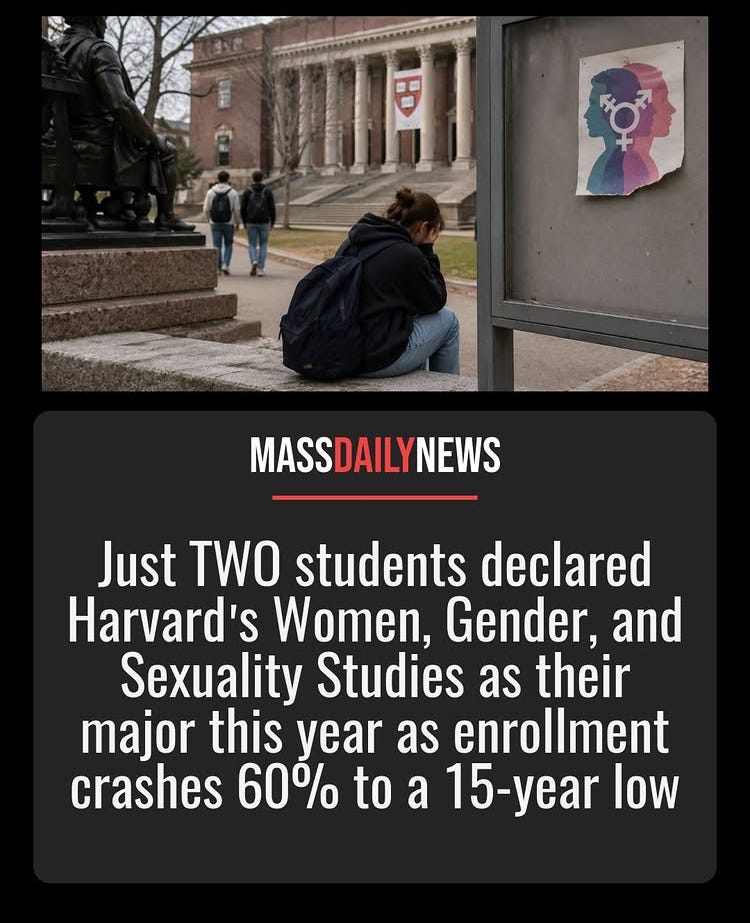
Is there any sexually integrated economic sector in which DEI hasn’t been enthusiastically applied (which allows committees of women to evaluate candidates secretly and subjectively, a much more gratifying process for the female psyche than simply applying objective rules and metrics)? Veterinary medicine might be one, but I cannot think of another one. Even the organizations in which female integration has been significant but limited (10-30%, say), like prison guards and firefighters and police officers, the culture has changed, speech and behavior codes have been implemented in order to benefit and protect women, and women have been artificially advanced to management and leadership positions with alacrity.
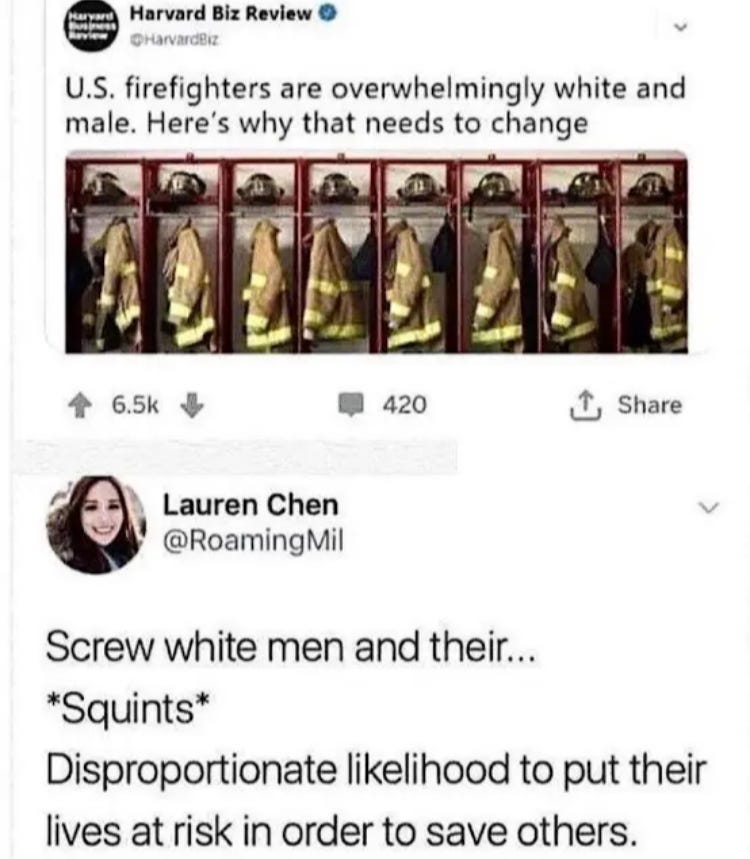

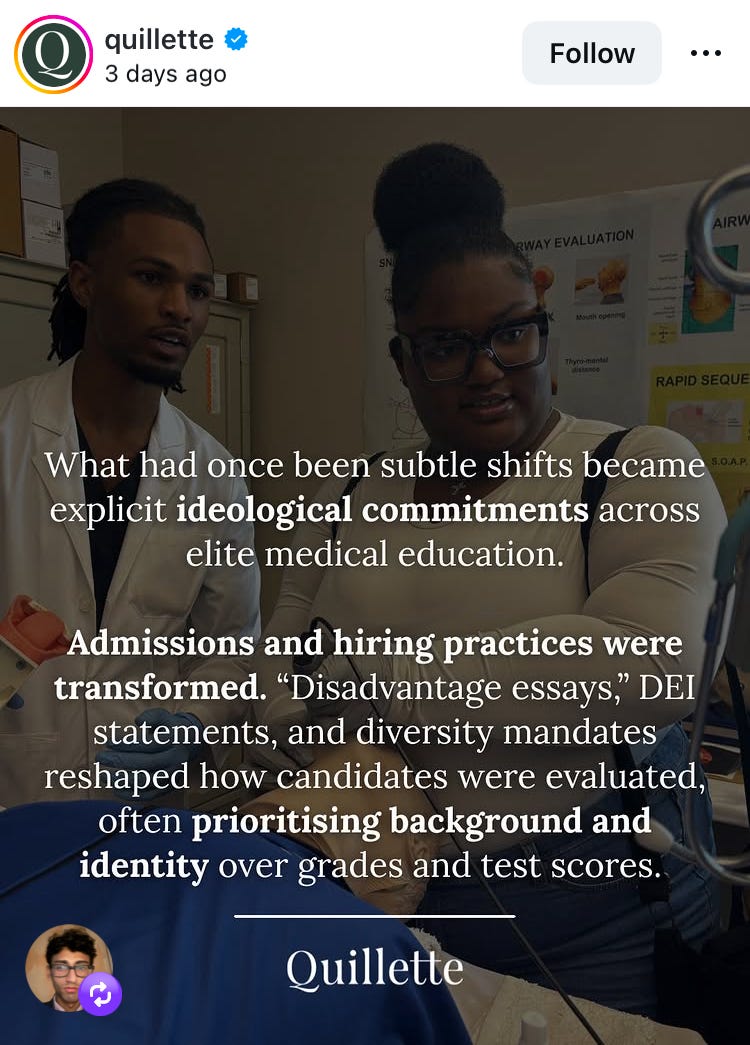
Women change organizations, and they change them in a very specific direction: weaker standards, more consideration for feelings and comfort and perspective (“work-life balance”), more emphasis on validation and consensus, more bureaucracy and more assistance in medical and psychological and lifestyle affairs, stricter speech codes, less overt competition, more selection done by committee based on subjective assessments, more consideration for certain fashionable groups, a greater emphasis on displaying enthusiasm and support and tolerance, etc. Social science data seems to indicate that the average woman in the United States says around 3x more words per day than the average man. Feminine organizations have more meetings, and they last longer, and they focus on different things.
“Wokeness is simply feminine patterns of behavior, applied to institutions where women have not been very well represented until recently. The piece that made it all click into place for me was the coincidence of timing. It is the case that a lot of institutions that “went woke” or were affected by wokeness became demographically female in the last five years.”
-Helen Andrews
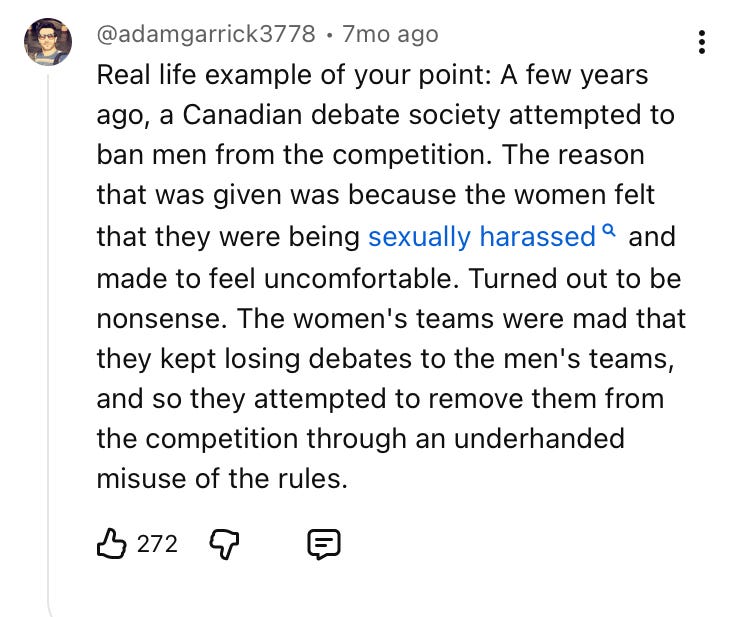
The fact that all of these claims are essentially invisible to modern people - that, despite our intuitive understanding that men and women are profoundly different, the idea that they would also be different in the workplace - is itself evidence of the speech codes I already mentioned. Any generalization about women, any diagnosis of feminization or discussion of subjective emotional responses or dislike of overt conflict or competition, is completely verboten. These ideas lie in the social science data, and there they remain. Trying to operationalize them or even acknowledge their possible validity is liable to destroy a man’s reputation (Larry Summers and James Damore are both examples I’ve already given). All of this creates a regime of awkward silence, enforced by law and by the threat of termination, and privileges borderline or manipulative individuals (male or female) to leverage their company’s complaint mechanisms in order to pressure coworkers or supervisors. Does anyone believe that this system was built to protect men? I work in a charter school. I could not verbalize any of these possibilities there, in any context, to any person I work with. I couldn’t raise them (even in a hypothetical or inquisitive manner) in any public university’s education department. I’ve worked in corporate America, and I’m fairly sure I couldn’t ever introduce any of the relevant data in an HR training or a staff meeting, even if the topic of discussion was corporate culture. Is that because these ideas have no validity… or is it because women generally don’t want to hear or consider them, and men generally want to help and protect women? I suspect that it is the latter.
Helen Andrews, in The Great Feminization, writes:
In 2019, I read an article about Larry Summers and Harvard that changed the way I look at the world. The author, writing under the pseudonym “J. Stone,” argued that the day Larry Summers resigned as president of Harvard University marked a turning point in our culture. The entire “woke” era could be extrapolated from that moment, from the details of how Summers was cancelled and, most of all, who did the cancelling: women.
The basic facts of the Summers case were familiar to me. On January 14, 2005, at a conference on “Diversifying the Science and Engineering Workforce,” Larry Summers gave a talk that was supposed to be off the record. In it, he said that female underrepresentation in hard sciences was partly due to “different availability of aptitude at the high end” as well as taste differences between men and women “not attributable to socialization.” Some female professors in attendance were offended and sent his remarks to a reporter, in defiance of the off-the-record rule. The ensuing scandal led to a no-confidence vote by the Harvard faculty and, eventually, Summers’s resignation.
The essay argued that it wasn’t just that women had cancelled the president of Harvard; it was that they’d cancelled him in a very feminine way. They made emotional appeals rather than logical arguments. “When he started talking about innate differences in aptitude between men and women, I just couldn’t breathe because this kind of bias makes me physically ill,” said Nancy Hopkins, a biologist at MIT. Summers made a public statement clarifying his remarks, and then another, and then a third, with the apology more insistent each time. Experts chimed in to declare that everything Summers had said about sex differences was within the scientific mainstream. These rational appeals had no effect on the mob hysteria.
This cancellation was feminine, the essay argued, because all cancellations are feminine. Cancel culture is simply what women do whenever there are enough of them in a given organization or field.
The fact that there is now a national regime of speech monitoring and penalty built in order to discourage sexism and bullying and harassment of women should invalidate the claims of equality. Equality would be entering an organization and competing with the people there based on the same rules that they were operating under. Or it could include forming your own organizations. But it’s naturally easier to infiltrate and change existing organizations, especially when you have the weight of federal law behind you. It is legally and it is defensible as a policy proposal. But seeking special protections from bullying and harassment (which men didn’t seek and generally didn’t want) is, inherently, unequal.
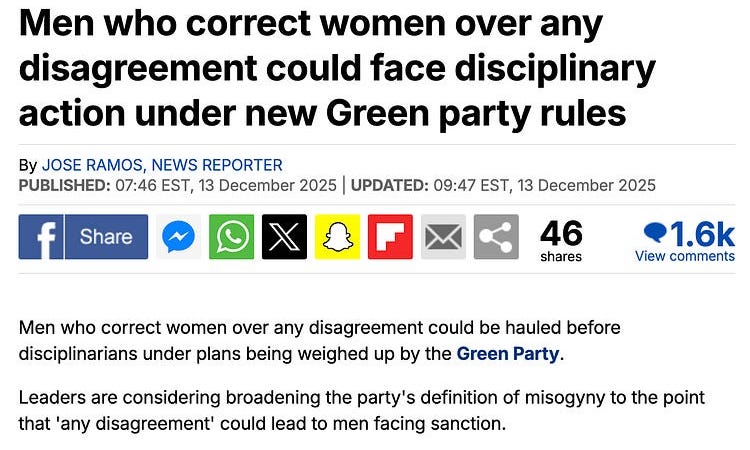
And this is the pattern that we see, again and again. Women (as a collective and as a political interest group, not as individuals) want the opportunity to enter and compete with men. But they don’t want to do it in the way that men did and do. And because we value women and strive to protect them, a system which was still dominated by men catered to these wishes. And women have gained some measure of this status by manipulating men and playing on their sympathy and exploiting their urge to protect, all while denigrating the idea that they need protection. This is a pattern we will see again and again. Women want opportunity and freedom and advancement and status. But they do not want equality, and the examples of pervasive advantage and redistribution I describe below should prove that.
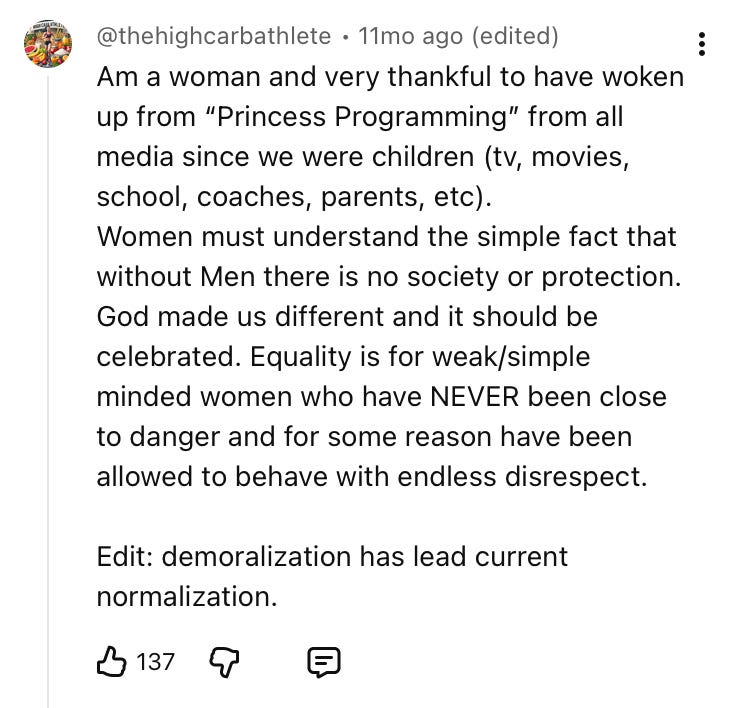
And of course ‘women’ is a huge and diverse category. Most women (the vast majority) have nothing to do with these policy choices. In most cases, they were executed by men. But they were executed on behalf of women, at the insistence of bureaucrats and activists and federal legislators. And most modern women still support them. This is an inconsistency that seems to be very popular and widespread (probably more so for being mostly unexamined). Women want the benefits that they have accrued. But they also want (not for themselves, but for other women) the help and the protections and the bonuses. This isn’t irrational, and it’s not bigotry. It is, I think, a biological instinct in humans (male and female) to value and protect women. But this instinct was never designed to be implemented across millions of people by the administrative state, with police violence silently standing behind it. As with so many other cultural features in our civilization (the ones which haven’t disappeared altogether, that is) these norms have gone from being interpersonal and familial and communal to being tools of bureaucratic control. Rare is the woman who wants to give any of that up. With all due respect to my female readers, I think that there is a drive to protect not just individual status but collective feminine status and identity and privileges in a way that used to exist in men but which has been systematically eroded. I’ve noticed that women (even reasonable, temperate, virtuous ones, which most tend to be) don’t want to discuss the oppressive system of child support or paternity fraud or female promiscuity. Perhaps that’s because these ideas raise associations of oafishness or misogyny. But those are ultimately just vague cultural triggers, and feelings. There must be a point at which child support could become oppressive or female promiscuity grows unchecked and corrosive. And if we’re not there now we might be heading in that direction. Is it on that fair-minded and empirical basis that I raise these points.
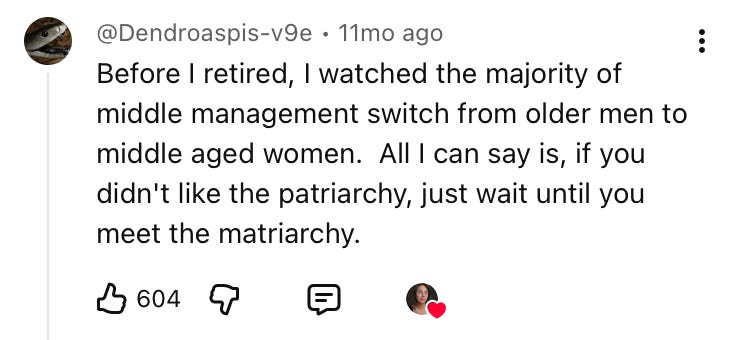
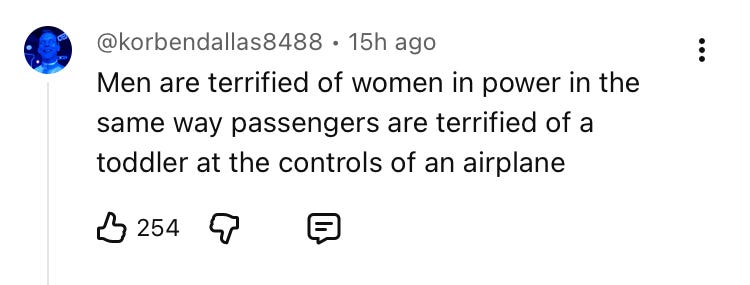

Cultural Drift and Double Standards
In world that proclaims itself to be devoted to the ideal of gender equality, it is hard to imagine state programs transferring billions to men at the expense of women, or women being systematically discriminated against in courtrooms, or women being jailed for failing to help the male parents of their children. But all of those things now exist, in reverse, and affect tens of millions of men. If these policies were to the detriment of women, I suspect that our cultural reaction would be rather different.
It’s tricky to generalize here, because most women are reasonable and decent and not at all misandrist but I don’t think it’s invalid to claim that there is a very portent cultural mode (most influential among young and educated women) that continues to emphasize feminist values. In a context of overwhelming female privilege and systemic redistribution and almost total opportunity availability, this is resulting in a kind of derangement, in which women are always right, always in need of help, and always admirable. You might think I’m exaggerating here, but I’m not. There are now popular cultural events and products and figures who promote the message of absolute gynocentric privilege, and there are no valid equivalents for androcratic privilege. Feminists like to point to Andrew Tate but, besides being almost totally discredited even among the boys who followed him, he has been ruthlessly attacked, deplatformed, and prosecuted by the power structure - which may be deserved - and his ideas are a matter of huge institutional concern across the Western world. This isn’t an exception to the pattern I’ve identified - it’s a case study. How many messages or products of female domination or unlimited cultural license (which is essentially what Tate argued for, for men) are deplatformed or studied or criticized by educators or policymakers?
I want to try to remind my readers of something which is very important and often overlooked: our modern cultural practices are not correct or incorrect, right or wrong. That’s a limited and improper framing. They are simply solutions to recurring social problems. Compared to fundamental values and objective moral norms they’re almost arbitrary. Some of them will prove to be adaptive. Some of them will not. It’s difficult to know which is which, but that feeling of sanctimony, of offense and indignation when confronted with awkward or unpleasant possibilities, is always misleading. That is simply cultural programming, pushing you away from consideration of things that may be real and salient. Those things may even be urgent. If my suspicions are correct, and the cultural changes sweeping across the entire globalized part of the world continue (ignited by the corporatist and progressive institutions of the West and promoted using every available financial mechanism), the maladaptive qualities of this vast, sex-based unbalancing will only become grosser and more obvious: lower birthrates, fewer and more unstable marriages, increased rates of loneliness and mental illness among men and particularly women, and a general sense of emptiness and hedonism. Sex roles and the family have been the foundation of every complex society on record. It would be a fantasy to believe that we could respectively dissolve and reorganize these features in the space of two generations without serious social harm and upheavals.
Helen Andrews again:
The Great Feminization is truly unprecedented. Other civilizations have given women the vote, granted them property rights, or let them inherit the thrones of empires. No civilization in human history has ever experimented with letting women control so many vital institutions of our society, from political parties to universities to our largest businesses. Even where women do not hold the top spots, women set the tone in these organizations, such that a male CEO must operate within the limits set by his human resources VP. We assume that these institutions will continue to function under these completely novel circumstances. But what are our grounds for that assumption?
At the very least we should be able to openly discuss what’s happening. At this moment in time we cannot.
The problem is not that women are less talented than men or even that female modes of interaction are inferior in any objective sense. The problem is that female modes of interaction are not well suited to accomplishing the goals of many major institutions. You can have an academia that is majority female, but it will be (as majority-female departments in today’s universities already are) oriented toward other goals than open debate and the unfettered pursuit of truth. And if your academia doesn’t pursue truth, what good is it? If your journalists aren’t prickly individualists who don’t mind alienating people, what good are they? If a business loses its swashbuckling spirit and becomes a feminized, inward-focused bureaucracy, will it not stagnate?
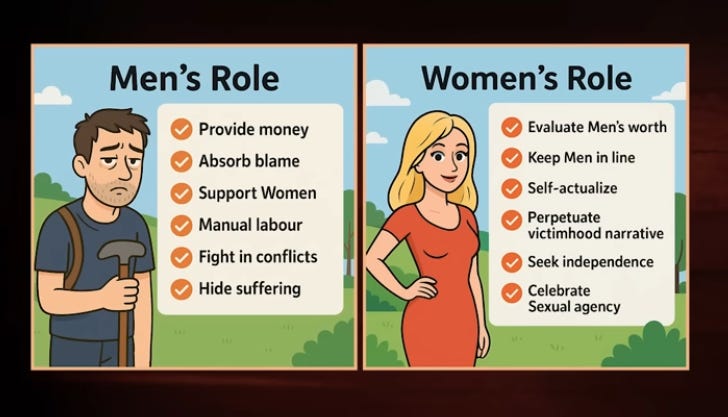
The Suck
And now we get to the meat of the issue. Qualifying feminism or masculinity always puts one on shaky ground, epistemologically speaking, but the numbers don’t lie. The final and clarion proof that we live in a gynocratic and gynocentric society - in which the status and freedom of women have been intentionally expanded (and mechanism of shame and accountability have been intentionally erased) while the state and the power structure still treats women as if they’re dependents, entitled, owed something from men - lies in the overall weight of privileges and accommodations and forcible wealth redistribution. The Longhouse might be a cultural structure overlaying education and media and psychology and a dozen other fields and imposing artifical, one-sided considerations of speech and behavior. Feminization might be dramatically altering our institutions and driving us farther on the road to safetyism (an endless black hole of risk aversion) and infinite, sclerotic bureaucracy. But the ultimate evidence for feminist preference and privilege is the forcible confiscation of money, rights, and status from men and its distribution to women. This is intentional, sex-based (even in its rhetoric), and for many millions of men it is crushing. It is the central, eternal, oppressive feature of their social and financial lives.
Remember: the rhetoric of our society is one of individualism and freedom and financial opportunity. Conservative Christians and progressives might disagree on many things, but they are united in believing that women should have full civil equality and be able to enter nearly all fields and should have autonomy over her body and her life decisions. This is a now a universal cultural attitude, and in the modern world this entails a wide latitude for independent action. The idea that men should have some advantage or privilege when it comes to college (where men are actually beginning to have slight admission advantages, thanks to the female-centric attendance skew of academia) and career and home-buying and consumption and legal maneuvering and travel and parenting is dismissed outright. The very notion is ludicrously regressive. Men and women are equal in all of these areas.
But they’re not. Women actually have measurable, valuable advantages and considerations in many of them. This is often tied to their role as childbearers and mothers, of course, but that’s culturally incoherent in the context that we just described. If women get especial considerations for being mothers, than they have specific, innate responsibilities tied to that. Conversely, if women are equally capable and are agentic economic units expected to manage their own financial fates then they should not expect bonuses or set-asides or special regards when it comes to alimony or hiring.
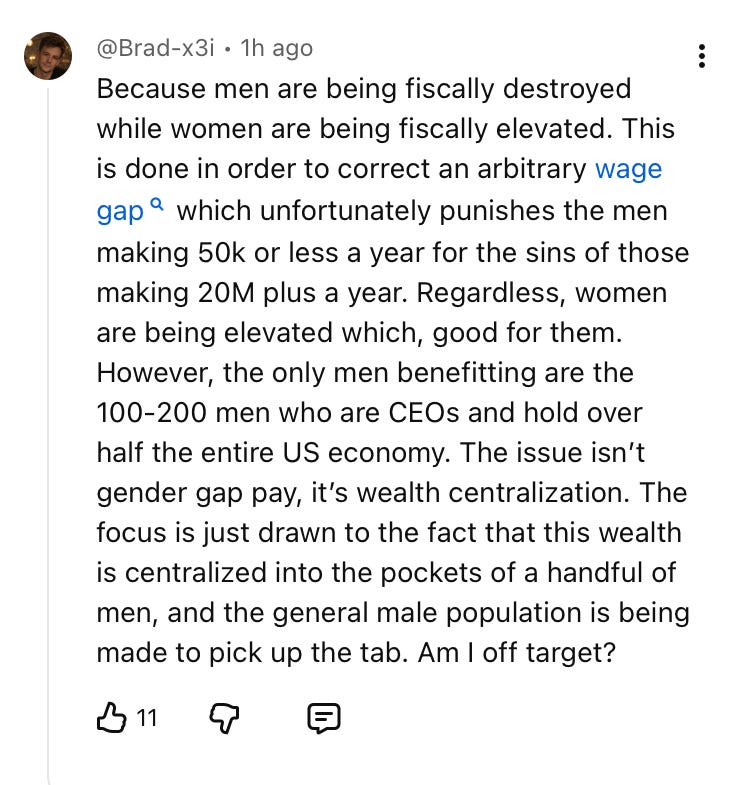
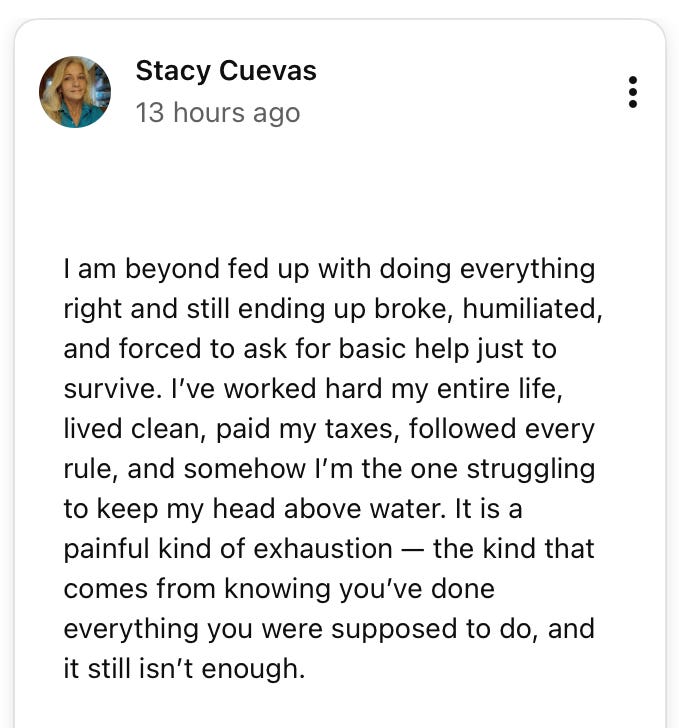
“Everything you [are] supposed to do” no longer necessarily includes marriage. Why might that be? Is this change framed in terms of benefit for society or for the individual? But think about it: 45% of American women are projected to be single and unmarried by 2040. Is that really an improvement for most of these individuals? What is personal freedom and sex-based status without a healthy and vital society to surround them?
This is not a manosphere talking point. Many women are echoing these sentiments - the unusually thoughtful and logical and heterodox ones of course, so not the majority.
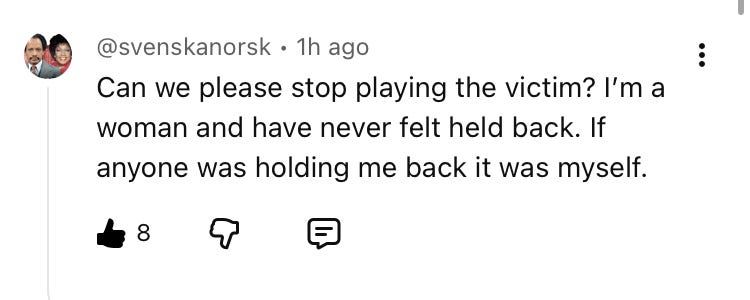

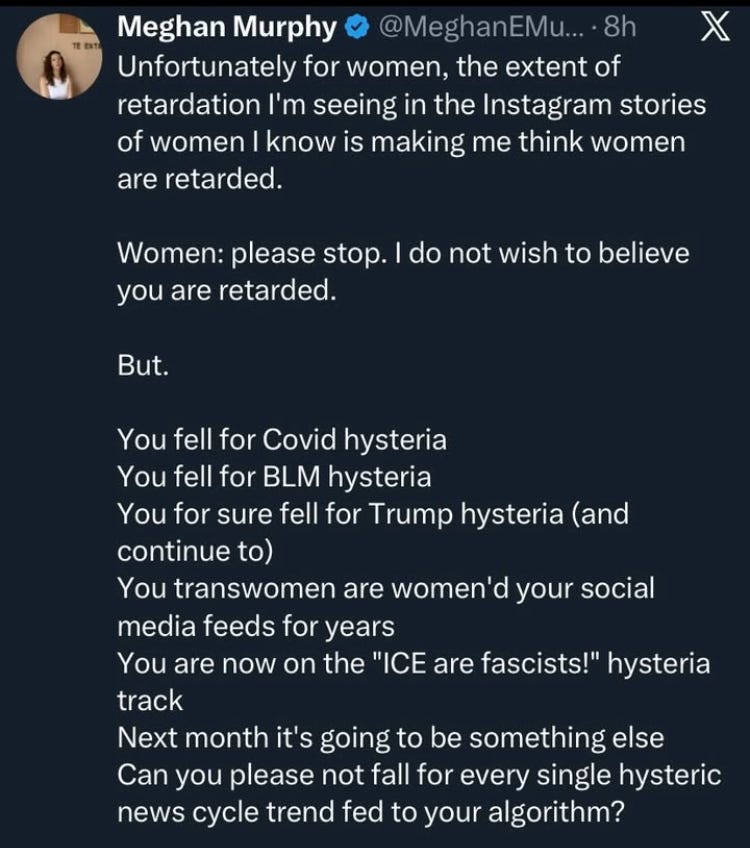
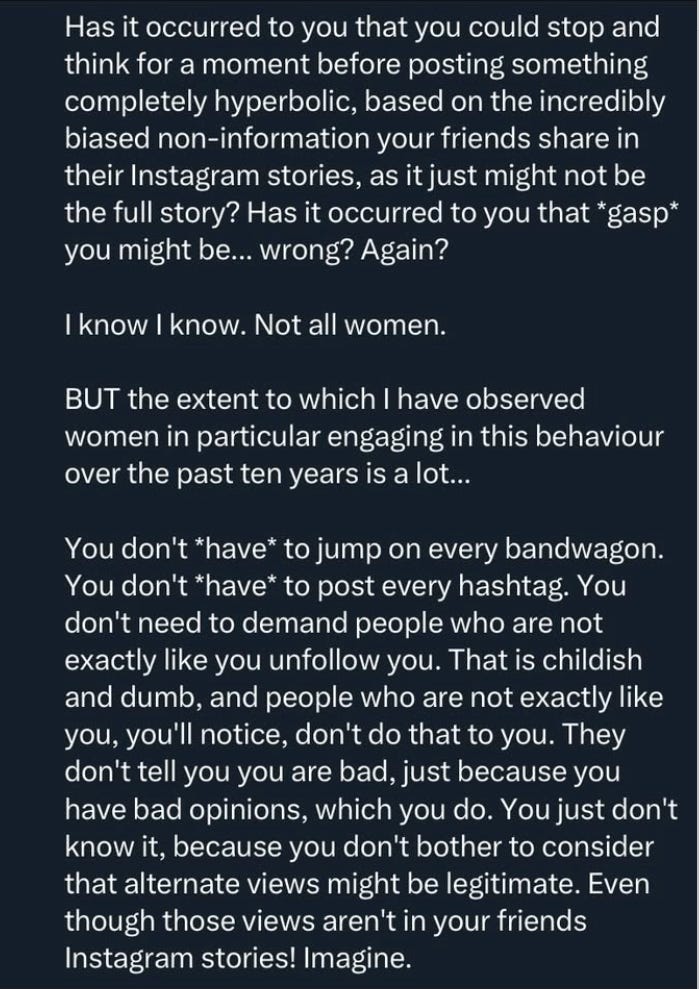
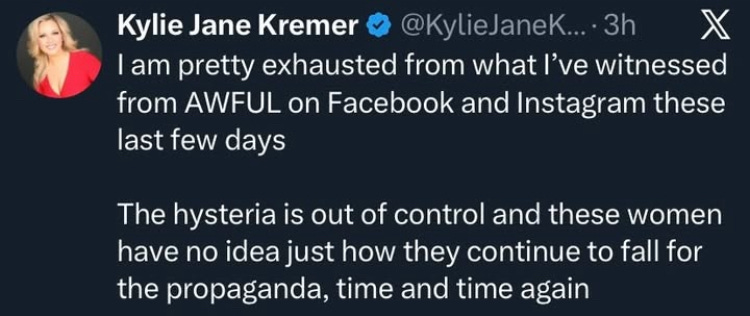
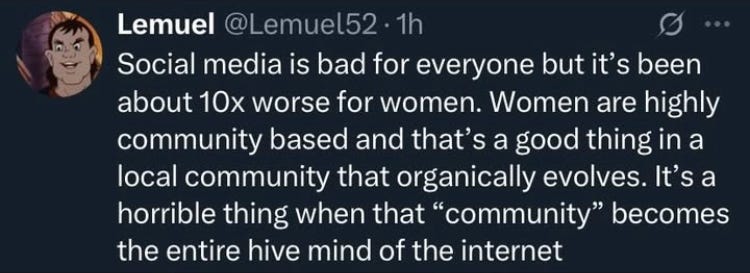
Here are some of the many systemic advantages that women have gained at the expense of men. Keep in mind, the weight of cultural momentum and the priority of the administrative state is to continue taking from men and giving to women:
Family courts award primary custody to mothers in roughly 70 - 80% of cases. Fathers receiving sole custody only about 10% of the time. These statistics hide the horrible abuses (which are inevitable with state-level policies like this), and they elide the crushing weight of child support.
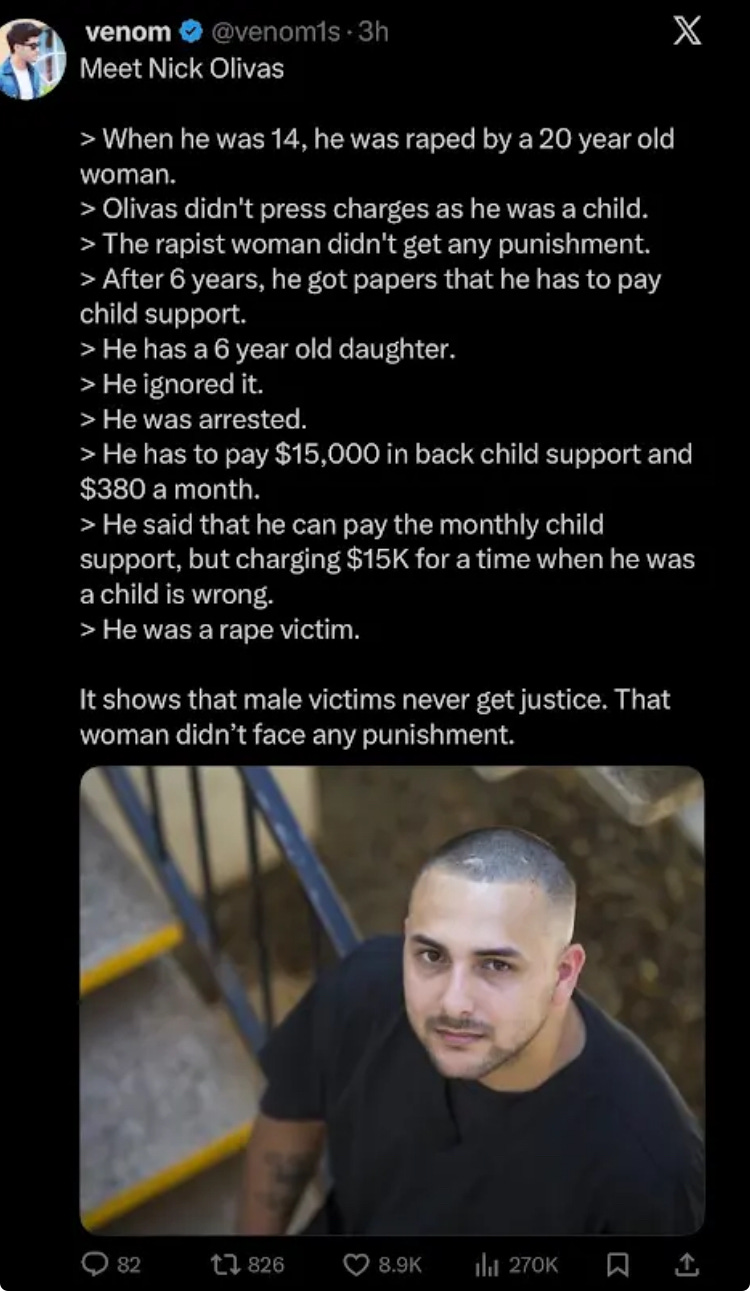
Child support was instituted on the basis of arguments supporting child welfare, but I don’t believe that most modern policymakers actually care about children. Marriage is overall a great boon to growing children and policymakers have eroded it. Full-time mothers are beneficial for children and activists have reduced their number. What do all of these moves have in common? They all financially benefit women and reduce their reliance upon men. That is the principal aim of the managerial class. In many cases it’s explicit.
The cost to support and provide for all of the children of unmarried parents in the United States would be a significant fiscal obligation - even if it would be more consistent with the ideology of the administrative state, wherein the state assumes responsibility for helping and equalizing people. So our government has erected a system in which men (not always the fathers - any man will do) are made responsible for financially supporting children. There are hundreds of horror stories of men being denied DNA tests (which would free them from their legal bondage), having to pay anyway, and being jailed for nonpayment, which leads to them becoming unemployed and being responsible for all of the accumulated child support when freed. It’s a triple benefit for the Blob. It can redistribute resources from men to women, offload some of its budgetary liabilities, and establish a system of surveillance and court hearings and imprisonment for millions of men.
Would we ever put this kind of burden on women, I wonder? Both people are responsible for creating a child (unless there’s coercion involved, which is a loophole that is often raised in the abortion debate but never seems to touch the policy of child support). So let’s treat people equally: neither of them gets the power of police and prisons to force the other to do anything in the way of giving money. Each party has to make his or her own arrangements with the other, guided and constrained by communal pressure, as people have done for at least 300,000 years.
How might this change the reproductive incentives, and the type of men that women choose to mate with? I think the differences would be seen immediately. I think they would be dramatic.
Women receive sentences more than 60% shorter sentences than men for equivalent crimes and are significantly more likely to avoid incarceration entirely.
Alimony payments (affecting about 10% of divorces) and real property judgements (about 70%) accrue to women at a vastly disproportionate rate. Women initiate more than 70% of divorces (and that number appears to be rising). And why wouldn’t they? They are usually incentivized to do so. Millions of businesses have been shuttered, millions of homes have been broken up, and millions of houses have been either sold off to pay divorcees or transferred to the care and use of women. The culture of divorce has shifted profoundly as well. In the Christian Bible, which was the textual basis of mainstream American marriage norms for generations, there are two acceptable pretexts for divorce: adultery and abandonment (which can be interpreted rather loosely). These days literally any reason is acceptable; no stigma or cultural disapproval will ever descend upon an adult who claims they must have a divorce. Combined with the intensely (some would say pathologically) individualistic culture of the contemporary United States, this has led to a situation in which self-reported “happiness” is the most common given reason for divorce. “My spouse was neglecting me” and “we just weren’t happy” and “we weren’t right for each other” are all trivially common explanations for the breakup of marriages, and the involvement of children seemingly has little effect. If a person (usually a woman, according to the data) “isn’t happy” then she (or he) is fully entitled to renege on her/his spiritual and legal commitment.
Lest one doubt that alimony and child support and the general judicial bias towards women and wives and mothers isn’t a decisive factor in the decision to divorce, consider this: Kentucky instituted a default 50/50 child custody arrangement - save in cases of substantiated physical abuse or other measures of demonstrated parental unfitness - for all divorces after 2018. By 2022, the divorce rate among women had fallen by more than 25%. A 50/50 custody arrangement means that the woman will generally be ineligible for child support payments, which then indirectly affects alimony. In other words, many Kentuckian parents (again, most of them mothers) were deterred by the prospect of sharing custody of their children equally and not gaining court-ordered subsidies from the father, to the point where overall divorce declined by 23% in 3 years. If we reformed alimony and real property awards I suspect that we might see a comparable decline.
The Violence Against Women Act directs federal funding specifically toward female victims, despite men comprising about one third of domestic violence victims. Some data indicates that in relationships without mutual DV, the man is actually more likely to be the victim. “When domestic violence is one-sided (or nonreciprocal), studies have found that women are the perpetrators in the majority of cases.”
Are there are any domestic violence shelters for men? The very idea seems silly to us. In public experiments, men “assaulted” by women on the street are ignored and laughed at. Women who are “assaulted” are intervened for and protected.
Men are (far) more dangerous, physically. But men are also far less likely to call the police and use allegations of assault to try to get their partner defamed or imprisoned or killed by police. Using the police to preference custody disputes or harm their male partner is devastatingly common in dysfunctional relationships.
If you’ve ever seen a woman being questioned by police or arrested you are likely to agree: the feminist act goes out the window entirely when the gravity of the circumstances become clear. Crying, manipulation, and acting weak and vulnerable are are tried and true strategies. Men are likely to lie, or even to run (or resist) but they rarely cry to police in order to gain sympathy.
Have you ever seen a woman get arrested? Most of the time everything goes normally. The police approach and the suspect quietly submits, and is taken in for booking. But when things go awry, the behavior of the sexes tends to diverge. Men will leverage their size or their speed or try to argue or twist away from the arresting officer(s), often twisting away while arguing, as if police who are in the process of handcuffing a suspect will be so impressed by the merits of his appeal that the police will relent and let him leave. This is the entitlement of people who live in a free and orderly society, people that are so used to arguing with and lying to and manipulating teachers and bureaucrats and social workers and (less often) employers that they feel certain that their recitation of facts or expressions of indignation or victimhood must have some automatic value.
Federal contracting programs set aside contracts specifically for women-owned businesses. Such preferences exist all throughout the contracting and procurement space at every level of government. Abigail Spanberger (A female Jewish Democratic governor of Virginia) recently put forward a policy of strictly preferential government contract awards for contracts with a value of less than $100,000.
Dozens of grant programs, business loans, and VC funds are legally restricted to or preferentially awarded to female founders.
Hundreds of college scholarships and fellowships and grants are explicitly designated for women. I know of none devoted to men. I’m sure they exist, but I’m equally sure that they’re a minority of the total, both in terms of numbers and value.
College enrollment is now more than 60% female, and federal financial aid flows proportionally. No policy exists to address male underenrollment, although some institutions have now instituted de facto affirmative action policies. But these aren’t to help men. They are to keep enrollment high and to make the campus for attractive for female applicants.
The higher education system in general has been a part of a crushing wave of credentialism, effectively putting most jobs and advanced positions out of bounds for those unwilling or unable to spend years in a classroom. This description disproportionately applies to men. This system (which doesn’t lead to better employees or more genuine expertise, instead rewarding the rich and the risk averse and the conformist) has coincided with institutional feminization in a manner that looks suspiciously like coordinated action.
Women’s professional sports are subsidized by men’s leagues, and the calls to institute wage parity with the men are constant. The fact that male players are the standard that female activists reach for (rather than achieving better pay based on performance, or ticket sales or ad revenue) illustrates the resentful and envious nature of this worldview. If men have it, then (these) women want it. But only if it’s a good thing (pay, status, benefits).
EEOC enforcement and corporate DEI programs have focused primarily on female representation in high-status roles, not male-dominated dangerous jobs.
Corporations, universities, nonprofits, and enterprises of all kinds exist under the warped and overgrown regime of Civil Rights Act-related HR bureaucracy. This is a vast encrustation, in which the original piece of legislation was expanded by judicial ruling and generations of civil suits and organizational moves. At this point, women must be represented adequately (what this means precisely is obviously unclear - in effect it means enough women must be present in high-status and lucrative positions to deter the ever-present threat of civil litigation by female employees or former employees). Helen Andrews makes it clear that this isn’t necessarily a net benefit to women. Artificially promoting them past their competence, enacting a general cultural attitude of entitlement, and burdening and deforming important institutions can’t be beneficial in the long run… if your idea of benefit is simply the maximization of female potential and the (true) empowerment of women.
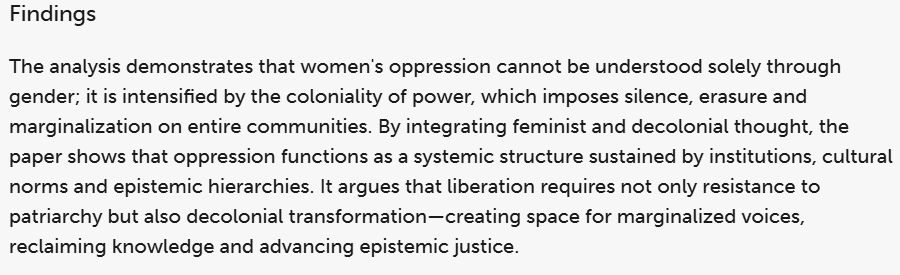
This (above) is what passes for social science these days. Interestingly, the deployment of vague language, false expertise (awarded based on status and credentials rather than mastery of some useful field of knowledge), and emotional/morally-loaded verbiage is a primary feature of feminized institutional spaces. I see each of these phenomena literally every day at work as a primary school educator.
But if you believe that women are innately worthy and that disparities are necessarily due to disadvantage (“structural oppression”) and that infinite social value should therefore be taken from men and given to women (an explicitly Marxist framing which is now a mainstream opinion) then you will conceptualize “female benefit” very differently.
As a woman myself, I am grateful for the opportunities I have had to pursue a career in writing and editing. Thankfully, I don’t think solving the feminization problem requires us to shut any doors in women’s faces. We simply have to restore fair rules. Right now we have a nominally meritocratic system in which it is illegal for women to lose. Let’s make hiring meritocratic in substance and not just name, and we will see how it shakes out. Make it legal to have a masculine office culture again. Remove the HR lady’s veto power. I think people will be surprised to discover how much of our current feminization is attributable to institutional changes like the advent of HR, which were brought about by legal changes and which legal changes can reverse.
Because, after all, I am not just a woman. I am also someone with a lot of disagreeable opinions, who will find it hard to flourish if society becomes more conflict-averse and consensus-driven. I am the mother of sons, who will never reach their full potential if they have to grow up in a feminized world. I am—we all are—dependent on institutions like the legal system, scientific research, and democratic politics that support the American way of life, and we will all suffer if they cease to perform the tasks they were designed to do.
Occupational Safety enforcement: men make up 93% of workplace deaths but this receives little policy attention relative to (exagerrated and constantly misrepresented) “pay gap” activism.
The gender wage gap has been debunked for 50 years. But the narrative never seems to die. Why? because it’s a platform for feminists and policymakers to push for more pay/status/power for women, as a group
NIH spends significantly more per capita on female-specific conditions vs. male-specific ones

Women’s Health Equity Act and related legislation create dedicated female health funding streams with no male equivalent (of course).
TANF, WIC, housing assistance programs, Head Start, and many other programs are gynocentric in mission in spending.
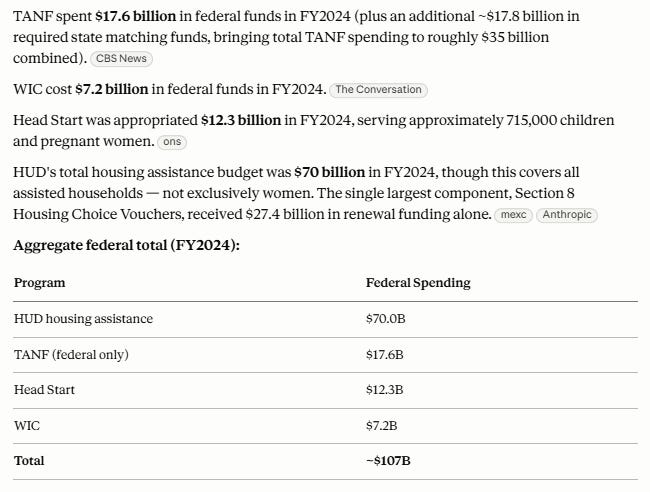
The lion’s share of these payments (above) go to women and their children. This creates a perverse disincentive, wherein women are now much less likely to seek stable and committed relationships with men. One would expect marriage and active fatherhood rates to be deeply affected among the poor, fairly diminished among the working class, and mostly unaffected among the upper-middle class and wealthy. This is indeed precisely what we see. Less than 1/4 black women will now get married at some point in their lives (and most of these marriages will be ended by the women involved).
The state has replaced the male head-of-household… but most of the state’s resources still come from men and the things they produce. Rather than being dependent on working men, tens of millions of women are no dependent upon the managerial class and the programs they administer, a much preferred change for those professionals and their sympathetic voters, and a decidedly inferior one for the women and their children.
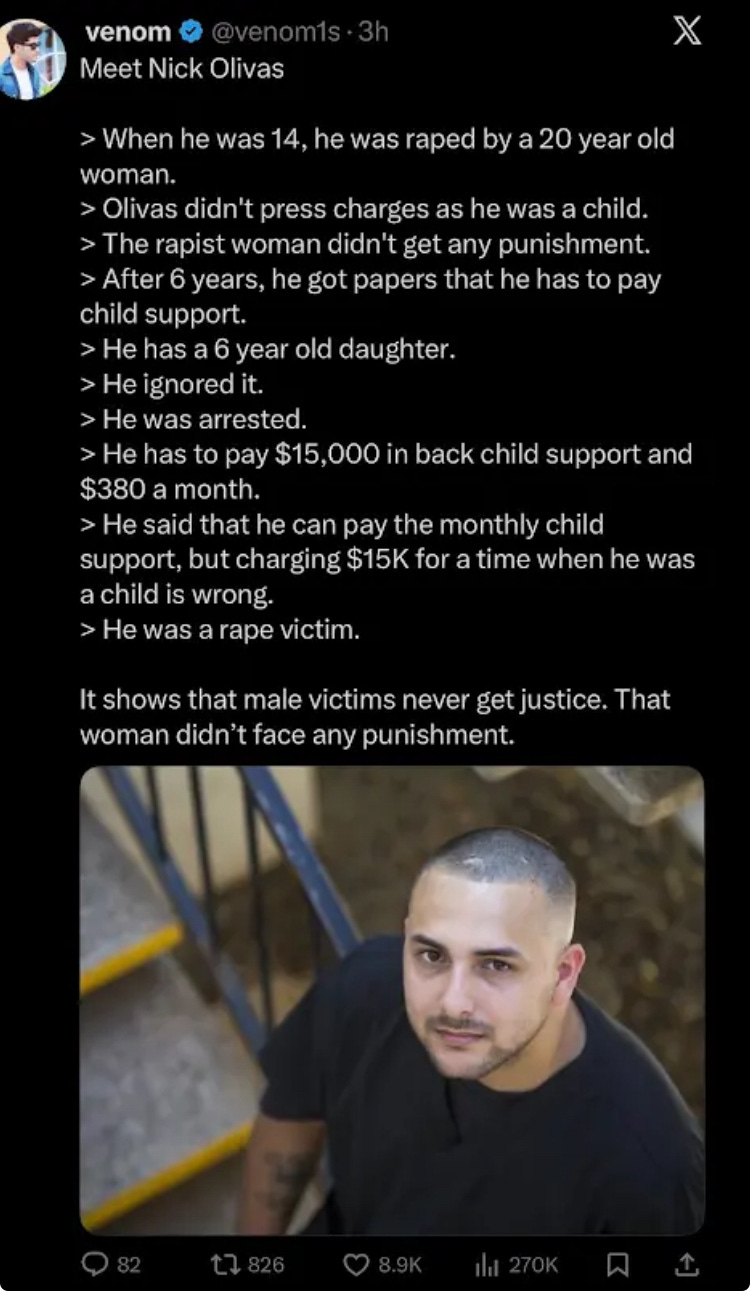
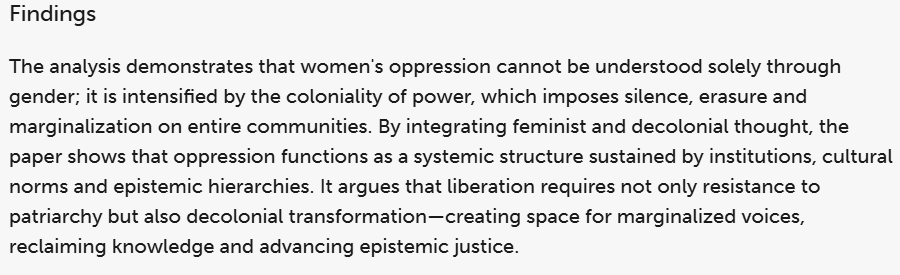

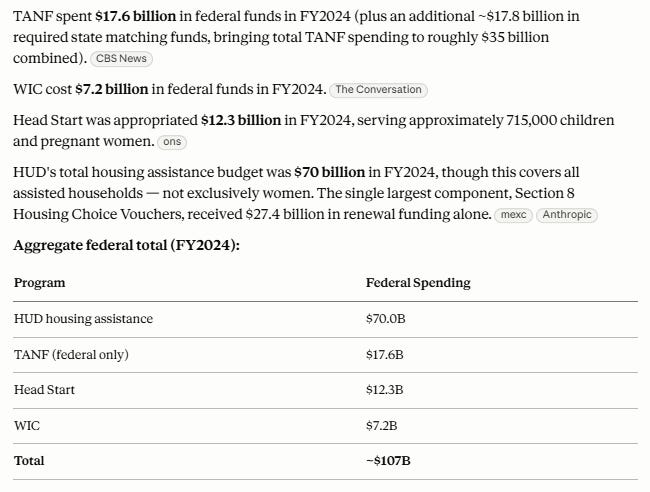
There are millions of women out there who read these statistics and recoil. But that doesn’t change the fact that these issues are not a part of our policy discussion. And when policies are put forward to promote justice in a way that would help men (mandatory DNA testing for child support, for example) feminists push back. And women are silent. This means that women, as a constituency, often only generate issues-based enthusiasm for changes which would help them. This is understandable. But men don’t behave this way. If we did, none of the policies above ever would have been adopted in the first place. What do you think of when you hear “men’s rights’? Weirdos on the internet? Perhaps a whiff of sexual frustration, or misogyny? What do you think of when you hear “women’s rights”? I think that the association that most folks have is: a valid and righteous policy orientation that all decent people. But we’re long past the days of Susan B. Anthony and Betty Freidan. These structures have congealed and grown alongside a social structure which continues to proclaim the equality and vigor of women, while demanding money and political authority and rule-changes to help them.
Men want to help women. And women want to help women. But what happens when you get to a place in which the overwhelming weight of the law enforcement and entitlement bureaucracy privileges women as a class? According to many people (on all parts of the political spectrum) the answer is clear: help women even more. There’s no opposing instinct, and men are uncomfortable advocating for their own interests as a collective. In such an unbalanced environment, it’s no wonder that so many factors are stacked against men. For this to all come into being men had to assent and assist in its construction. For it to be pared back and reformed women will have to take a hard look at the current social identity of their sex, and perhaps acknowledge that “Schrodinger’s feminism” (victimized and marginalized or independent and empowered, with the descriptor changing constantly depending upon which is more advantageous) is in full effect in our ruling institutions. Feminism, as a modern worldview, depends upon the idea that women remain structurally disadvantaged. That’s a difficult position to sustain in the face of all of these data points.
Men and Boys Falling Behind
And now I will return (briefly) to cultural analysis. “The male loneliness epidemic” (which is not particularly concentrated among men, and around which the measured psychological damage has actually been worse for women) and the college admissions gap and the home ownership disparity (millions more single women own their own homes versus single male homeowners, but a huge share of the difference can be explained by real property and alimony judgments. Divorce-related changes prompt nearly 15% of all real estate sales each year (not all of them residential) after all. All of the above are cited as data points in a trend of men falling behind. There is a myriad of public intellectuals, podcast guests, journalists, and policymakers who are now discussing this “issue".” But few of them will ever make the obvious connection: young men are falling behind because they’re systemically disadvantaged. If we want to help young men (whose success can only be measured relative to their young woman counterparts) perhaps we should even the playing field. Instead, these thinkers recommend education initiatives, compassion, mental health support, etc. - all feminized and bureaucratic solutions that young men are very definitely not asking for. What this cohort seems to want instead is for the replete instances of preferential treatment to be moderated or abolished, for men to be able to keep the money they earn, and for men to be able to find opportunities outside of feminized institutions.
And the larger point to be made about all of this special consideration and sex-based help is that it does not enhance the resilience or capabilities of women. If feminists really wanted to “empower” women they would advocate for strict and absolute equality… and then they would funnel their energies into competing effectively and fairly with men in their own domains. (Of course, the same could be said about any of the equitarian movements dogging our politics. The inconsistency arises because these moevements aren’t sincerely trying to “empower” these groups, in the sense of maximizing individual power or agency. Rather, they are trying to gain power for the group because it is seen as a systemically victimized class. This is a Marxist framing in which individuals are irrelevant, but such a framing cannot honestly use terms like “opportunity” or “fairness” or “justice.” These notions are incompatible with a vision that is dedicated to seizing ultimate power for one group at the expense of another). Women aren’t holistically benefitting from these advantages.
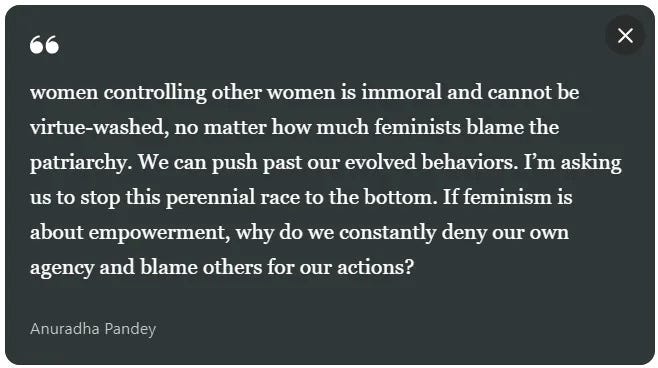
In her latest essay, Aly Dee writes:
…if there’s anything we can discern about modern women, it is that many modern women have been incentivized toward individualism, careerism, and self-prioritization in ways that weaken family bonds. I would provide data on this, but I don’t like to humor people who cannot entertain the possibility of trends occurring counter to their worldviews. If you need sources to explain how the modern woman is problematic when she is the most privileged, promiscuous, and coddled of all time, you’re not the sort of person I want to have this conversation with because you are significantly detached from reality. I will give you a few statistics on how women are doing without commentary on how men are doing because it’s important to be able to assess Western Women as a single cohort:
Women hold most W-2 jobs in the United States
1/3 of Gen Z was aborted
1/5 of women of childbearing age in the US have a sexually transmitted infection or disease
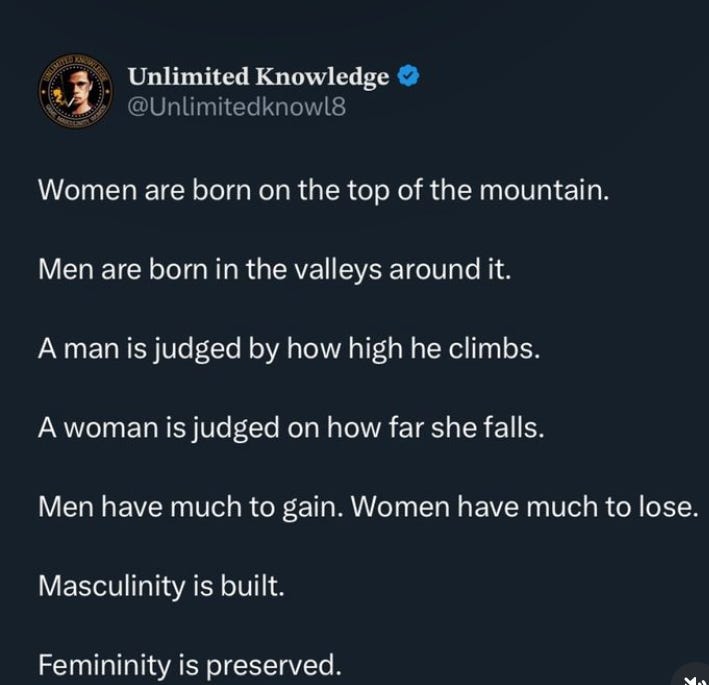
One could say that these kinds of claims are de facto evidence of misogyny, but the fact that millions of women are now echoing them should give us pause. Perhaps - just maybe - we live in a society which not only marginalizes masculinity and shunts ambitious and competitive men into increasingly constrained and unnatural strictures but which also prioritizes the wealth and safety and flourishing of women over that of men as a rule. When men and women were usually bonded this was a non-issue. When men were rewarded for their consideration and protection with feminine helpmeets and loyal sexual partners and nurturing, stable mothers for their children this kind of trace chivalric impulse was socially adaptive. When men were able to keep the money they earned as use it to help and sustain their (intact families) the earning was the great mission and achievement of most men’s lives.
But, increasingly, none of those things can be taken for granted. Imagine a society in which they disappear entirely, in which women are both fully liberated and empowered to follow their own whims and priorities and are provided a male-financed social safety net and generous subsidies for all of their missteps and digressions. This might be the direction in which Western civilization is heading, and it is doubtful whether it can survive such an arrangement. Certainly no civilization in human history has.
And that, alas, is yet another thing that we can’t talk about.
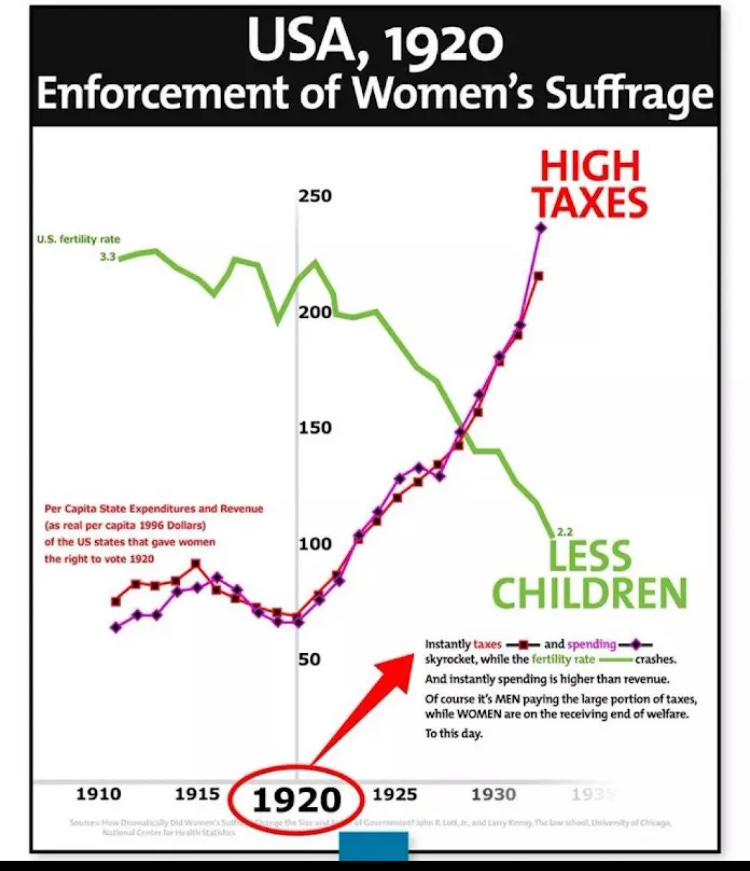
I haven’t verified this data, and I’m not opposed to women’s suffrage (I’m a middle school Civics teacher, after all). But a society in which men had inordinate political power and financial control would look very different than ours. To be clear, ours is the reverse on both counts: women have an extremely inordinate share of political power, and more than 80% of consumer dollars are spent by women. Feminine institutional control probably affects patterns of consumption, academic speech codes, criminal justice sentencing policies, immigration enforcement, entitlement spending, corporate culture, contemporary pedagogy, and many, many more areas of social activity.
All I desire (for now) is an open discussion about these effects and incremental reforms of the most deeply unfair parts of the system.
Child support would be a good place to start.
Thanks for reading. Take care of yourself.

In a society where women are fully empowered to follow their own whims and priorities the fundamental incongruence between liberal democracy and feminization is simply in how women tend to behave together when they gain control. That is, they tend to rule by exclusion based upon whom they agree with. Group consensus is enforced; open debate isn't well tolerated. Opposition to outside challenges are a forgone conclusion because "the truth" will have been a forgone conclusion. Censorship then easily follows. A state of illiberalism; backed by the threat of state violence, is a wholly realistic outcome.
> Can women manufacture the products, or service the machines to do so?
So, this is only a vague pointer, and certainly not a deep dive into the history involved, but... women built a *lot* of the aircraft that the US and the Allies flew in WWII.
So, they're certainly capable of *building* things. I don't know if it would be accurate to say that they can both *design* and build things (statistical outliers notwithstanding) or build the *systems* necessary to design and build things.
I don't disagree with your thesis. I *do* wonder how much of what we've seen is still the inertia of history.