

Two Weeks In
Reflections on Childhood Education and How I Got Here

A collection of my notes concerning my first two weeks of teaching (middle school Civics and a Research class) at a mostly-nonwhite and poor/working-class school and the life currents which brought me here.
Once you’ve returned from the belly of the beast
You’re never quite the same
The school I teach at is full of cheerful, dedicated adults. The administration is (emotionally, less logistically) supportive, and the kids are not bad. I’m legally constrained from writing anything specific or negative about my employer (and I should be vague about exactly who that is) but in this case no self-censorship in necessary. It is a decent school, with motivated adults working there. The problems I see are largely due to culture and technology, which I imagine is the case in every school these days.
When you yell, the kids listen. When you threaten to call parents, they quiet down - at least until the next impulsive outburst or instance of horseplaying or poking. Those things are not to be taken for granted. There are many, many teachers in this country who have no power to remove students. No disciplinary threats move their pupils, and a call home is not just irrelevant but might kind of be an object of longing - that’s how little care and attention they’ve received from their caregiver (who is almost always a mother or a grandmother). These teachers can yell and punish and send kids to offices… without effect. After a few weeks of this, the shouting and scolding is seen for what it is: pleading.
That’s not the case in my school. The kids are rarely openly defiant and they do have some respect for authority (the fact that none are older than early adolescence surely helps). However, it’s still a challenging environment. Most of the students are from immigrant families, and some speak no English at all. Many have warnings in their file regarding custody disputes or DCF decisions. About 70% of my students are black. That shouldn’t be synonymous with behavioral and learning difficulties, but it often is and everyone knows that it is. Nevertheless, it is a joy to teach. I wanted to record my thoughts and reflections, two weeks into my new career.
Exiting the Labyrinth
When I was young I was drawn to transgressive films, music, concepts: smoking, drugs, crime, violence. Those things called out to me in the same ways that reading or travel or the wilderness did and I had difficulty separating the good from the bad. I think that I believed that there was some element of freedom there, some deeper truth that was unavailable in the normal run of suburban life and errands and office jobs. I left West Point after my first year to move to New York City, partly influenced by this misguided idea and alive with the impetuous certainty of youth. I had many adventures and made many twists and turns during the next two decades.
I’m an intelligent person - personable, curious, active - yet my life during the first 30 years (!) was shaped by a series of bad decisions. Looking back on it, I realize that this is because I was employing a flawed model of the world. Like so many other people, I was pursuing the wrong things in the wrong ways. The fact that I have substance use disorder eventually made everything much worse, obviously. These days we tend to think of handicaps (like a disability, or a mental health diagnosis) as obstacles which demand some amount of accommodation and sympathy (and, increasingly, status). Disabilities and diagnoses are certainly obstacles, but this is the reality that modern society endeavors to hide: an obstacle can turn out to be your greatest gift, if you learn from it and take its lessons and let it change you in the way that you need to change. Many obstacles, if confronted in the correct way, can end up creating superpowers. How many ‘marginalized’ people drew strength from their pain and ended up forging new identities from their struggle? Not only would making things easier or softer for these people be superfluous, it would actively erode the benefits of their challenges. In today’s feminized world, we too often see challenge and struggle as bad, and easy success as good. In fact, I believe, it’s almost precisely the opposite.
Keeping all of that in mind, I feel lucky to have been born an addict (and luckier still that I’m now in recovery). My troubles were serious enough that growth was absolutely necessary. The only alternative would have been a quick or slow death. As I ventured into the world I slowly began to realize that there was no freedom to be sought in the places I was looking. Perhaps in the 1930’s or in the 1950’s there were vibrant, urban subcultures, or worlds of outlaws, but those things seem to have disappeared now. The entire landscape of New York City (and, I suspect, many other American and globalist cities) is littered with other haunters of the simulacrum - other people who are looking for spontaneity and authenticity and some element they cannot quite define, which I would call vitality. I’ve never been a career criminal, but I’ve lived and worked with gang members and I been around enough robberies and drug deals to know that this slice of society certainly offers no freedom. The entire subsection is comprised of damaged and impulsive and low-IQ people, and all they care about is money. It’s just my suspicion, but it’s one that’s growing: the meaning is being leached from all of our lives as the natural bonds of family and community weaken. Everyone feels it. We just feel it differently, depending on our circumstances. The only people who are probably blissfully unaware of this trend are those with close-knit and vibrant families and communities around them, but the wider social decay will affect them too, eventually.
You don’t have to be involved in robberies in Washington Heights or be addicted to drugs to understand what I’m saying. Go to any electronic music festival in Nevada or Los Angeles. Go backpacking in Thailand. You will find many young and enthusiastic people, but increasingly you will see people in their thirties, still chasing something that they can’t quite name, slowly realizing that there are only so many thrills to be had on beaches and in clubs and parties. There is nearly half of a generation who seem unable to let the thrills and ideas of youth slip away. I think that’s because our culture prizes youth (and wealth, and beauty, and status) so much. The natural progressions (from playing to dating to marriage to kids, for example) have been interrupted, and many people linger on as perpetual adolescents. They gain wealth and social credit and they have life experiences, but they never really grow up. They haven’t been compelled to seek meaning from deeper and truer sources, and so they linger in the shallows.
By the time I’d realized that the goals and plans of youth were mostly dead ends, I’d stopped caring about clubs and parties and friends and women altogether. By then, all I cared about was drugs: the quickest and most direct route to neural stimulation and to a feeling of transcendence. One of the things we’re encouraged to do in recovery (informally - it’s not one of the Twelve Steps) is to reflect upon what got us into our various cul-de-sacs of desolation. Many people have trauma. They simply love the feeling of pain leaving their body. Many more have social anxiety, and they immediately gravitate towards the chemical comfort and confidence of drugs or alcohol. I had neither, and so I haven’t been able to come up with a neat answer to the question. I can honestly say that I don’t know for sure, but I can say with equal honesty that I suspect that it had something to do with an element of magic in life. If this sounds incoherent to you, then perhaps we just have very different personalities and outlooks. I understand that this might be nonsense as well - that it might be a way to romanticize my drug addiction and make it sound more interesting than it was. But I truly do think that wandering the streets of Harlem or riding my bike back to my little apartment in Tucson felt more enchanted and real when drugs were added. The feeling that always brought me back to relapse wasn’t depression or anxiety - it was boredom. As the initial challenges of withdrawal and administrative tidying up and renourishing my body began to fade, I was struck, again and again, by the flat and drab aspect of reality. Drugs were my way of reenchanting my world.
During my use, as I slipped into unconsciousness, I would entertain ideas about some future career, or some great love, or days spent writing and travelling, but these possibilities were growing more distant by the day. I had as little a chance of participating in them as a television viewer had of mingling with the characters of Baywatch, or of tracking down criminals in Manhattan. They were pleasant fictions which I nursed to ease the pain of an increasingly ugly and bare reality.
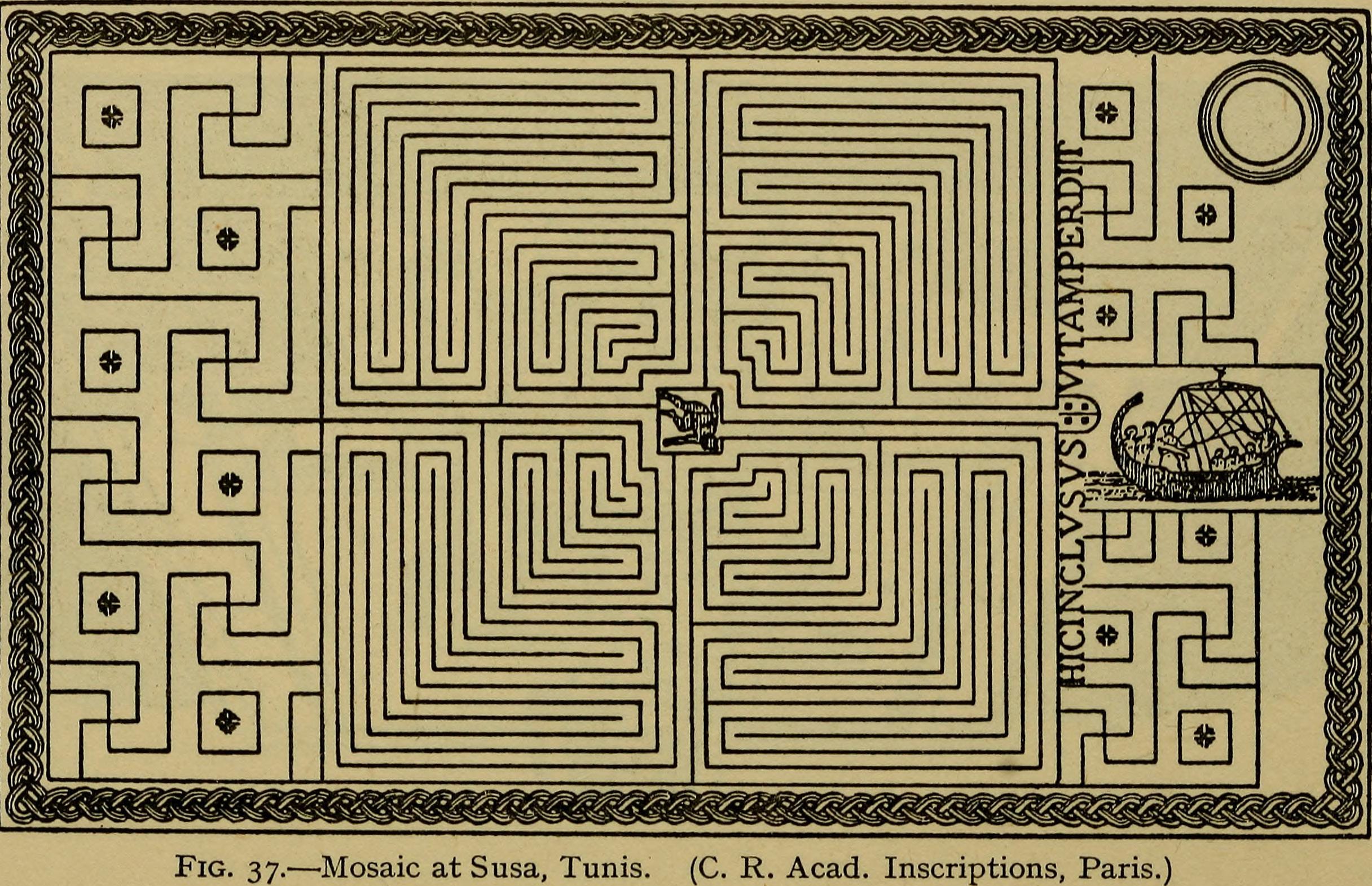
The labyrinth is the Jungian formulation of the place I was in - the place that many, many modern people find themselves in, herded and misguided by the pressures and values of modernity. I had ended up in a maze of impulses and ideas which were leading me farther and farther from where I wanted to be and where I knew I should be. When I would turn back towards a direction which felt right (and which was consistent with the norms I’d been raised around) everything felt wrong. You can run on for a long time, as the song says. You can fight your impulses and beliefs and your shadow self for months or even years, but you can’t fight it forever without losing. Those inhabitants of the modern world who feel trapped, who feel deeply unfulfilled or are locked in a toxic loop of behavior, are in their own labyrinths. These are the times when growth and perspective are required. The conventional advice would probably be to seek therapy… but many therapists are trapped in their own labyrinths. The sad truth is that our culture doesn’t have a ready-made answer to find one’s way out of such psychic places. There’s a lot of pressure to chase status and money and to deprioritize personal connections and duty and the intangible goods of social life (integrity, curiosity, self-reliance and resilience). I suspect that more people are finding themselves deeply enmeshed in labyrinths than ever before.
In my case, exiting the labyrinth required growth in a number of directions. One of the main ones was formulating a completely new understanding of the blessings of life. I’d always loved my family, of course, and I’d had friends, but sobriety and its lessons really helped me to begin to understand the deeper meaning of these relationships. I became motivated to reach out to people I’d mostly neglected for years. I also came to learn the value of service.
It is these lessons and ideas, and a dozen other things that I feel that life has taught me, which gradually compelled me to consider teaching. When I regard the public (and charter) educational complex, I perceive a bureaucratized and feminized superorganism. I see a source of lucrative sinecures for some, and grinding difficult jobs for more, all bound by rules and goals which never seem to yield the desired result. The results seem to slowly degenerate, the administrators seem to proliferate, the rules and requirements become more intricate. I’ve written elsewhere that two of the areas that anti-progressives should focus on are therapy/mental healthcare and childhood education. The former will be important if we are to reconstruct a cultural system of meaning and value (which I believe can draw nourishment and inspiration from Jungian ideas), and the latter will be essential for socializing children with adaptive values and ideas. In most places now, conservatives (of any definition) have yielded the field to progressives and critical theorists… and then they complain about indoctrination and safetyism and psychological fragility in our schools. It occurred to me that I was older, educated, without a real career - and I love kids. Perhaps this path forward wasn’t ‘meant to be’ for me, but it sometimes feels as if it was, and I think that’s it’s often good to think and behave as if it is. I’m not sure what kind of good I can do teaching middle schoolers, but every job offers opportunities to improve the world and teaching involves many more opportunities than most.
Spiritual Extroversion
Much of my life has been a series of personal encounters with the spiritual poverty of contemporary Western civilization. Our cultural template has become a bleak and shallow thing. Kindness still means something, courage is still admired, and family and community remain central to millions of people. However, the driving force behind our lives and the motivating factors for our biggest decisions (in a very real sense, our deepest cultural values) often revolve around career, paycheck, consumption, status, artifice, and (increasingly) a kind of digital narcissism. The importance of compassion and the value of bravery are never openly derided. In a sense it’s worse than that. We pay lip service to these values, and then pursue our selfish aims, careful never to endanger our incomes or reputation. Think of all of the thousands and thousands of professionals involved with censoring and ridiculing COVID policy skeptics (who were eventually vindicated), or the professionals involved in the gender transitions of minors. Many of them (perhaps most) are simply midwitted conformists - they buy the party line due to a lack of independent thought or curiosity. But surely a good number of them had doubts… and said nothing. Or they actively worked to suppress damaging information and persecute colleagues and keep the Blob’s moving parts operating smoothly and quickly. Of course they told themselves some story about what they were doing, and the diffusion of responsibility is a central feature of modern bureaucratic organizations. Still the fact remains: almost NONE of them spoke up or chose to vouch for their colleagues or join public conversations about the issues. They used their degrees and credentials as a meal ticket, and as a shield. They even used them as weapons against doubters and questioning peers. They used them as bludgeons against the truth.
If we’re going to arrest the decline of our culture, surely teaching children will be an essential element in this project.
For every one of these social issues, we see the same pattern. A few brave souls might raise their voices, but far, far more choose the path of conformity and safety and cowardice. How many college administrators have admitted to racially discriminating against the millions upon millions of college applicants? How many nonprofit or government employees came forward when the federal government began colluding with tech companies to censor and deplatform private citizens? How many whistle blowers have chosen to shine a light on election manipulation or the sinister revamping of prosecutorial policies and laws in our big cities? Basically none. Not only is this an exceedingly rare choice, it’s one that seems downright insane to the people within these systems. These people use values like ‘truth’ and ‘public trust’ in the same shallow and disingenuous way that our culture talks about the importance of ‘education’ or ‘family.’ They’re nice ideas (and certainly pleasanter to discuss than mercenary ambition or secret greed) but everyone knows that the real energy lies elsewhere. In my opinion this kind of mass hypocrisy (especially among the elites, who should be raised and trained to internalize some sense of honor and public duty) is a symptom of a dying culture. If the only thing that matters is personal wealth and social acclaim, then the weak and the vulnerable do not matter. One could see the progressive approach to immigration or policing (in which massive social difficulties were essentially offloaded onto poor and working class communities to gain profit and psychological gratification for more well-positioned citizens) in this way: the weak do not matter to professionals. At least they matter far less than the professionals’ jobs and status markers. If this sounds dubious to you, then tell me: when has a professional endangered his or her own job or reputation in order to protect poorer citizens? After all, the bureaucracy attends to millions of people in dozens of different ways: education, healthcare, housing, safety, etc. Surely there have been many instances when those bureaucracies are not serving the interests of their charges? Corruption or predation or manipulation or simple incompetence? How many school administrators have spoken out about their failing schools in Baltimore or Chicago? How many hospital administrators or public health experts have risked their own incomes or reputations in order to take a stand against bureaucratic dysfunction or overreach? I don’t know of any. It’s very easy to criticize funding cuts (which threatens the professionals’ bread and butter) or Trump’s policies (for such criticisms earn nothing but status bonuses in their world) but when has a professional taken an unpopular stand on behalf of their patients or students or clients? When you begin to consider this question you must wonder how bad the system must get before people would begin to do the right thing. I suspect that as long as people aren’t being killed outright (unless through negligence or incompetence, of course) our social structures could become much more toxic and harmful… and no one would say a thing. What does ‘doing the right thing’ even mean in such a society?
I learned that service to others was essential in the recoveries of the men I admired, and I learned that a kind of spiritual extraversion would be necessary for mine. Our culture teaches people to obsess over their happiness (and ‘vibes’, and dreams and hopes and affirmations and validation) and to constantly endeavor to improve their subjective experience. There are products galore to improve self image and focus and sleep and relaxation and stress and energy. These things generate a lot of money for corporations, after all. Rarely do I hear the inverse claim made: if you want to be happier, you should focus on others. In my experience this is a surer path to happiness (and good sleep, and comfort, and motivation, etc.) but it isn’t profitable for companies, and so it’s ignored.
If focusing on others is important for society and for personal fulfillment, and if putting oneself out there in a real and committed way will help reform these bureaucratic organizations, I thought, then maybe I should do these things. I know how to write and speak and lead. Perhaps I could become a teacher.
Putting the Pieces Together
After I came to Florida for rehab I still had a lot to learn. I didn’t get sober right away (far from it) and I had years of struggle and physical labor and legal issues and personal disappointment ahead of me. Throughout that whole period, things began to gel for me. I finally internalized the importance of the people I love in my life. I changed my mindset, and ceased striving for advantage and ease. Instead, I began to seek to do the right thing (in fits and starts at first, and more as time passed). I began to write, and do Brazilian Jiu-Jitsu, and became very active in recovery programs. I slowly realized the truth about our culture, being sensitized to indicators of addiction and seeing them flashing all around me. I began to develop my ideas about cultural values and bureaucratic dysfunction as I watched the operations of schools and police departments and universities and agencies in 2020 and thereafter. I was a law school student up north before I was shipped down to the Gold Coast. I realized that, for myself, pursuing mere wealth and status wouldn’t yield much. If I focused only on myself I would end up back in my labyrinth and perhaps, this time, deeper within. I realized that my life would have to be at least somewhat devoted to others, and that my own personal values would be: resilience, curiosity, and integrity. Rather than empty sentiments, these would have to become my watchwords. That meant that if there was a choice between money or status and integrity I would have to choose the latter.
And what kind of work would I be doing, as I began to grow into my new self-conception? I was drawn to therapy (despite its frequent misguidedness and its indulgence of narcissism and self-absorption, it helped me and many others), and looked into getting my Masters of Social Work (MSW) degree. For a long time it was a struggle simply to pay my bills. One of my chief sources of frustration with professional cowards is that the stakes for their struggles are actually quite low. Getting fired shouldn’t be nearly so frightening when you own a house. Losing a job should be a less unpleasant prospect when you have a valuable degree, or a glittering curriculum vitae. Being ostracized shouldn’t be such a mortally wounding experience in the age of social media, when you can simply move or find a new workplace. It’s as if, as people have become more comfortable and successful, their fear of difficulty and failure have increased apace. A system which should allow professionals to be brave and resilient and original has instead bred a race of people terrified of any hint of poverty or stigma. I wish I could teach these people that poverty isn’t so bad. Living in your car or on a friend’s couch won’t kill you. Even crushing debt or arrest or termination are obstacles can be steadily overcome, if you make good decisions. The stakes are certainly much lower than they were for our ancestors.
Sometimes I suspect that the progressive narratives about the poor (that they’re essentially victims of some phantasmagorical forces of oppression and marginalization, rather than just normal and subnormal people who’ve made bad choices or waste their money or aren’t ambitious or acquisitive) stem from a failure of empathy. Professionals cannot imagine a class of people who would be content to live in Section 8 housing and send their kids to disastrous schools willingly, if there were realistic paths out of those situations, and so they imagine that there must be some crushing external forces keeping the underclass where they are. Those forces are never precisely described, which makes sense. They don’t really exist, at least not in the ways or to the extents that progressives believe. Learning the truth about poverty and failure and self-improvement has given me a kind of deep contempt for the progressive narratives which relate to them. They are empty and bankrupt. No one talks about systemic discrimination or hiring preferences in the rooms of recovery. When people are earnestly trying to improve their situation, all of that talk falls immediately by the wayside.
I spent about a year paying off catastrophic and foolish short-term loans, and stabilizing my credit. During this time I had almost no money to spend on myself. I often went a week or two without buying much of anything. I spent another year consolidating my credit card debt and habituating myself to a sober budget. As my sobriety became more apparent and credible, family and friends began to help me when I needed it. Humans aren’t meant to struggle or subsist alone, and so many of the difficulties of the modern world are made much more so by the atomization and loneliness of modern people. If our families were stronger, if the old lived with the young, if communities were close-knit and functional, if mutual aid between working adults was more common - if all of these things were the case we would barely need the messy and wasteful superstructure of entitlements and safety nets that now constrict our country. But if they weren’t needed the bureaucracy would find itself much less healthy, and professionals would find themselves with much less to do and spend and administer. What a disaster that would be.
During this entire time, I worked. I had been an executive assistant for a large alcohol distributor (a job I’d gotten during a dark period and which probably saved me) and then I served as an assistant editor for two small magazines associated with a prison reform nonprofit. I applied for credentials as a teacher in Florida (a ‘statement of eligibility’ - SOE - it’s called here), which was made easier by a state program that aimed to get veterans and first responders into the classroom (I’m a combat veteran, but that’s a story for another day). On the basis of a bachelor’s degree, for which I studied political science and economics, I gained my temporary credentials and began to look for teaching jobs.
I have tutored students for years. I’ve served as a writing coach and test prep resource and college essay editor (on a freelance basis) but I’d never stood before a classroom. Now I have, and I enjoy the experience. It’s different than I expected, but no less challenging or thrilling. The thing about teaching for me is that it really is about the teaching. By that I mean that I have become deeply invested in the students learning what I teach them in a few short weeks. If I worked at a private school or taught the children or the wealthy or was employed at some swanky preparatory academy I might find better learners (or at least quieter and more attentive ones). I probably wouldn’t get notices from DCF, or have students missing the entire first week of class (although I suspect that the children of the wealthy bring their own unique psychological challenges to the table - another symptom of a sick society). But that wouldn’t make me any more invested in teaching. It’s not that I want my students to be brilliant or verbose or analytical. I want them to learn. Wherever they’re starting, whatever their capabilities, I want them to grow and transcend their old ideas and habits. I want to teach them. When they seem to be learning, or coming to life, or I sense some small ignition of curiosity, the feeling is deeply satisfying for me. It’s enough to justify all of the worksheets and stresses and instigating and pointless meetings.
Final Reflections
I have written on this platform from time to time about events in my life, or outlooks, or challenges. Mostly I write about politics and culture (and film and history, etc.) but I find that from time to time I must write something about where I am in life. It’s more than catharsis. It’s a kind of mental release, and it must be let out before I can return to the affairs of the country and the world.
I’m a middle school teacher. I teach Civics and Research (in two weeks we’ve gone over AI and graphs and some social science data), which just so happen to be the two things I probably enjoy teaching most, and the two things which I believe are most important to imprint upon children of their age. Research is a class without any guidance or content whatsoever - it’s mine to do whatever I like with (due more to unconcern and busyness on the part of the higher ups, and less to some faith in my lesson-planning abilities). So far, I have focused on AI, logical fallacies, basic graph and chart reading, and scientific notations in the past two weeks. My students seem to enjoy it, although they’re not sure what to make of it, or of me. I don’t tell them that I’m almost as confused as they are, and I never admit to being a first-year teacher.
My students are loud and often unruly and seem very deficient in terms of writing ability and functional reading comprehension (although I’ve heard that even incoming Columbia University freshman make this impression, so this might be a generational attribute contributed to by the ubiquity of smartphones). They have been mostly immunized from some of the worst behavioral and social pathologies evident in many African-American communities because they come from large and active families (something like 40% are Haitian-American). The first two weeks have been a dynamic and exhausting process of getting to know them and establishing our mutual arrangements for the classroom. I have my rules and expectations and seating charts but if I press too hard I might lose control altogether. The work requires a fair amount of yelling, but it rarely pays to appear angry. Every morning I arrive about 90 minutes early to school, and I stay afterwards for about an hour, helping kids get to their cars and calling parents regarding the day’s events. I teach about 100 students, in 6 classes (most of them are in both my Civics and my Research class). My main goal is to instruct them in the political traditions and governmental dynamics of the United States, which I have openly told them is (in my opinion) the best and most interesting country in human history. I have much more to say about classroom dynamics and the byzantine hiring process for public school teachers and the insidious psychological culture of validation and safetyism, but I am happy to report that I have so far mostly only caught small glimpses of these things. My students say the Pledge of Allegiance every morning. Then we get to work.
I think the hardest thing about teaching, you will find, is that different styles suit (work for) different kids. It is particularly hard to be effective with both boys and girls. As a very troublesome (not in the least troubled!) boy and young man I remember getting a one-word report card from the Ecole Bilingue in Paris calling me a "Volcano". It was a very progressive and caring school that I am sure suited young girls perfectly. My parents yanked me and put me in the all-boys Ecoile Blaise Pascal which was for smart, annoying, what we now call ADHD kids. Those teachers (all old-school French women) took no prisoners. But when you you showed any sign of really paying attention the small rewards seemed immense. Anyway, I prospered more in those two years--5th and 6th grade than I ever would again in school. Interestingly, we had many Haitian boys--offspring of the Duvalier gang! Nobody gave a crap that they were black or rich. Oui, Madame, Non, Madame.
I am amazed. It is as if you've lived several lives. My life doesn't exactly parallel yours; but, as a young idealistic hippie, all I wanted to do was to help people. I decided to become a psychologist. In my senior year, my best friend died because he had long hair and no insurance. It was such a shock to lose a friend at that age that I neglected to renew my college health insurance. Four days after the policy lapsed, my wife's kidneys failed and I became thousands of dollars in debt. I settled for being a State Social Worker and, after 30 years, I wish I had remained a printer's helper and apprentice. That was the only job I ever had that I could see from start-to-finish (I'd also worked at a big post office) and actually see results.
Congratulations on your successes.