

We're Getting Weaker (Part 1)
And We're in Denial

This is Part 1 of my essay about the declining levels of discipline and accountability in our society, and how they’re related to social status and manipulation and feminization. In Part 2 I will focus my lens on the upper class, where issues like obesity and financial irresponsibility are mostly replaced by neurosis, victimhood mentalities, and a kind of modern condition of fragility, characterized by depression and anxiety and an obsessive focus on one’s one thoughts and feelings and attitudes. These have all replaced the ethic of personal responsibility and the usefulness (and beauty) of self-improvement.
I suspect that we are slowly weakening, softening, fraying. I look around and I see tendrils of self indulgence and corruption and normative slippage everywhere.
This isn’t surprising. We live comfortable lives - unimaginably comfortable by the standards of even a century ago (when people lived much more comfortable lives than their distant ancestors). Even the poor among us can afford to live rich, gluttonous, idle lives. Even the lazy can own homes that exceed Bronze Age palaces. Distraction and consumption and convenience is all around us, and serious suffering and loss has receded. Of course we would become weaker.
But I don’t think that’s the whole of it. As we’ve become weaker (and I will describe what I mean by that in greater detail shortly) we have come to embrace self-serving, unrealistic, sympathy-gaining ideas about challenge and suffering and disadvantage. The norms which bound us and kept us connected to one another, and to the daily reality of human suffering, have slipped, and there’s no longer any individual incentive to question any claim of disability or trauma or handicap or victimhood. As the opportunities for this kind of narrative-building have opened up, and the limitations on them have weakened, the incentives to embrace them have increased commensurately.
There’s an innate value - a kind of quiet, instantly perceptible dignity - in bearing up under the weight of the world. It’s undeniable, immediately apparent, and it gains respect. But it’s also difficult to execute. It’s much easier to pretend to be disadvantaged in some way, to be unable to confront the challenges of life but deserving of the rewards anyway (the rewards that should naturally accrue to the hardest workers and the most diligent investors and the most frugal savers and the most powerful minds and the most enduring bodies). That pretense is blooming across our culture, like a fungus.

The Weakness
Every school is different. Hell, every class is different, so I would never generalize my observations to every classroom in America. Yet my personal observations, plus the data I come across as I peruse social science, plus the anecdotes I read from other teachers on Reddit are all disturbing.
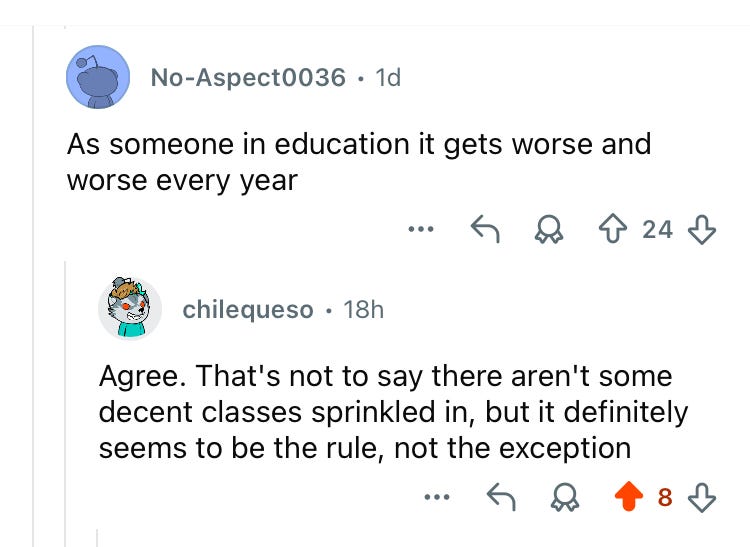
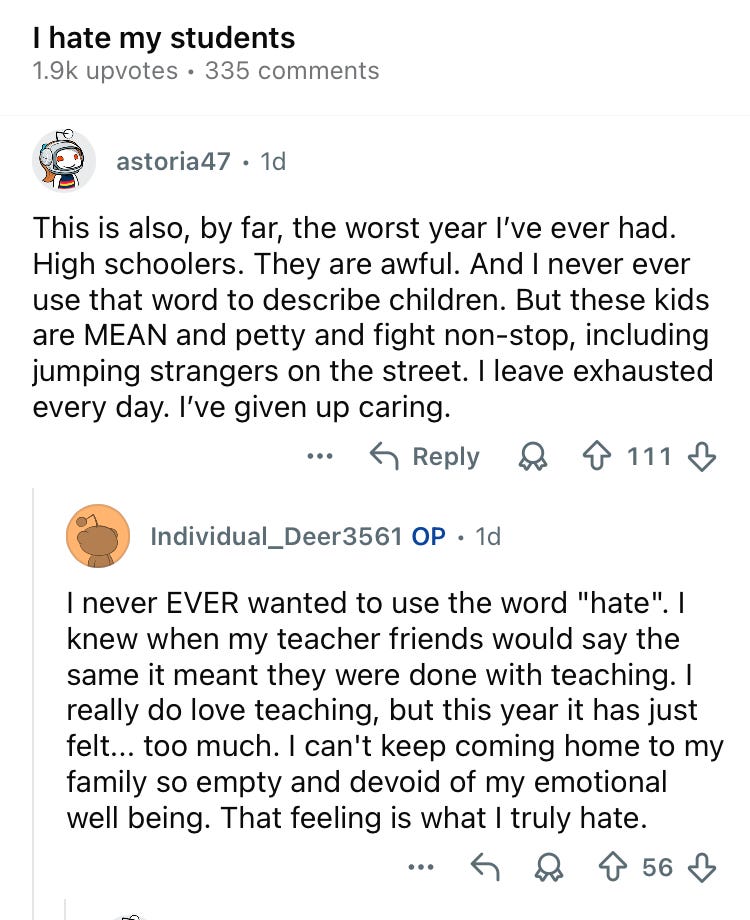
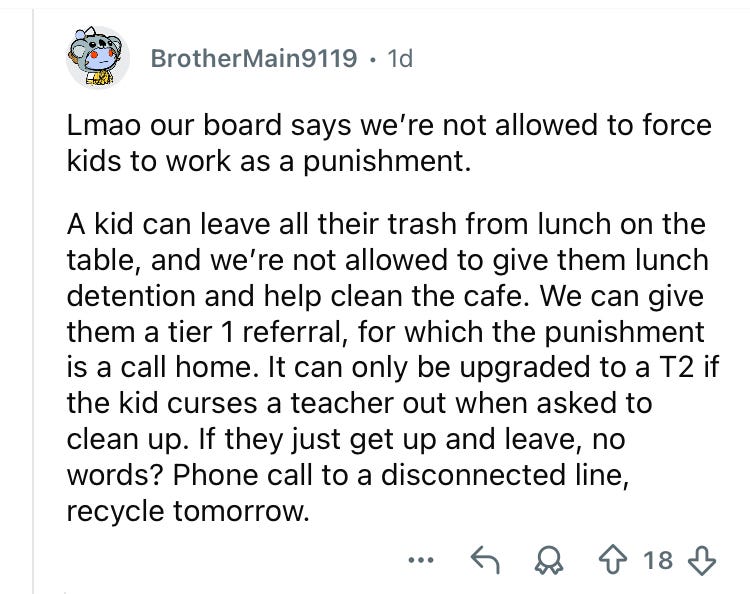
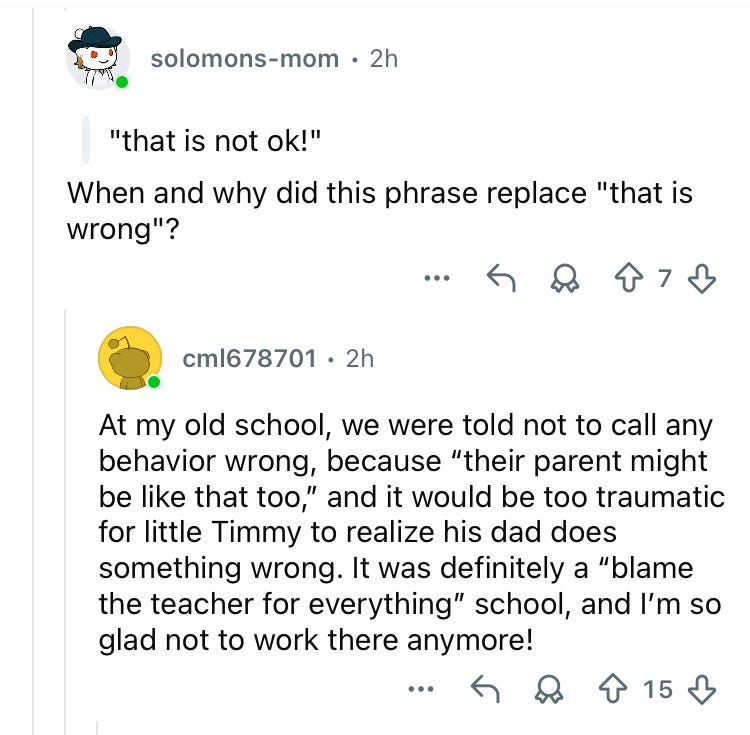
I’m a middle school Civics teacher (and I teach 3 Research blocks) and I must admit that the plague of cheating and total illiteracy and serious behavioral difficulties that I read about (assaults on students and staff, extreme and repeated verbal disrespect, threats of serious violence - all remaining unpunished due to new administrative priorities which I will cover in more detail in Part 2) aren’t really a part of my daily reality. They’re huge problems in many public school systems, which are now often less focused on educating students, and more focused on gobbling up resources and protecting staff from termination and accountability.


Yes, my students are shockingly bad at critical thinking. Yes, their ambient level of world knowledge (What was the Civil War? Who was Thomas Jefferson? What’s the biggest continent in the world? Can you point to the Amazon River or Africa or Australia on a map?) is much less than I would have expected. Yes, they are generally poor readers and they hate to write.
But they’re nearly all immigrant kids and they are the youngest active members of the smartphone generation. It seems that the generational declines in literacy and critical thinking might be civilization-wide. My worries lie in different directions. I worry about the parents driving luxurious SUV’s whose children are receiving food assistance at school and who live in Section 8 housing. I worry about the girls who are already eagerly seeking the attention of boys in a culture where the only guardrail that exists is their conservative Haitian parents; this is the parental role of course, but should it really be the case that barely-teenaged girls should be tossed into a sea of promiscuity and feminist messaging… while their male counterparts (who they’re mostly supremely uninterested in, as 13-year old girls usually for 13-year old boys) begin to consume material which focuses on self-improvement but also begins to fill them with ideas that are cynical about and suspicious of feminine tendencies? I worry about the lifestyles of my students. Yes - they’re active and they love to play outside (barely a day passes where they don’t beg me to take them out to the athletic fields) but they also go home and spend 8 hours scrolling on TikTok. They stay up late. They arrive to school exhausted and irritable. Much of this is simply the predictable results of an isolated, digital existence. It’s unremarkable at this point (which is probably an indication of how far we’ve travelled in 20 years)… but there’s more. My students don’t understand the value of doing difficult, exacting, boring things. And the educational system has seemingly deleted all of its source code that used to relate to these lessons, that used to be designed to teach these lessons. Today, education is all about fun: engagement, games, tablets, screens, cartoon figures and colorful backgrounds and rewards confetti and candy and pizza parties. We treat middle (and high) schoolers as if they’re small children, as if we must trick them into learning, or distract them with novelty and excitement while we smuggle bits of information into their diet. We do this partly because it’s easier for teachers. But I also think that for many teachers and administrators the value of discipline is vague and unfamiliar, because they aren’t applying it in their lives. More and more of us, it seems, are not. The idea that kids should be made to write for hours, or to look up difficult and obscure information in books, or should be rigorously tested in moderately difficult mathematics - and the reality that all of these challenges have an inherent benefit in growth and discipline - has completely disappeared.
I’m trying to paint a picture here. My students don’t just struggle to learn scientific notation or write paragraphs (there’s truly nothing they hate more than writing). They bring copious amounts of snack food into school - chips and candy and gum, far more than I remember from my own school days. They’re distractable. They’re impulsive. They’re unbelievably, indescribably messy (leaving trash everywhere and losing notebooks at a rate that I’ve calculated at about 5-10% per week). They’re much more likely to cheat, and they’re less orderly as students than the kids at any K-12 school I attended (and I attended 7 altogether, I think). But all of these qualities are reflections of their parents, and of their teachers. I believe that spirituality and pain and struggle can all be vectors for personal growth, and I see little evidence of that kind of growth as I look around at American society. Everyone wants to maximize their earnings… even if that means consuming generous government benefits. Everyone wants to get the most and best medical care possible for the insurance premiums they’re paying. Everyone wants health and beauty but few want to work for them, even if ‘work’ just means to strictly reduce one’s consumption of sugar and processed foods. Everyone wants accommodations for testing and social status and comfort and protection from accountability.
These incentives - these social drives - are in all of us. They’re part of human nature, and they’ve only been sharpened by a culture which actively teaches us that money and career and status are more important than community or family ties or honor (When was the last time you heard of a man choosing honor over career? When was the last time you recall our culture encouraging this… or even referring to honor?). The urges aren’t new, but they’re uniquely potent and active in a culture which allows so many people to gorge themselves, to wallow in sloth and distraction, to live at the expense of taxpayers, to pretend to be leaders or academics or winners when they’re really just creatures of the bureaucracy wearing a poorly-fitting skin and playing a role. If you can’t buy food the government will buy it for you - thousands of dollars of snacks and pasta and soda and ice cream. If you overindulge and blow out your pancreas the medical system will kick into gear, arranging specialists visits and tests and prescribing medications. If you fail to take the dietary advice (offered more as an afterthought - the medical system doesn’t want you to be healthy or to heal; it wants you to be chronically ill for as many years as possible while generating money for it) or miss your medications, surgeries will be arranged. Surgeons trained at the cost of hundreds of thousands of dollars will lovingly slice off little parts of your toes or lengths of fingers or even entire feet, and the government is very likely to pay for this too (plus the follow-up visits and - of course - an ever longer list of medications). Therapy exists if you struggle with depression or anxiety (although we’re therapizing more and more, and depression and anxiety don’t seem to be moving in the right direction). Through it all you can order DoorDash and distract yourself every day. You’re likely to be entitled to take months of paid leave from your job (if you have one… many people live directly off of the labor of others through child support or alimony or lawsuits or government transfers). You’re free to indulge in gluttony or parasitism or promiscuity or laziness or antisocial behavior without any fear of judgment.
The Loopholes
As I said, none of this is particularly surprising. We have a culture where ease and comfort are at unprecedented levels, and where the administrative state actively redistributes resources (supposedly to address social problems, more often simply to generate activity for itself and to create client groups which will become lifetime dependents). Communities are phantoms of their former selves. I’m not just talking about the small-town America of the prewar years, or even the uniform, child-filled suburbs of the 1950’s. Jane Jacobs, in her Death and Life of Great American Cities, punctured the 20th-century progressive orthodoxies of urban planning (which were based, as are all progressive orthodoxies, on a simplification or reality, a denial of complicating factors, and a utopian and meddling impulse to forcefully reorder society based upon a mental scheme which didn’t fully reflect reality). She describes the cities of the 1930’s and 1940’s, full of working class (itself an anachronism, as this point) neighborhoods with watchful parents and crowds of active, independent children, and friendly shopkeepers. Such cities no longer exist.
A city street equipped to handle strangers, and to make a safety asset, in itself, our of the presence of strangers, as the streets of successful city neighborhoods always do, must have three main qualities:
First, there must be a clear demarcation between what is public space and what is private space. Public and private spaces cannot ooze into each other as they do typically in suburban settings or in projects.
Second, there must be eyes upon the street, eyes belonging to those we might call the natural proprietors of the street. The buildings on a street equipped to handle strangers and to insure the safety of both residents and strangers, must be oriented to the street. They cannot turn their backs or blank sides on it and leave it blind.
And third, the sidewalk must have users on it fairly continuously, both to add to the number of effective eyes on the street and to induce the people in buildings along the street to watch the sidewalks in sufficient numbers. Nobody enjoys sitting on a stoop or looking out a window at an empty street. Almost nobody does such a thing. Large numbers of people entertain themselves, off and on, by watching street activity.
When you read more of Jacobs, you begin to understand why her vision has faded into the historical background, and why her priorities aren’t reflected in the plans of modern policymakers. She valued not just organic communities and families, but responsibility and trust.
The first fundamental of successful city life: People must take a modicum of responsibility for each other even if they have no ties to each other. This is a lesson no one learns by being told. It is learned from the experience of having other people without ties of kinship or close friendship or formal responsibility to you take a modicum of responsibility for you.
Responsibility and kinship and trust aren’t just less important than they used to be - they’re actively corrosive to the larger aims of the administrative state (which is now inextricably linked to large corporations and universities and legacy media outlets… we call it ‘the Blob’). As communities have changed and weakened and died, the old standards of behavior which were upheld by them haven’t vanished, exactly, but they’re much weaker versions of their former selves. There simply is not the same social or reputational penalty for being lazy or rude or promiscuous or antisocial or gluttonous. I suspect it’s a public goods problem: the benefit for any single person to uphold norms (to express disapproval or to penalize a person socially) is less. This certainly applies for people expressing doubt about claims of victimhood or disability (which we’ll get to shortly). We live in larger systems, more anonymous, more technologized, and so no one feels any personal urge to uphold community standards. To try would make you an oddity, a “hater”, uptight.
Character flaws and bad habits don’t hurt the community as they would have because there is no community. And it doesn’t hurt the fabric of modern society, because modern society is predicated upon the maintenance of a complicated series of entitlements and benefits and transfers, which aren’t earned in the old way but which are instead bequeathed by the administrative state. This structure wants people to need it, and so it wants people to be weak.
In this gap, this vanishing and liminal cultural space created by the disappearance of the values of discipline and self-control and honor and interpersonal trust (which is still alive, but exists in a different form), a new and much more malignant cultural development has grown up: the social loophole.
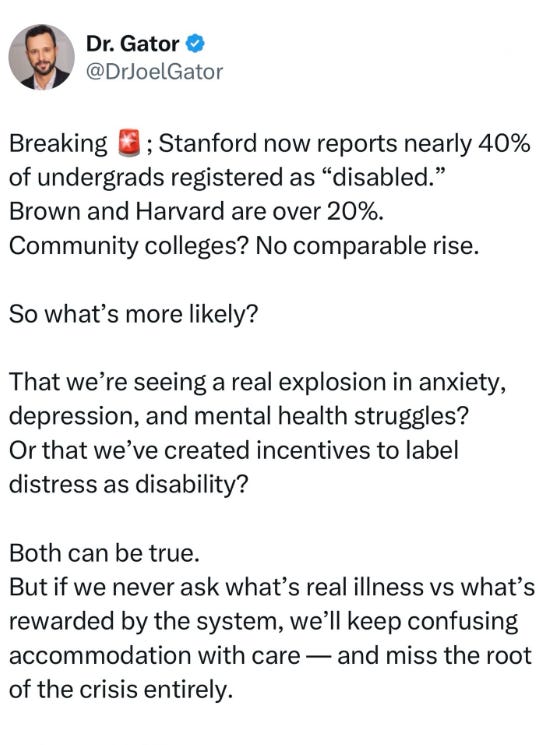
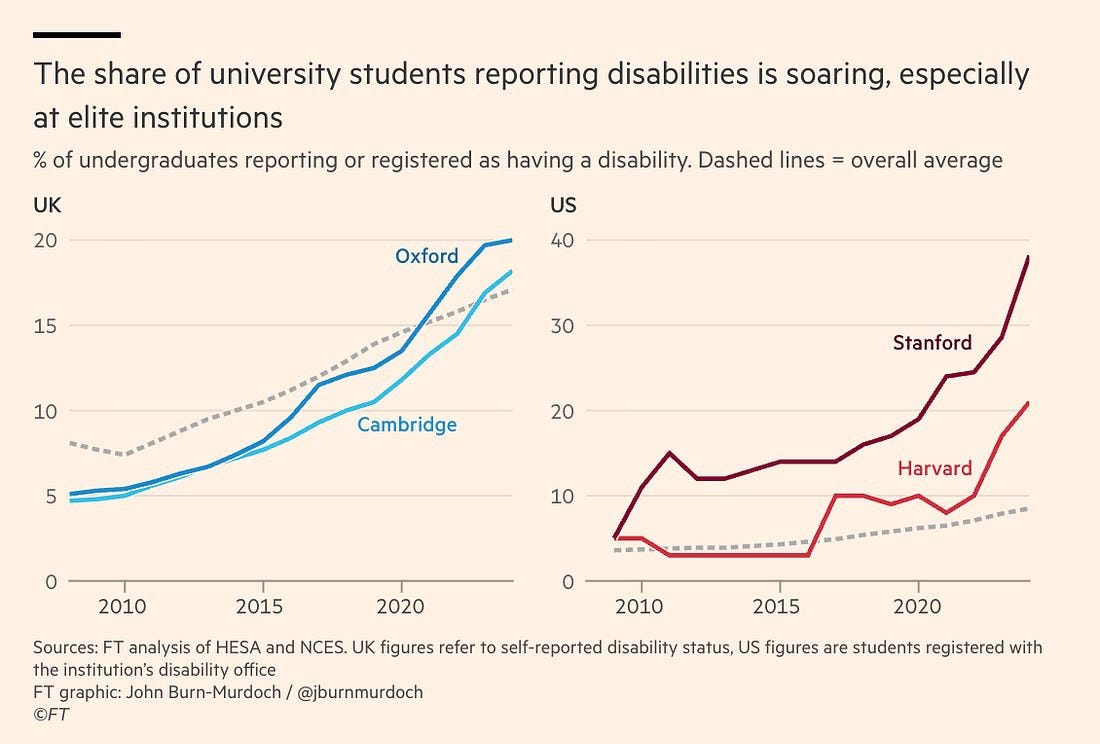
Some loopholes are straightforward (if cynical): students will claim to be disabled in order to gain more time on tests. Academics will claim to be indigenous in order to gain tenure or grants or professional credibility that they otherwise would be denied (the so-called ‘Pretendian’ phenomenon).
Part II of this essay will focus on the symptoms of personal and ethical weakening among the upper classes, where status-seeking, neuroticism, and hypocritical references to ‘privilege’ are much more common.
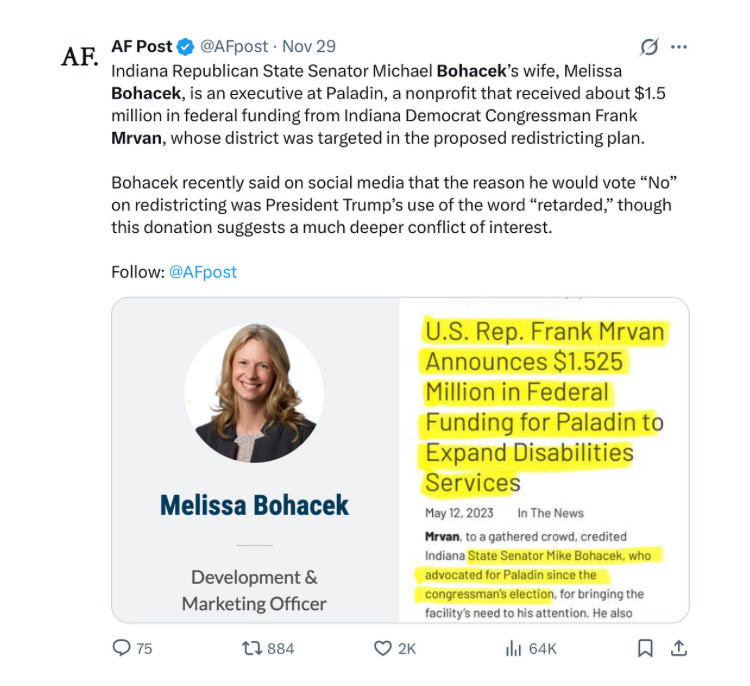
So: this individual possibly used manufactured (or exaggerated) offense about a term that President Trump said in order to conceal moves which had more to do with wealth and power. Whether or not this is true, this kind of maneuver is frighteningly common today.
It’s important to acknowledge: people are driven by status. In many contexts, status is their primary goal. And status is largely invisible - it is rarely acknowledged or named.
Most of the social loopholes that are extant in our culture have less to do with wealth or testing accommodations or promotions, and are instead disingenuous moves to gain power - by discrediting opponents or competitors, positioning oneself as a victim or as a champion of some disadvantaged group, or by claiming some harm or pathology or disadvantage (trauma, disability, offense, psychological symptoms, the subjective feeling of threat). These are much more consistent with female social strategies, and so they have become closely related with both feminine behaviors and with feminized organizations. As society has become more feminized and bureaucratic, and feelings have become both important and unquestionable (several generations ago they were completely irrelevant - no one even brought them up) the opportunities for this kind of manipulation has grown apace.
As the brilliant Nathalie Martinek PhD writes:
Narcissism is commonly imagined as a loud, domineering personality style, marked by grandiosity, entitlement, and overt self-aggrandisement. Because this caricature aligns more closely with male presentations, it has fostered the impression that narcissism is primarily a male pathology. Clinically, this is misleading. Narcissism is not defined by volume or dominance, but by the pursuit of unearned status: admiration, exemption, and moral authority acquired without the contribution that would ordinarily justify them.
In women, the same psychological structure often takes a different and more socially palatable form. Higher baseline neuroticism, combined with a cultural environment that rewards vulnerability, emotional expressiveness, and claims of injury, produces a narcissistic style that does not assert superiority but suffers its way into it. They no longer need to say, “I am better.” They simply say, “I am more affected.”
When status is awarded through displays of psychological injury and performative empathy, this form of narcissism acquires a powerful strategic payoff. The route to elevation no longer runs through competence or achievement, but through being the most visibly impacted. It allows one to win without competing, to appear morally elevated while accumulating the same exemptions, deference, and admiration pursued by grandiose narcissists, without the corresponding risk of exposure.
The interactions between these layered social designs and ideology have become so thick and entangled that it is often difficult to discern where feminine narcissism ends and progressive ideology begins.

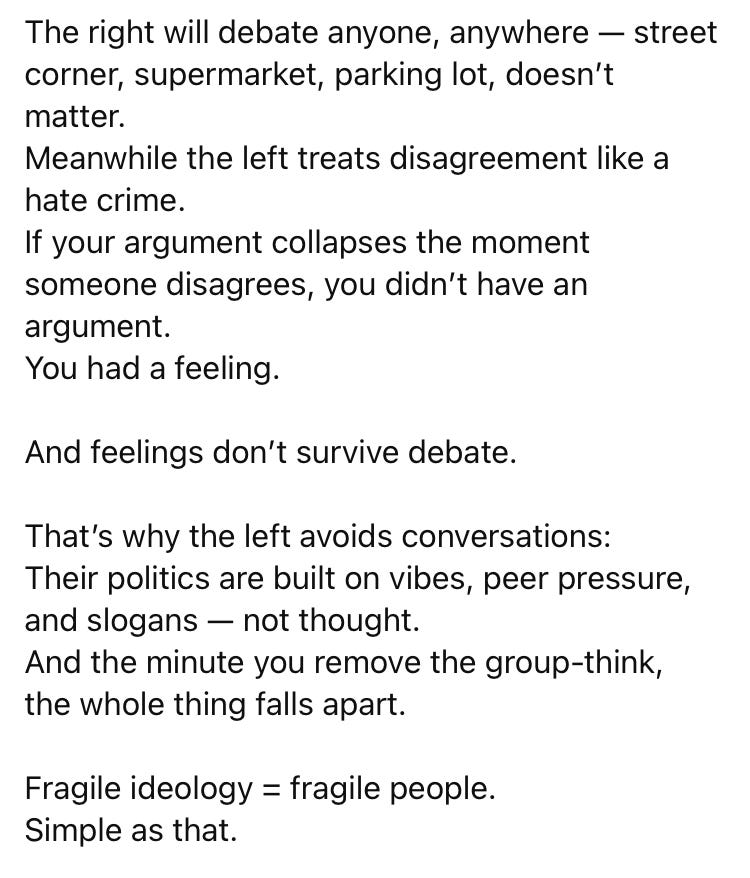
It’s important to note that this reality doesn’t necessarily mean that progressive ideas are worthless, or that all progressive activism is psychological pathology. That’s obviously not true.
But the people who refuse to admit the existence and primacy of status, and who refuse to acknowledge that the establishment of victim groups provides many juicy opportunities for Machiavellian and vulnerable narcissist operators, are feeding into a dynamic which continues to warp our social reality. For example, racism can be understood as a real issue. But when black people who’ve suffered alleged racist acts become unquestionable and are deluged with sympathy and accommodation and credibility, some black people will take advantage of that loophole. Some white people will similarly drape themselves in the flag of ‘anti-racism’ in order to make their ideas more secure, and in order to hurt their opponents or competitors. We’ve seen this sequence play out so often that it’s probably not possible to be well-informed and deny that it is real. We can debate as to how pervasive it is, but it absolutely happens. And once we acknowledge that it happens the question should be: how can we tell the manipulators from the sincere? Obviously this must be done on a case-by-case basis.
But there are still millions of progressives who maintain that this does not happen - that the exorbitant social benefits will not incentivize certain borderline personalities or insecure students or vengeful or discredited employees to seek some artificial status.
Not only does this happen; when it comes to race and racism, the hoaxes are now much more common than the validated acts of antiblack racism… at least on university campuses.
Racism Hoaxes

An essay in which I give a rundown of the never-ending sequence of racism hoaxes and what they might reveal about our society.
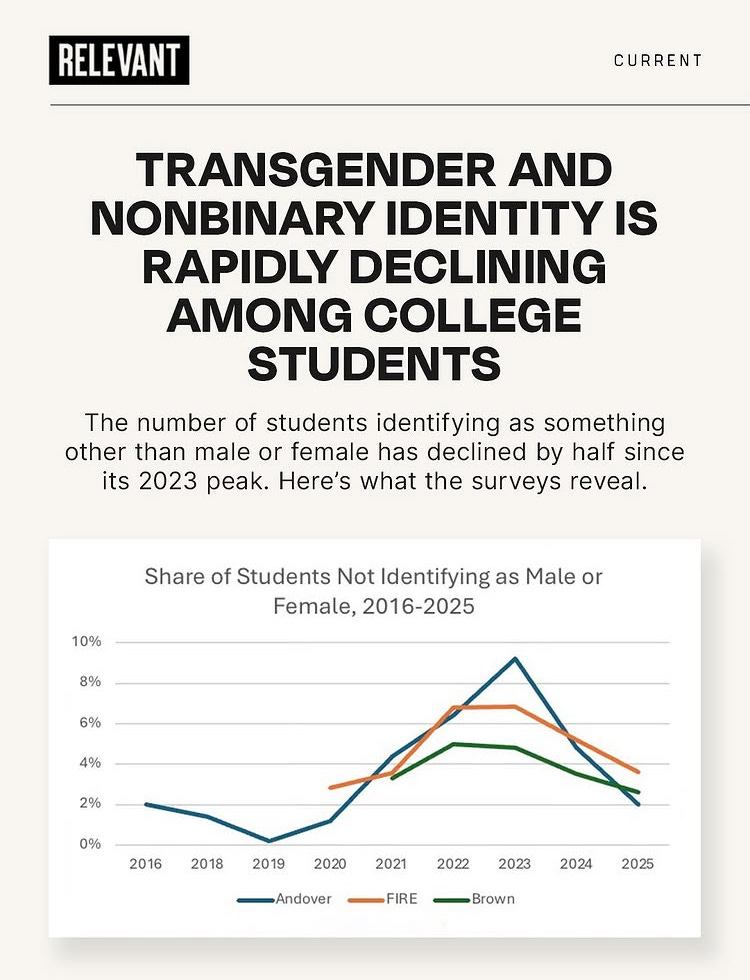
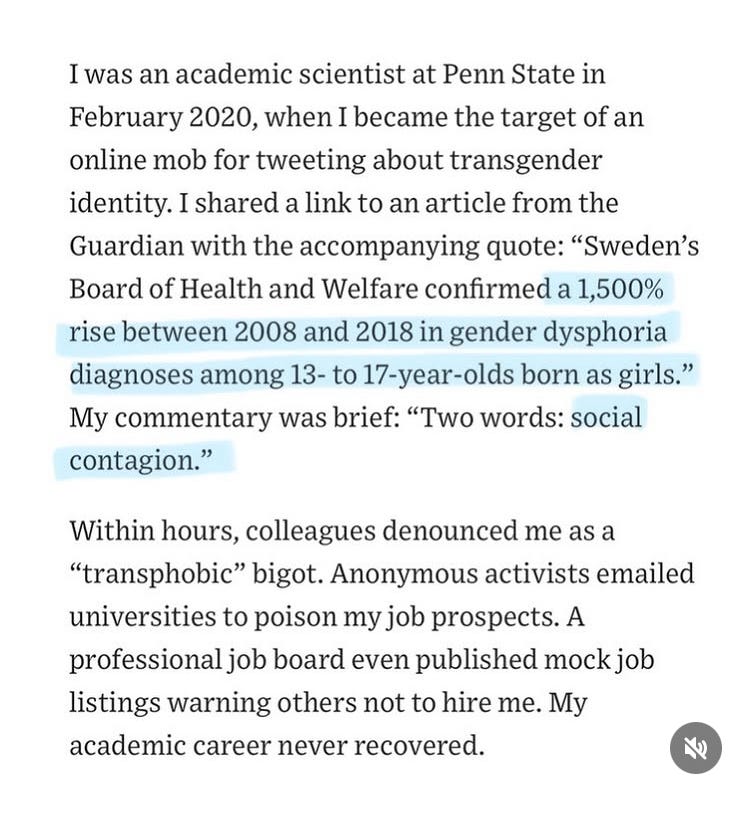
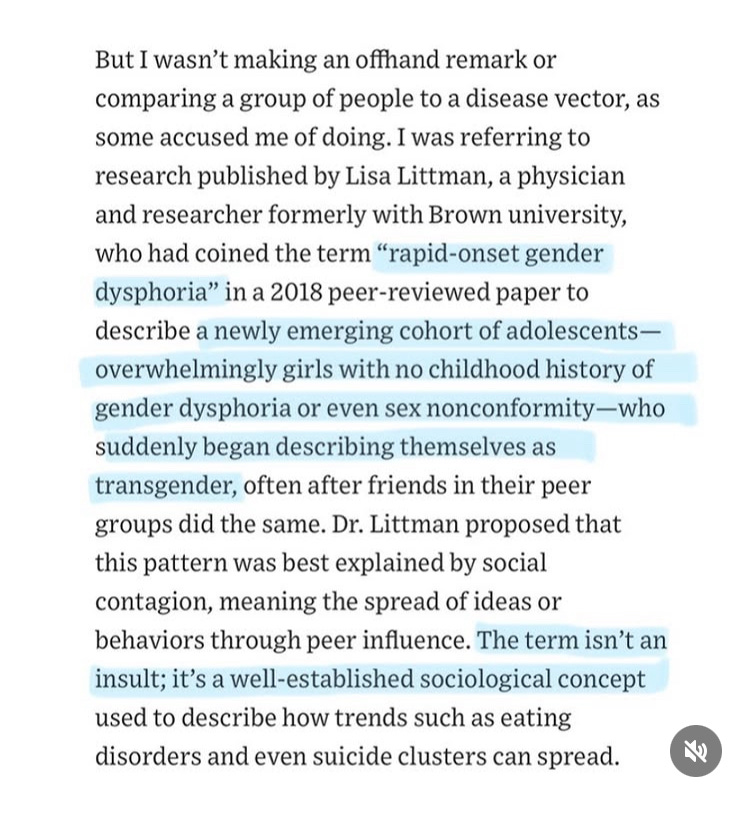
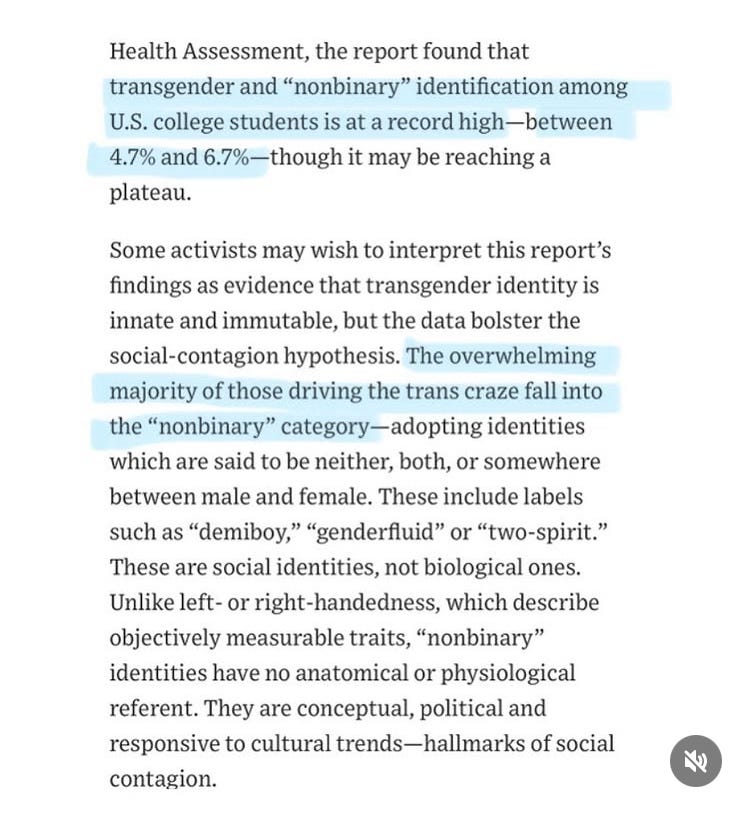
But we need not confine ourselves to a diagnosis of contemporary social conflicts. We can actually see the collapse of several movements which emerged, were supercharged by feminine narcissism and activist bullying and victimization narratives, and are now slowly collapsing. The dominant institutions are trying to slow and cushion the collapse, of course (denying that they made errors and discredited honest actors and pursued harmful and unscientific policies, and endeavoring to amend the narrative gradually in order to protect their personal careers and institutional legitimacy) but the collapse is in progress nevertheless.
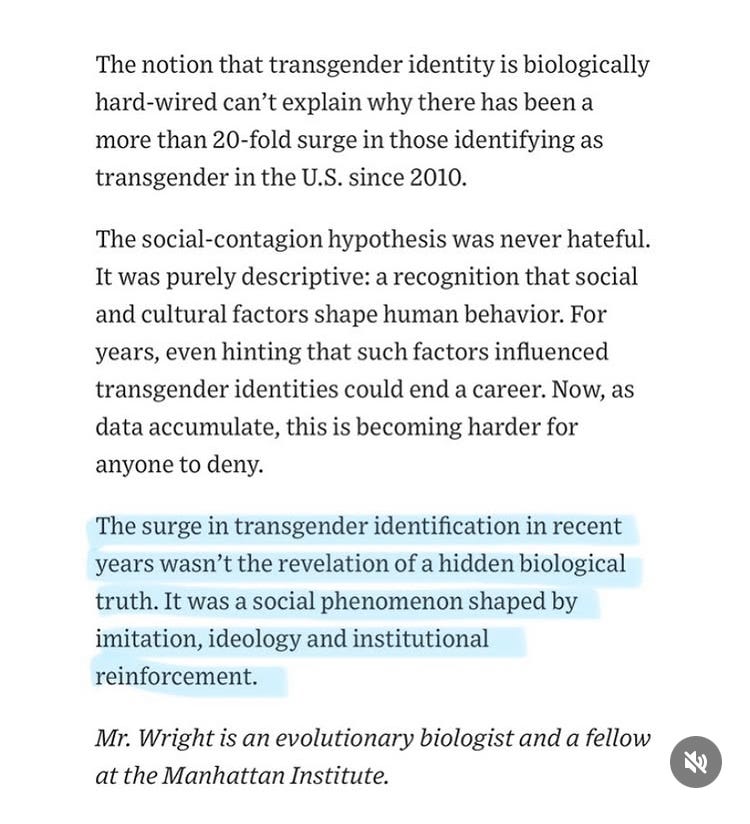
The fact is that, on issue after issue, entire institutions and academic departments and economic sectors (public health, for example) have been captured by this dynamic. It’s always quite obvious which areas are afflicted, because people with reasonable and well-meaning and popular opinions are punished and ostracized and silenced and purged.
Again: it is impossible to deny that this is happening and that it has happened. If we consider the people who weren’t punished (fired, de-platformed, ostracized, unpersoned, shamed, assaulted, killed) but who were instead cowed into silence or assent by these examples the victims certainly run into the millions.
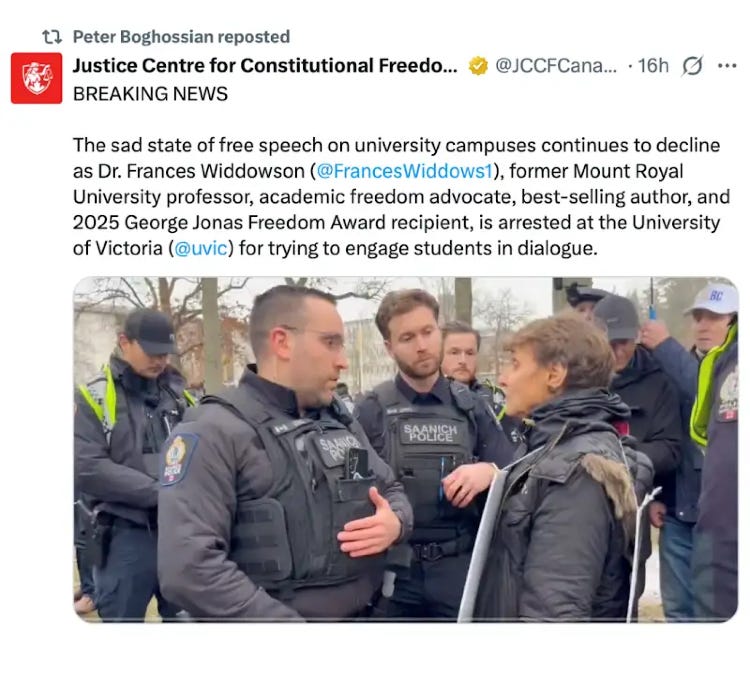

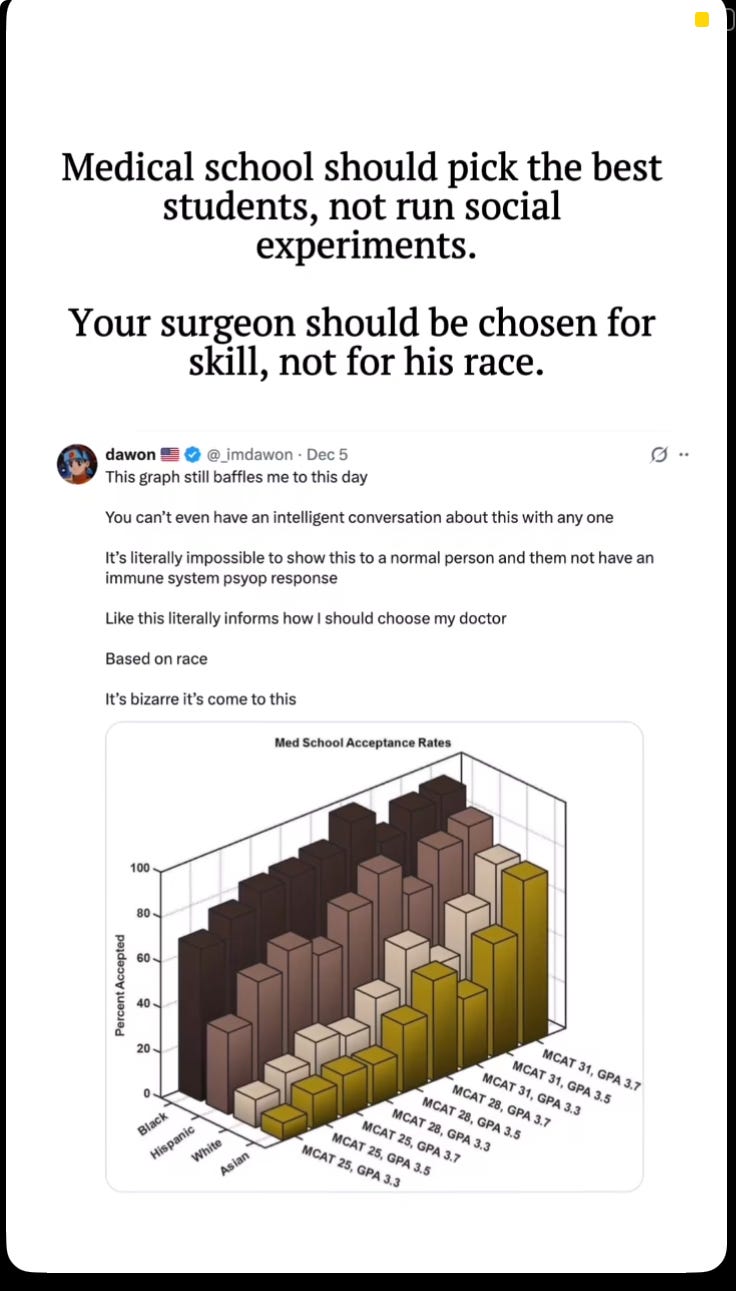
This is an institutional and ideological tendency, of course. But the psychological strategies which underly it are evident across the culture. Consider the ubiquitous appropriation (for that is certainly what it is, in most cases) of ‘trauma’ or ‘CPTSD’ or ‘ADHD’ or ‘autism’ or ‘neurodivergence.’
Such labels should only have meaning for patients (and not as identity markers - all of the data I’ve seen indicates that identifying with your disorder retards healing and growth) and for medical providers. There is no reason for these terms to have washed over our culture… unless the true aim of their advertisement lies elsewhere.
Even when these are meant sincerely (and have been diagnosed by professionals) they represent social claims and efforts to gain status. They’re often accompanied by implicit claims or by attacks on critics or opponents. Nathalie Martinek PhD again:
The route to elevation no longer runs through competence or achievement, but through being the most visibly impacted. It allows one to win without competing, to appear morally elevated while accumulating the same exemptions, deference, and admiration pursued by grandiose narcissists, without the corresponding risk of exposure.
Higher baseline neuroticism, combined with a cultural environment that rewards vulnerability, emotional expressiveness, and claims of injury, produces a narcissistic style that does not assert superiority but suffers its way into it. They no longer need to say, “I am better.” They simply say, “I am more affected.”
“I am more disabled. I am more special. Things are harder for me.”
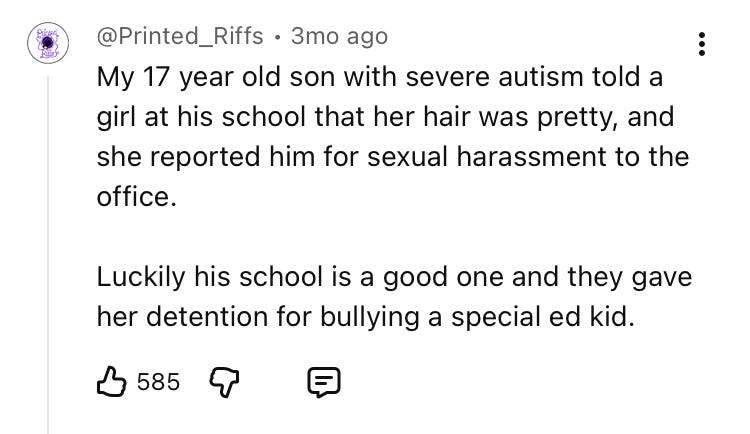
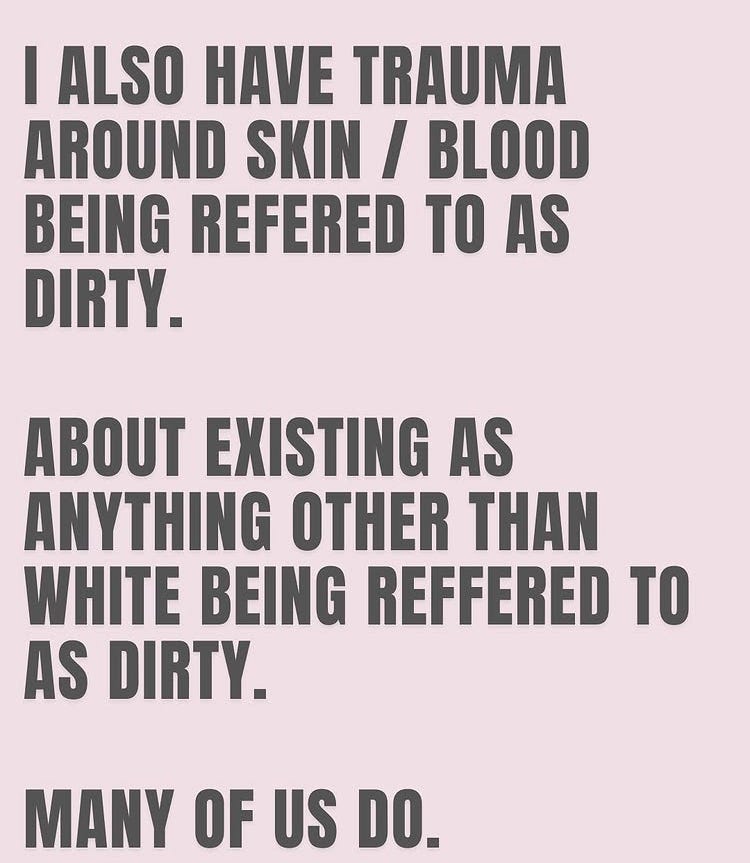
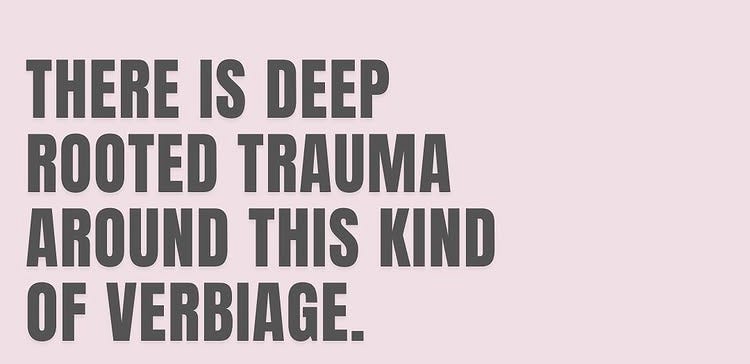
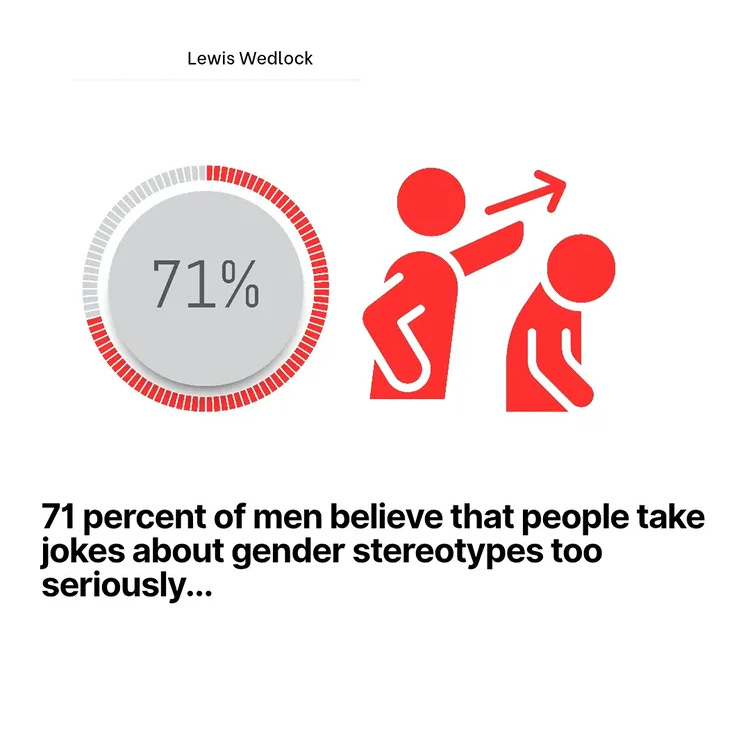
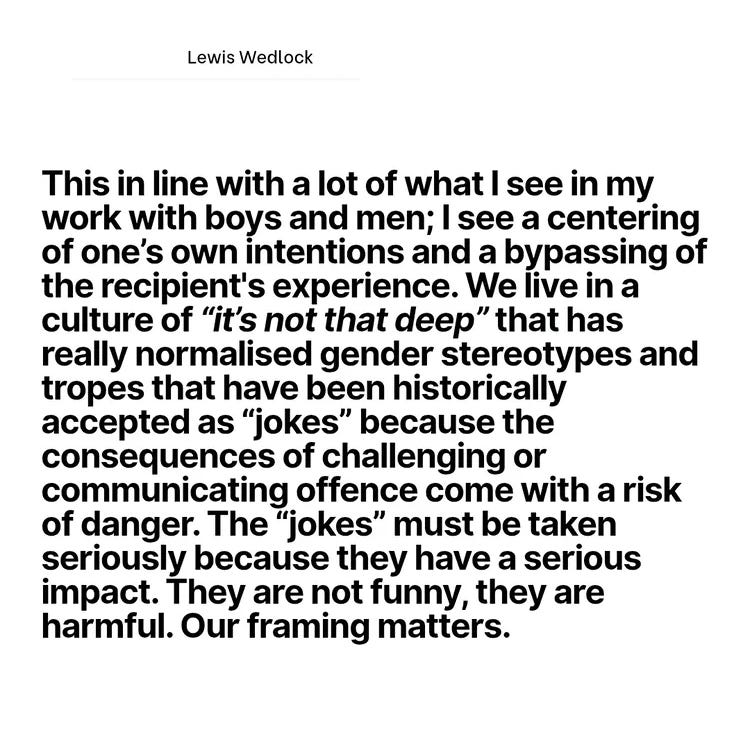
“They are harmful” = “I don’t like them and they make me feel uncomfortable, therefore they must be suppressed”. This kind of self-centered and emotional orientation towards speech and ideas and policymaking is rampant today. It primarily seems to be a feature of progressive women, rather than conservatives or progressive men.
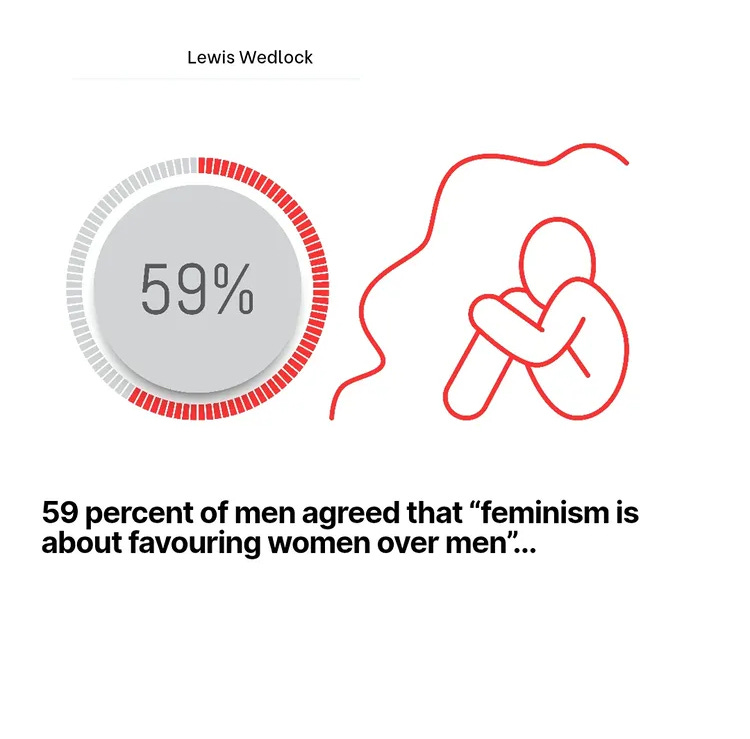
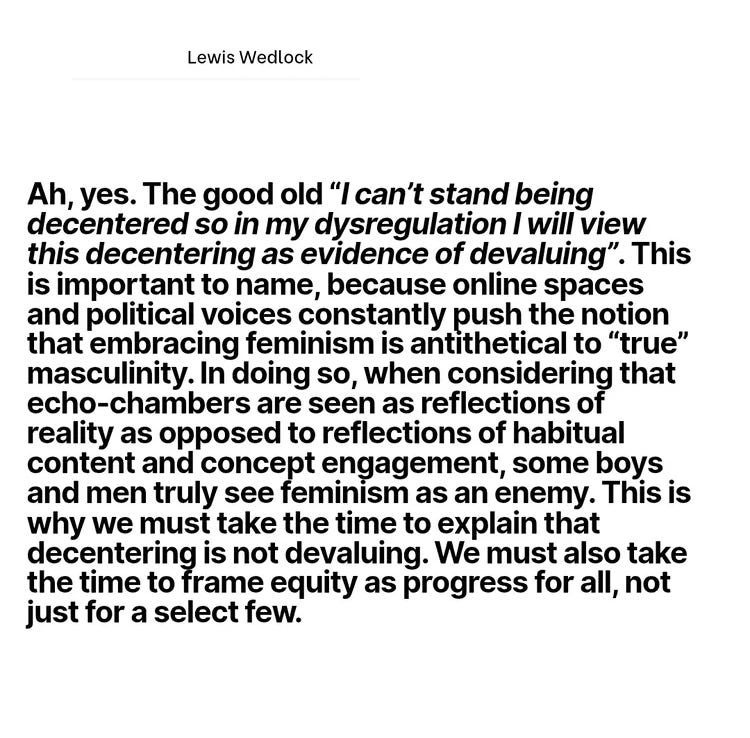
Okay. Can I tell my joke that involves gender stereotypes then? Can we get rid of equity-driven hiring and promotion campaigns in the private sector and in academia? Can we abolish alimony? Those are goals which I would characterize as progress for all. If your equity is “progress for all” then surely you will join with me.
Or are we just saying that “equity is progress for all” while we continue to try to gain more wealth and power for feminists, and to control unpalatable speech?
All of this has one clear objective: to gain more status and credibility and benefit without achieving or producing or creating more… but instead by simply identifying as a member of a victim group.
Fatness & Status
Racism has been shown to produce a fertile soil for hoaxes (and for professionals to gain money and advancement through DEI and consulting and grants, etc.). Trans is a belief system which is caught in its own vicious cycle: as the months pass more and more people leave or amend their opinions, leaving only the most vicious and deranged and intellectually subnormal believers behind… making the belief system less reasonable and attractive, etc.
But this ‘social loophole’ tendency doesn’t just apply to ideology and feminism and college campuses. Our immigration debate has been deformed and hijacked by ideologues who tend to believe that migrants (as a group and as individuals) must have come from violent and troubled areas. Obviously many of them are violent or sexually depraved or are simply unproductive people who were attracted by free hotel rooms and government benefits - but that reality cannot be articulated. The recent government shutdown exposed debates about food assistance, in which people on food assistance were assumed to be poor through no fault of their own and would surely suffer or starve if benefits were cut… rather than just having to spend some of the money they currently spend on shoes or electronics or vacations on food for their families. Students are assumed to be hard-working and honest. If you attend teacher trainings all of the guidance will be geared towards boosting ‘engagement,’ or making the information more ‘accessible,’ ignoring the fact that many students are simply lazy. They’re not inclined to work hard in school (for various reasons) and their laziness and lack of investment in the process of education is their biggest obstacle, by far. If you attend a medical conference, all of the information will be focused on improving outcomes and education and access, ignoring the fact that most unhealthy people in the United States are simply too fat and lazy. They have food addictions, certainly, but these aren’t conditions which can’t be broken by mindfulness and social support and willpower. The problem isn’t a lack of education or treatment. The problem is that millions of people would rather eat huge surpluses of unhealthy food than be active and moderate in their habits. That’s it. It’s obviously it, because education and access and treatment have expanded enormously during the past 60 years… and our obesity rate has more than tripled in that time. The rate of childhood obesity has more than quadrupled, and I guarantee that very few doctors or educators or policymakers are noting that this indicates above all one salient detail: many, many more parents are choosing to feed their kids mountains of trash than used to. Overworked moms and food deserts and racial inequities - all of these narratives collapse upon cursory examination, yet they persist. They offer shortcuts and excuses for our increasing levels of weakness.
We can apply the frame to basically every policy issue: urban gun deaths. Academic disparities. Chronic illness. Rising signals of psychological distress.
The basic social and physical needs of the human animal are being systematically neglected in order to create lives of pleasure and comfort and distraction… but unearned pleasure and comfort always has a cost. We are paying it, collectively and individually, and we are paying it because we choose to. The alternatives are, in our telling, simply too hard. And we now have an entire, vast, unopposed social narrative which bolsters this fiction. None of these issues are actually very difficult to fix, if we conceptualize ‘difficulty’ in the context of human reality during our time on this planet.
The Anthropological Framing

It is only by exploring the norms and ideas of traditional cultures (including the long-gone ones of which we have a historical record) that we can truly understand the quality and direction of our own civilization. It’s pretensions of uniqueness and progressive inevitability are just those. If we don’t attend to the cultural basics (reward, punishment, marriage, children)
You won’t have to starve or fight to the death or see your family butchered or travel across the Atlantic in a caravel. You just have to make slightly better decisions, and you must do this for a long period of time. People will help you - but first you must admit that there is a problem, and you must internalize the fact that you have the power to correct it, and that means letting go of victim status & excuses. The two things cannot coexist in the same person.
Which brings me to the last, most flamboyant instance of ballooning (pun intended) weakness, and its social apologia: body positivity.
Body positivity is part of a loose constellation of ideas which gained prominence alongside the other progressive orthodoxies (beginning in 2015 - suspiciously concurrent with the year that young people who’d grown up with smartphones began graduating college). They probably reached their apogee around 2020-2021. (Note: it is somewhat curious that so many bad, new ideas appeared, gained unquestioned authority in elite spaces… and then quickly discredited themselves along such a tight and consistent timeline. A person could make a life’s work out of exploring this story. I suspect it has a lot to do with elite spaces full of inauthentic, disconnected, cowardly people who were uniquely susceptible to utopianism and to social pressure, due to their historically low levels of gumption and realism and sensibleness). HAES (health at any size). Body positivity. Fat liberation. Dismantling feminine beauty standards (a radical pressure campaign which is still very much alive in the gaming and film industries). None of these terms means exactly the same as the others, but they all share certain prominent attributes:
These were feminine movements - created by women and for women. While their rhetoric was often universal, they rarely applied the ideas to men. It’s a hilarious fact that most of the (female - they’re almost all female) fat activists who I’ve heard speak on the subject have expressed personal preferences for tall and fit men… while they proclaim that beauty standards which punish fat women are oppressive. Very little energy went into making the claim that fat men are victims of society.
These were all carefully constructed attempts to create social loopholes. In other words, their main concern was to erase the ‘privilege’ that fit (or non-fat) people (women) enjoyed, in regards to clothing selection and dating (!!!) and perceptions of discipline. As is a familiar pattern by now, a lot of bad ideas and shoddily-expressed statistics were trotted out and repeated millions (yes, millions) of times without any deeper exploration or objections ever being made. One example is the disparity in income between fat and non-fat people. This could be explained by non-fat people being the kind of people who are more energetic and productive at work (a third factor which influences both in other words, extremely common in social science). This could be due to health issues or low energy or absenteeism (i.e., fatness could cause a decrease in employability absent any discrimination). Perhaps fat people were deemed to be less hirable because of the widely understood health issues related to obesity. The disparity could just be due to the fact that most people would rather be around non-fat people (as coworkers, customer support staff, employees), in the sense that people tend to prefer the company of attractive and socially fluent people as a basic feature of human psychology and sexual selection. None of this was really considered. The fact was presented as if it was a clear call to action: fat people make less money than non-fat people… and this shouldn’t be the case. Fat people should make more money without having to lose weight. This kind of moralistic, childish reasoning was then applied to half a dozen social areas.
The narrative really went off the rails when content creators (as this was a mostly online phenomenon, but one which captured large parts of corporate America and the entertainment industry and the legacy media) tried to claim that obesity didn’t entail health risks, or that any health issues in the data was due to “fatphobia” or “weight stigma.” This is such a nonsensical idea that I refuse to even address it.
Disease is Bad
·
I’m struck by how often the sensible and informed must now battle ideas which are, frankly, crazy. Most of the time these ideas do not originate in the wider culture or on FOX News or Substack. They originate in academia, and in strange little closed-off worlds of online activists, and among the wealthy and safe. I should note that those very people are now making a concerted effort to define ‘misinformation’ and take real institutional measures to suppress or even punish it. Naturally, I’m not optimistic about their chances to improve the quality of political dialogue.
These all tried to use shaming, brigading, stigma (ironically) and other tools of social pressure to enforce a consensus. It was ruthlessly effective… but only at policing the fringe group of viewers and commenters who were already community members. It was less effective at changing society, but not totally unsuccessful, as we will see. The idea was to change society, rather then to just lose weight. Millions of hours of content was produced in which young women (there are few middle aged and no old women in the body positivity movement, and I know of 5 prominent creators that have died young in the past few years - not a great sign) made passionate arguments about why they couldn’t lose weight. In every case these people were capable of losing weight. In most cases they simply had addictions to food. But, as we say in recovery, “the first step towards solving any problem is admitting that there is a problem.” Society is the problem simply doesn’t cut it. You’re the problem, your eating is the problem, your lifestyle and self-pity and spiritual (and physical) flabbiness is the problem. Let’s solve it!
Body positivity was an effort to avoid solving the problem in that way, and instead to shift society’s attitude towards fatness.
The ideas were closely related to other progressive ideas. Fatphobia is rooted in white supremacy or fatphobia is a form of ableism are the kinds of mantras which are compelling to many progressives. They were repeated endlessly. For everyone else the impression is usually something more like: “how could these people believe such silly things and repeat them so often without ever considering the obvious ways in which they are wrong?”

‘Body positivity’ (what I will call this fetid ideological cluster, for simplicity’s sake) never made any impact on dating, because men aren’t connected to the Hive and therefore aren’t interested in what hundreds of thousands of young women believe about ‘fatphobia being rooted in white supremacy.’ They might like fat women or not, but online ‘activists’ won’t shift their attitudes one way or another. Contrary to the content creators’ claims, sexual and romantic preferences are not simply socially constructed. They are “rooted in” (finally, a correct use of that cherished leftist phrase) biology.
But state laws were changed. Minneapolis made it illegal to discriminate on the basis of weight when it comes to hiring and promotions and public housing. So a 400-lbs man has every right to work in a warehouse, or as a gym teacher. Society must change, and the social loopholes must be widened in order to push benefits and jobs and status (in this case) towards fat people.
Victoria’s Secret and dozens of fashion magazines and shows and women’s media products embraced body positivity wholeheartedly, which reveals that this was not just a fringe movement, and that women really do lack the social mechanisms to puncture absurdities when they’re presented as tools to help marginalized groups and maintain social consensus. (If you disagree, find me one time when a mostly-female employer or media company of academic department pushed back against florid progressive ideas in the past decade. I haven’t been able to find a single one. This is a huge problem for feminized spaces).
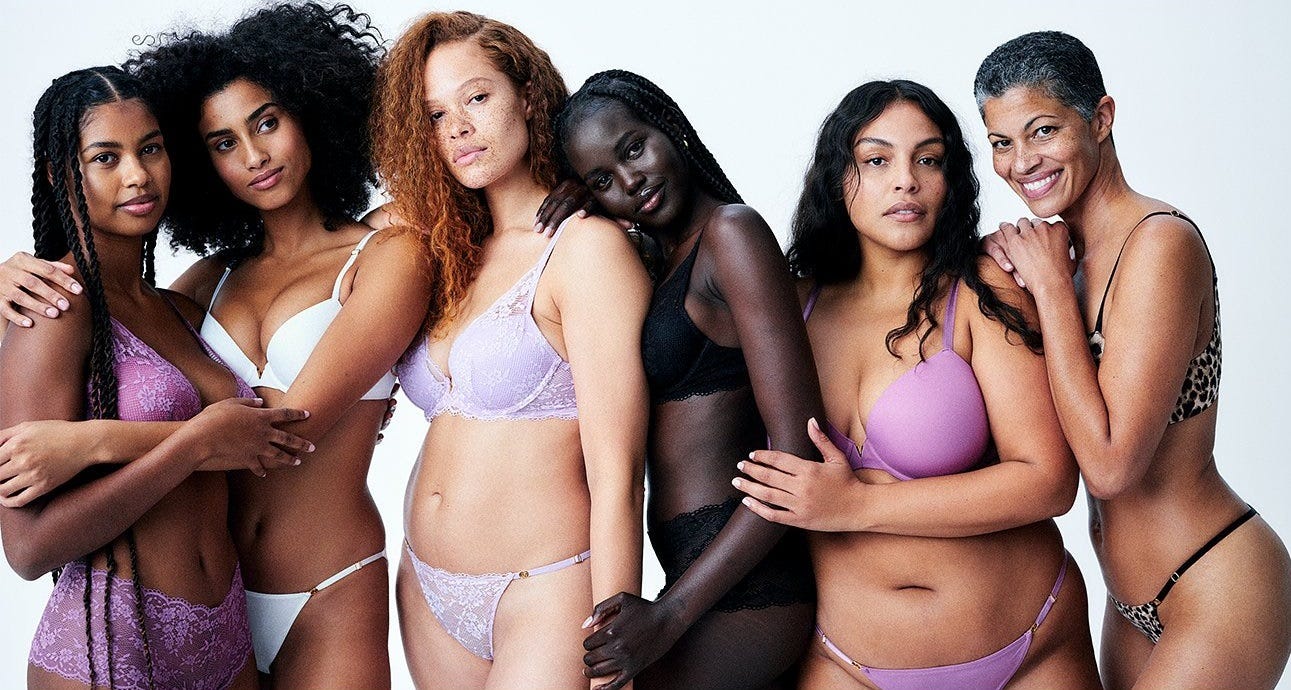
Victoria’s Secret rolled back their body positivity brand identity last year, after their stock continued to fall steadily. Feeling sorry for people (for that is what this is, deep down) and wanting to help them apparently doesn’t extend to buying underwear.
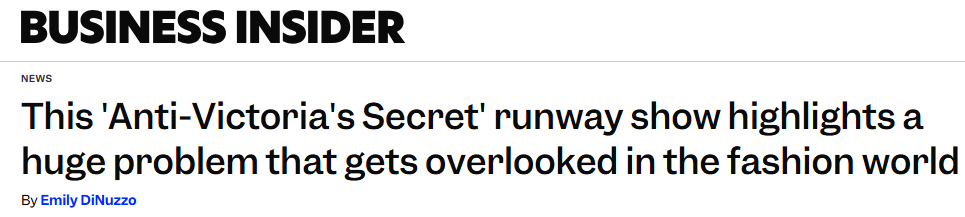
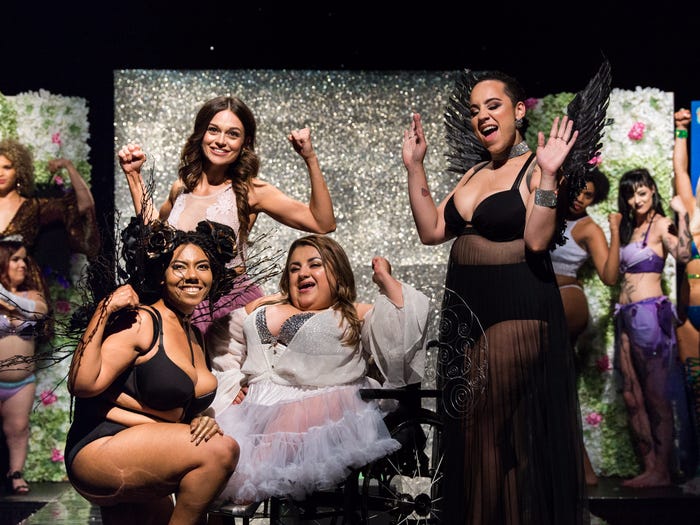
I can understand why women might want to patronize less exacting or aspirational brands (it didn’t turn out to be that popular, but I could see how it might be). But the problem is one of optics - this instinct to make society more equal and to push rewards and benefits and sympathy towards people who identify themselves as victims begins to infiltrate hiring, organizational culture, policymaking priorities, etc.
I’ve come to nearly believe that women (at least those in the modern West) are often collectively incapable of resisting or limiting these kinds of urges. I wish that weren’t the case, and perhaps it will change, but recent history should alarm us.
Hollywood and the entertainment industry embraced body positivity in their typical, mealy-mouthed, bet-hedging fashion, which mostly consisted of female celebrities (Lizzo being by far the most outspoken) repeating the mantras of the movement and trying to shift the cultural discussion. Once again: I can name a dozen female celebrities who publicly supported the idea that society must change to make life easier for fat people (or that beauty standards should change, or that women shouldn’t be valued for their beauty and physique, etc.). Can you name one who pushed back, and stated that fat people are responsible for their lives and that they should lose weight? This is the pattern: things that sound good (nice) become a central part of the cultural discourse. The new nice thing is weaponized by utopians and malcontents, and becomes a vehicle for political change and for the institutionalization of loopholes. And women are generally completely unwilling to oppose the new “nice” thing, because women tend to be more agreeable and more focused on maintaining social consensus. I don’t think it’s a coincidence that the dissemination of these ideas has coincided with many fields becoming 40-60% female or more, and with women moving into leadership positions in many institutions.
Then GLP-1 medications hit the consumer pharmaceutical market (by the way - it’s debatable whether there should even be such a thing as a consumer pharmaceutical market) like a nuclear bomb. I won’t go into the intricacies of public backtracking or the timelines or the frequent combination of sudden silence + new, thinner selfies. Suffice it to say, that when an easy tool emerged to help women (richer women, mostly) control their weight, the need for the social loophole mostly vanished. So the loophole did as well. Pay attention here: this means that, in some sense, all of the furor around fat liberation and “fat is beautiful” and “fatphobia” was a feminine social manipulation strategy. Hundreds of thousands of people really claimed to believe certain things and in most cases I think they did believe, on some level. Yet this was mostly revealed to be a campaign to build and preserve a wide (it would have to be wide, for the beneficiaries to pass through) social loophole, to reward fat women with jobs and status and dates (even if that never really worked out) without them having to lose weight.
The entire ideology, most of the rhetoric about white supremacy, the celebrity passion and the corporate campaigns - all were revealed to be a feminine social pressure campaign. Not to reform society or improve policymaking… but to grab status for less attractive women. Within a year it almost completely vanished.
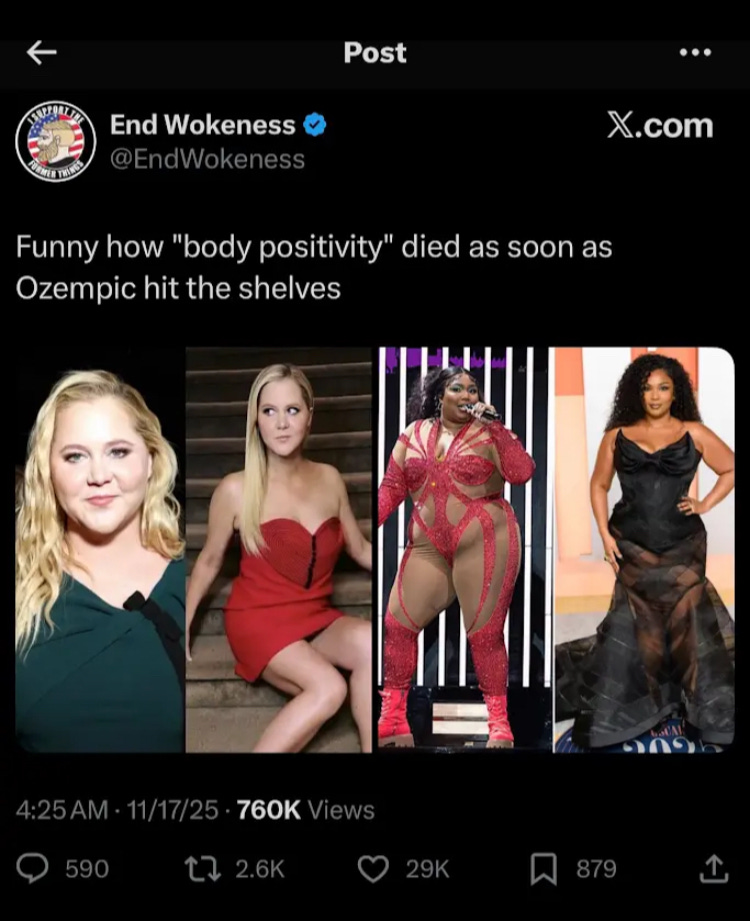
Is this a happy ending? I don’t think so. Firstly, it’s a bizarre demonstration of the fact that many modern ideas are not sincere or reality-based in the way that we usually mean those terms. Even the believers can be roped in by social pressure or status signals or the desire to be (or appear) nice, and they can zealously promote policies whose consequences they have barely considered. They simply believe and support them because of what that public support portrays about them. This isn’t lying or manipulation, in most cases. It’s a common phenomenon: certain groups of people form opinions differently than do the men who used to maintain and direct our institutions. Status matters. Anyone who pretends as if it doesn’t (for them or for anyone) is someone who probably shouldn’t be anywhere close to real power. Such a person can’t even understand the sources of their own motivations or worldview, so they will be completely unable to deploy cognitive empathy to try to understand the motivations of (for example) criminals or bad students or radical Islamists or government dependents. They’re lost in a thicket of social desirability bias, inexorably drawn towards the ‘nice’ and the popular, and mistaking these qualities for truth.
But more pertinently for this post, GLP-1 medications are themselves a kind of pharmaceutical loophole. We’re not sure what the long-term risks or side-effects are (and cautionary evidence is mounting) but we know how they work: they reduce appetite.
That means that millions of Americans are now spending considerable amounts of money to take a pill… to simulate self-control. People are so weak that they can’t even control what they eat, or create strategies or support networks for self-control, absent a miracle drug. And no one really points this out. The media, entertainment figures, commenters, patients - all are persisting in the collective pretension that this is a real medicine, meant to solve some kind of physiological defect, rather than just a cheat code to better accommodate weakness and undiscipline. It’s not the weakness hat troubles me. It’s the pretending.
Here’s the AA Big Book (written by people who knew a bit about lack of self-control, and personal improvement):
Those who do not recover are people who cannot or will not completely give themselves to this simple program, usually men and women who are constitutionally incapable of being honest with themselves. There are such unfortunates. They are not at fault; they seem to have been born that way. They are naturally incapable of grasping and developing a manner of living which demands rigorous honesty. Their chances are less than average.
I fear that we’re building a civilization of people who are constitutionally incapable of being honest with themselves. If that’s the case, their chances of self-improvement and success are less than average. That’s the thing about the lies and the manipulations and the loopholes - they can get you promotions and status and a kind of artificial credibility. But there’s no replacement for discipline, for the drive to improve oneself. No amount of manipulation will ever change that. All it can do is create a profoundly disordered and unhappy culture… where everyone simultaneously pretends to be both happy and victimized.
Sound familiar?
I’ve been thinking about our essential psychological weakness as a society for some time, and I’ve landed on it being an example of feminization — comfort and luxury are ontologically feminine because they are indulgent, and taken to an extreme they corrode social trust and discipline. Women in particular have been key agents of this, not least because of feminism, but because they have turned society inward in the name of empathy. But empathy and compassion taken to extremes undermines actual progress. It creates a society of dependents. Education being such a mess is in no small part because of this impulse, driven primarily by women because they are the majority of teachers. While feminized aspects of society have male participants, the agents of weakness are, squarely, elite women. And their beliefs trickle down to poor women who are not inoculated from their bad choices as well as elite women. The feminist apparatus is the ultimate source of luxury beliefs. I say this having once been a feminist and having been indulgent and weak. It’s funny how an ideology that claims to be about female empowerment has done nothing but foment fragility and become a system of downside protection for women.
Great piece!
I'm a woman in a female-on-steroids-university who has watched with bugged-out eyes all of these insane beliefs taken seriously. For example, we elders were advised by the Golden Millennial (who told me with a straight face that there is no difference between men and women) that asking students where they're from "causes harm." And on and on with the objectively ridiculous bullshit.
I recently became the subject of a student complaint -- I still don't know what I did! In the meeting with the director, she advised me NOT TO CHALLENGE THEM. She also claims that I'm 100% responsible for how students FEEL.
In case you're interested: "The Feminization of the University Makes Me Feel Anxious and Uncomfortable":
https://open.substack.com/pub/dogl/p/dear-director-the-feminization-of?utm_campaign=post-expanded-share&utm_medium=post%20viewer