

A Declaration of Independence
We Cannot Live With These People

On why our political system is no longer working, why society seems to still be flourishing and advancing, and how our prospects for the future appear.
Our country is often considered to be a democracy. That’s not entirely accurate (and it’s even less so, when you consider the intent of the Founders and the political structure they built - constitutional republic would be more apt) but let’s grant the label. The United States is a democracy. A democracy is a highly imperfect system of government (“the worst form of government except all those other forms that have been tried from time to time,” as Winston Churchill famously stated) but it has its upsides: being able to hold a leader or a government accountable and to express dissatisfaction with policy directions is a priceless luxury. Even when these mechanisms are indirect and disadvantage the average voter, as they inevitably are and do, they are still useful in constraining and directing the government.
But there are two deep problems with this form of government as it’s currently practiced in the West. One is cultural, and the other structural.
The Cultural Problem of Democracy
The greatest fallacy of democracy is that everyone's opinion is worth the same. -Starship Troopers by Robert Heinlein
In the novel Starship Troopers, the Earth has been pacified. The era of Terran wars is a historical curiosity. The species is politically unified (assisted by the existence of monstrous interstellar enemies, no doubt). And Earth has a democratic form of government! There’s one slight wrinkle for modern democrats, though: the only people allowed to vote in elections are those that have completed a term of service in the armed forces.
The novel is actually only half about fighting. It begins with the main character trying to decide what to do with his life (join his father’s lucrative business empire as apprentice and executive-in-training? Take a year-long vacation to Europe? Go to a private college?). He’s nagged by lessons and exhortations from a strange, disagreeable instructor who’s a veteran himself (having lost an arm in combat). This character - Mr. Dubois, his “History and Moral Philosophy” instructor - doubtlessly echoes Heinlein’s own feelings on various politico-philosophical questions. I must admit that as a middle school Civics teacher I consciously imitate Mr. Dubois’ techniques and affect - bluntness, sarcasm, gruffness, and a constant expectation of grit and achievement from all of my students to the best of their ability. Here is what that character has to say about our democracy:
There is an old song which asserts 'the best things in life are free.' Not true! Utterly false! This was the tragic fallacy which brought on the decadence and collapse of the democracies of the twentieth century; those noble experiments failed because the people had been led to believe that they could simply vote for whatever they wanted...and get it without toil, without sweat, without tears. Nothing of value is free. Even the breath of life is purchased at birth only through gasping effort and pain.
And:
A managed democracy is a wonderful thing... for the managers... and its greatest strength is a 'free press' when 'free' is defined as 'responsible' and the managers define what is 'irresponsible'.
Keep in mind, these words were written sometime before 1959. The first excerpt might not qualify as prophetic. Even before the Civil Rights era, the tendency of managerial class “manipulation through cultivated dependency” was apparent. But the second must surely seem eerily prescient to any reader who understands what’s happening in Canada and Britain and Germany and Australia and Ireland (etc.) right now.
We’ll discuss the incentives and strategies of the professional managerial class (PMC) in the next section. For now, let us observe one devastating constraint on the success of democracy: most people are not very bright.
This isn’t really a claim about cognitive ability. Most people have always been part-dullard. That was okay. There seems to be a tradeoff in terms of cognitive ability, reproductively-speaking, and you don’t need to be a genius to hunt deer or construct a shelter (or to impregnate your mate). But in the modern world, in the context of democracy, there’s plenty to be worried about.
Watch this video and then consider, all of these interviewees are probably entitled to vote, and some of them certainly do:
These people can vote:

And these people can vote:

(…or they could, before they passed away from complications of food addiction)
And these people can vote:

And these people can vote:
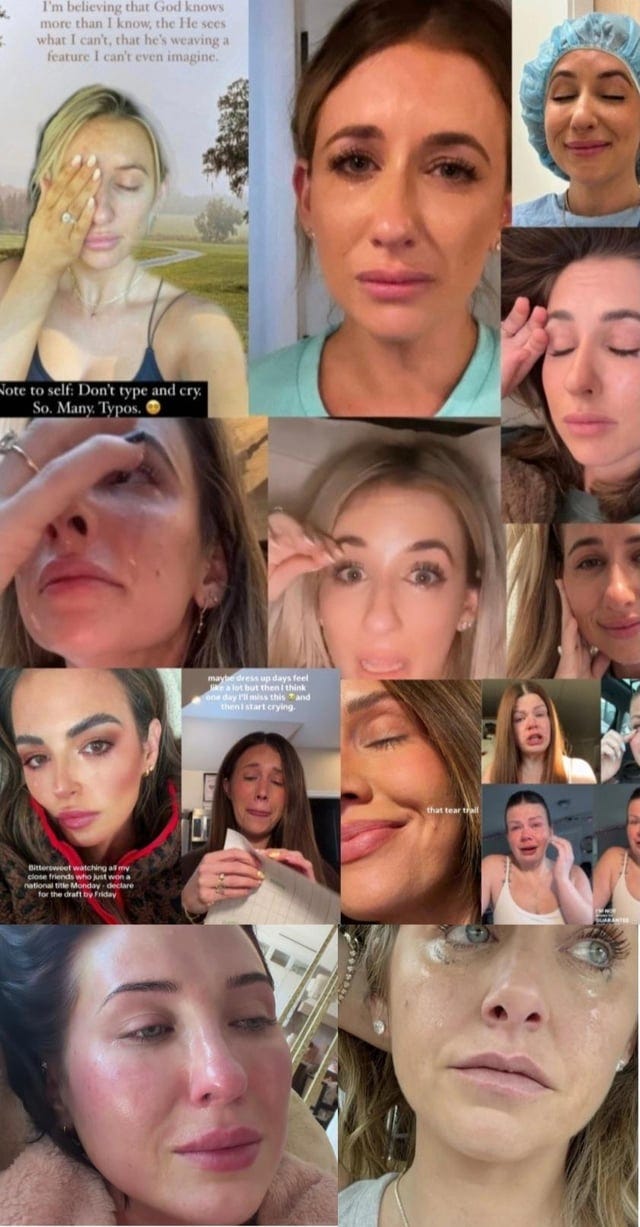
This (above) is what I call “the Hive.”
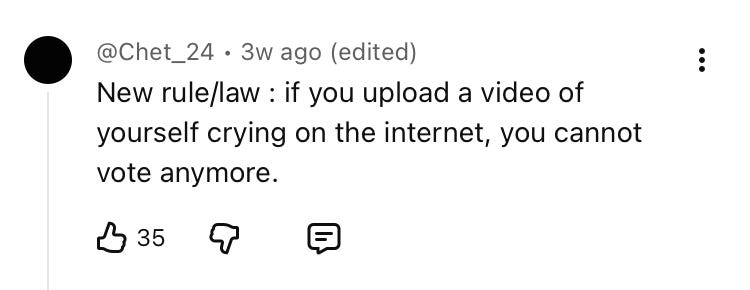
Heinlein would approve, I imagine.
The problem isn’t necessarily that these people are ignorant (although they certainly are). Even an ignorant person can observe his surroundings and develop some policy sense. It’s not as if thousands of years of aggregate university-level education inured our elites against moral panics when it came to #MeToo or #BLM, after all. The problem is that they’re weak. They’re fragile, and so they seek ideas and policies which make their lives easier. When you accumulate a critical mass of such people a vital republicanism becomes impossible.
I find it suspicious that personal strength (virtue, implacability, courage) are rarely brought up these days. Perhaps that’s just a byproduct of our comfortable and technologized world, but I don’t know. The other alternative would be that few people want to reference these attributes because they understand, on a deep level, that they don’t have them. No one (writers, viewers, executives, distributers) wants to feel like a soft person or a coward. Rather than convincing people that they are not these things (which would read as false) it’s more suitable to simply pretend the categories don’t exist at all.
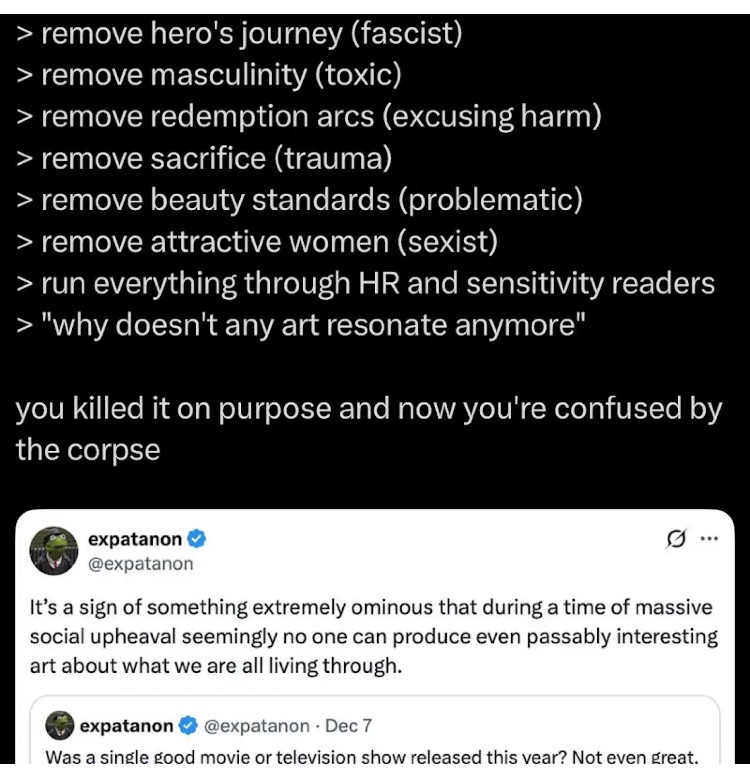
Whichever it is, the cultural script is changing. I’ll give you one example, shying away from the obvious Hollywood instances of cultural subversion, in which admirable characters are usually assigned a marginal identity category, strong and courageous characters are often female, and virtuous or courageous or principled characters are depicted as silly or ignorant or misled: children’s entertainment. Children of previous generations watched and read a wide range of content: cartoon animals trying to kill one another, classical stories of romance and chivalry, mythic stories by C.S. Lewis or J.R.R. Tolkien. Now what do they have? Silly Disney films (even when they’re not covert cultural propaganda). Cartoons that relentlessly emphasize messages of teamwork and kindness and self-esteem. Stimulating, colorful, kinetic - but ultimately vacuous - programming. We have completely excised references to death, pain, and loss in our children’s programming… and also deep love and courage and heroism. This is a phenomena which is total across the Western world.
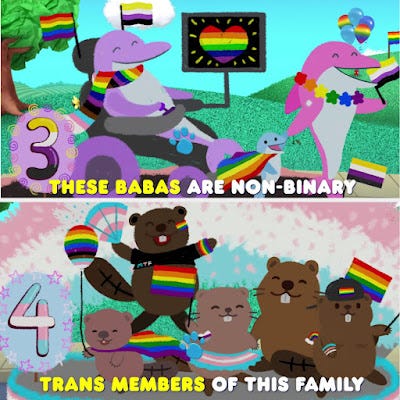
The fact is that we’re getting weaker. The signs are all around us (over-consumption, credit card debt, pop psychology, online attention-seeking, chronic illness, overmedication) and so the fact that this trend is rarely discussed is meaningful to me. Do we not see what’s occurring? Or do we simply not want to discuss it?
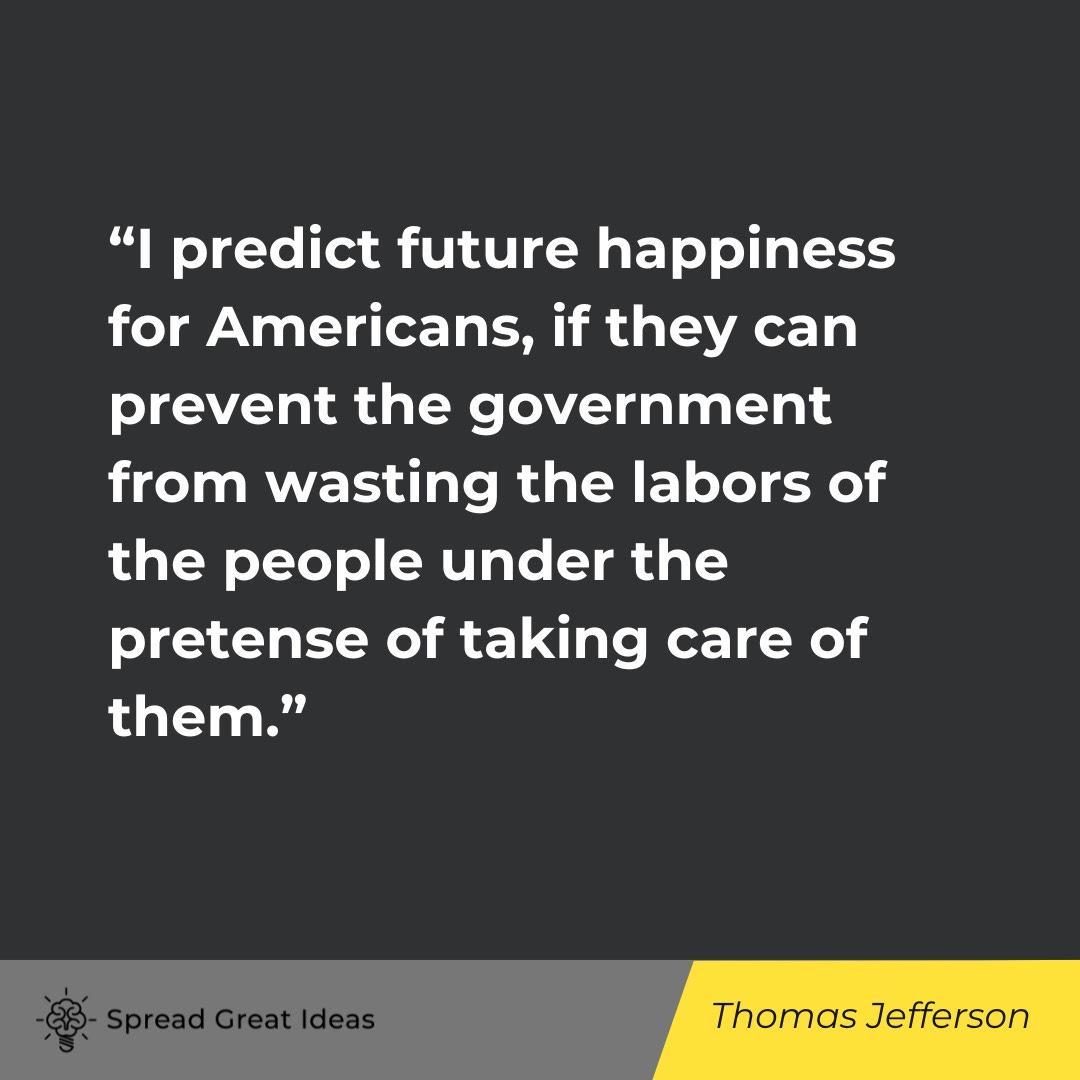
So much for that prediction…
Democracy’s worst fault is that its leaders are likely to reflect the faults and virtues of their constituents.
-Starship Troopers, by Robert Heinlein
A weak people will want things to come easy. It will shy way from duty, criticisms, and expectations, preferring instead a social conception that focuses on validation and ease and the satisfaction of impulses. A weak people combined with an overweening administrative state will want those easy things to be provided by the government, regardless of the cost or illogic behind that provision. This is the subtext beneath so many of our policy debates. People want easy money, jobs, promotions, weight loss (without the work), psychological validation, social affirmation, college placements, happiness. And the fundamental truths that happiness is fleeting and impermanent, and that everything meaningful requires work and sacrifice, have been elided. No one wants to hear these things, and so the messages have disappeared from our political discourse.
The Ideology of Fragility
When we consider that a parasitic, utopian belief system (everything provided free, no biological or material constraints, support and accommodation over punishment, all the beliefs and the values of previous centuries simply wished away) of perfect (superficial) ease and indulgence appeared around the time that our lives become so much easier and our people became so much softer we might simply read it as a unhappy coincidence. Or perhaps the two things are related. Perhaps a fragile, insecure voting public is more susceptible to promises of managed happiness and easy, relativistic virtue.
Whatever the case, we now have such an ideology. It is the operating software of the Democratic Party in the United States, and it exists across the West. In each country it is associated with elites and with the PMC (as we will see, it is the ideology of the administrative state) and in each country it exhibits the same peculiar blend of dishonesty, moralism, and power-hunger. Ironically, it is also supremely intolerant. It is explicitly constituted against the norms and traditions and structures of the past. That means it opposes traditional gender roles as a social norm or marriage as a basic expectation. It tends to be anti-natalist. It is environmentalist, but not arising from some deep familiarity or love with the natural world but instead from an urge towards managed decline.
The Philosophy of Bitterness

Much of our current political dialogue originates in displaced, repressed, and projected emotions rather than logical propositions. Sympathy for historically marginalized groups (along with the desire to feel and seem righteous) creates widespread feelings that failure and wrongdoing has nothing to do with personal decisions or cultural patterns, and therefore the only ‘fix’ for disparities is active and heavy-handed discrimination and set-asides. Unacknowledged fear of death leads to irrational hysteria regarding illness and environmental trends. Lack of empathy creates the feeling that criminals don’t respond to incentives, and ignores their victims (actual and potential) when it comes to creating policies around criminal justice and imprisonment… and so on.
It opposes harsh and equal sentences for criminals, preferring instead a philosophy of endless accommodation and identity-based criminal justice policies. It opposes deporting illegal immigrants altogether. If you’re paying attention, you can see a trend: each of these values is the opposite of what the Western mainstream (the bipartisan political consensus, in the United States) believed and valued, until about a generation ago. It has come upon us incredibly quickly. On all of these counts, the democratic/progressive/social democratic parties in the West have moved sharply leftward in the past 20 years, so that now they embrace policies which would have been frankly insane even a generation ago. This swing is rarely remarked upon.
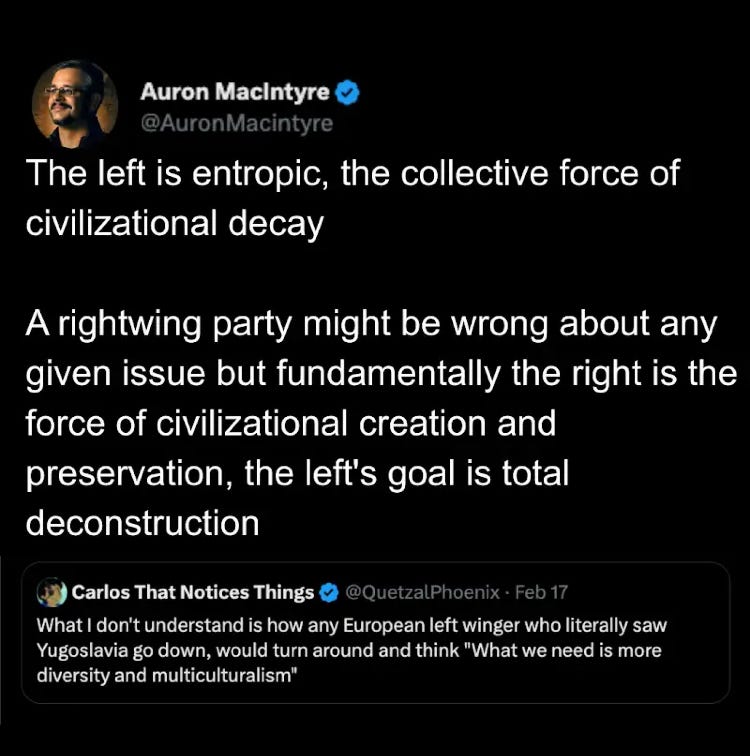
When it comes to social problems, psychological complaints, family issues, and economic challenges the ideologues of fragility have one prescription: the administrative state.
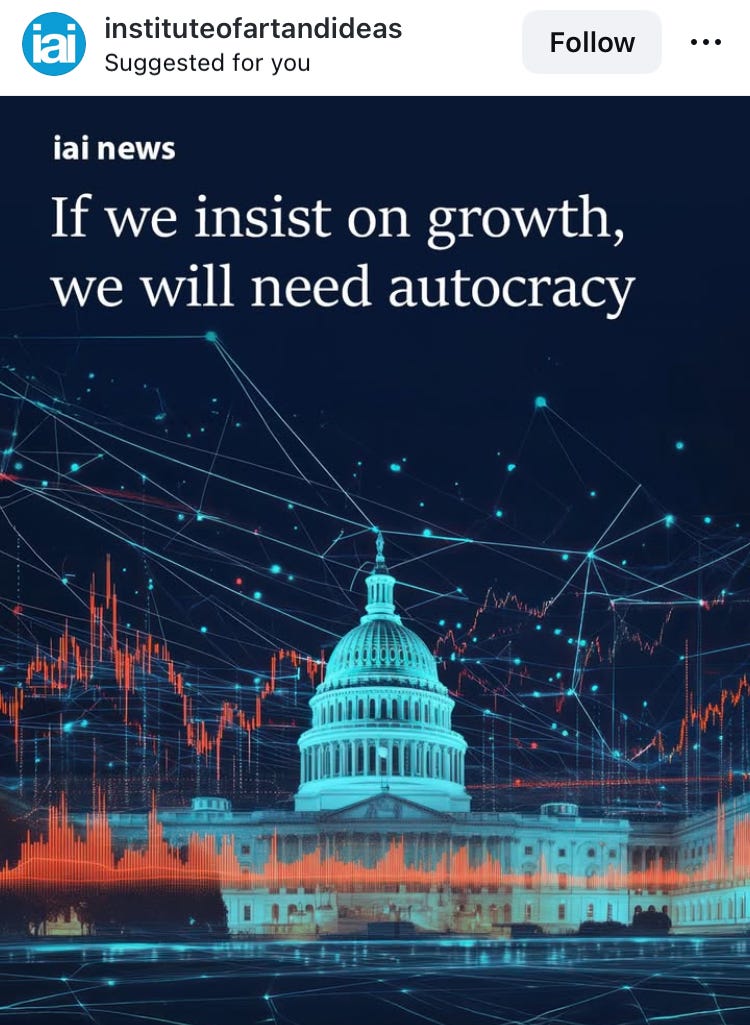
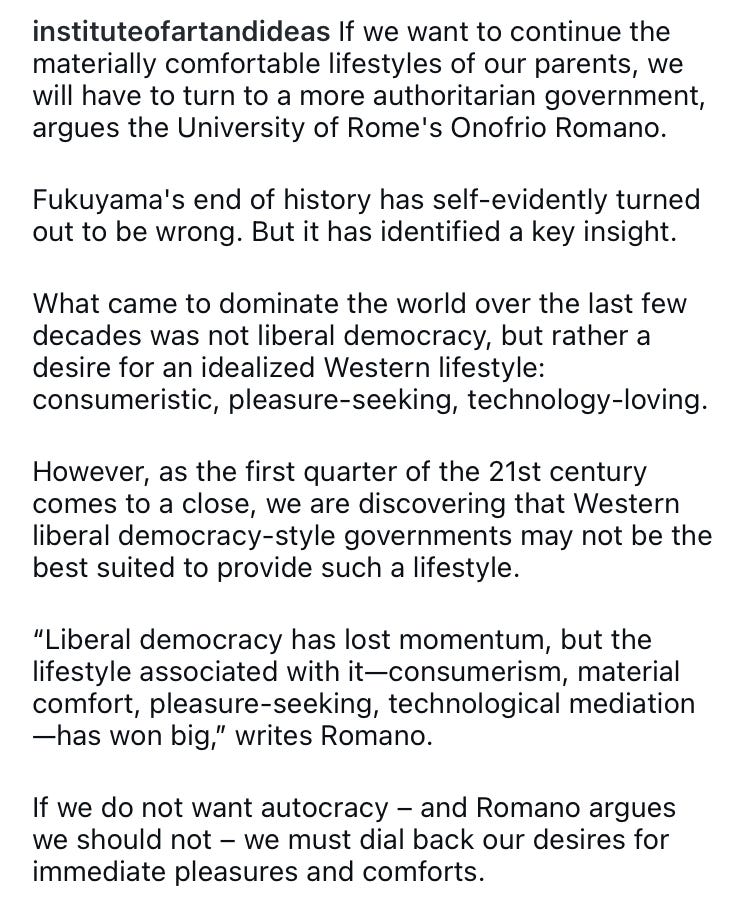
I see little hope that we can (collectively) “dial back our desires for immediate pleasures and comforts.”
The American Alternative
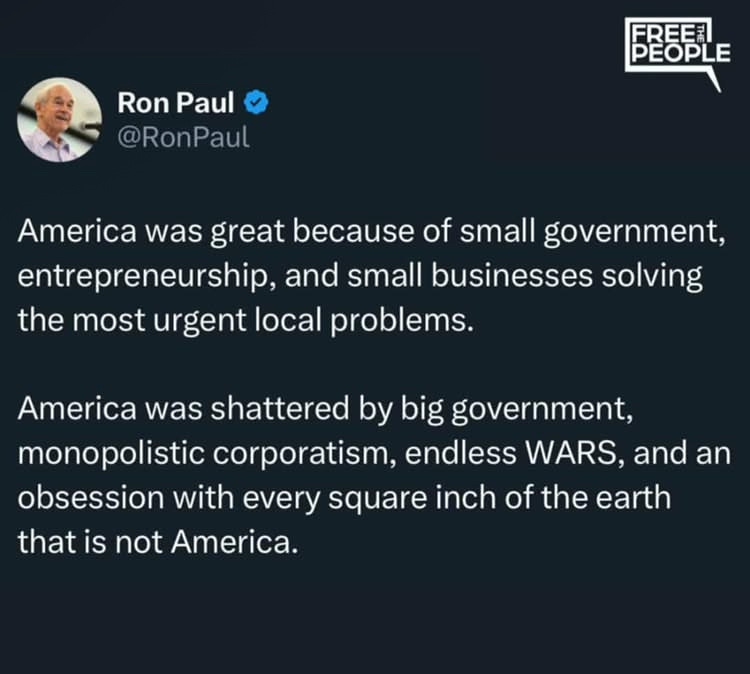
We live in a confused and confusing time, without firm norms or shared values. You can stab a boy in the heart after being jostled and murder him, and still raise hundreds of thousands of dollars for your criminal defense and receive the sympathy and consideration of mainstream journalists and politicians, provided the racial dynamics are in your favor. The disintegration of norms has been accompanied and impelled by the loss of social judgment. People should do whatever they think is best based on what they want, and there’s no firm ground upon which to criticize any decision or belief. In such a world, there’s little basis upon which we can make objective statements about political ideas.
Personally, I think that there is such a thing as a better- and worse-organized society . Deep down, I suspect that everyone feels this way. I think that there are eternal human values. I think they’re deeper and realer than the simple staving off of distraction and the satisfaction of urges and appetites. (Those considerations, plus the maintenance of social management, is are only ethos and telos that the modern Western administrative state has). I think that, regardless of what you want or believe, the procreation of children and their molding into strong and curious adults is a central mission for any set of social values. But I don’t have to make the case for any of these claims here. For now it’s sufficient for me to note that the social values of the modern administrative state are not those of America, historically-speaking. In many respects the two systems are contraposed. Perhaps that’s why the left is so zealous in their efforts to change traditional institutions and try their hand at rewriting history.
So what is the historical American ideal for social organization? Well, we’re a constitutional republic. Households are meant to be fairly independent: shopkeepers, farmers, tradesmen. The standard household is to be a man and his wife and their children. The man supports the household, and his wife helps. These households work to earn enough to buy their homes and land (“the American Dream”) and these properties cluster together to form communities. The communities manage their own affairs at the local level. When it comes to larger, regional issues (roads and civil engineering projects and schools and hospitals), the people vote for representation in their state governments, which were designed to function much more like states - like partially autonomous, variegated political units - than is the case now. The national government obviously manages interstate affairs, protects the border, establishes currency and post offices and weights & measures, etc., and maintains the military. The entire structure is in no way egalitarian. Hierarchy is recognized and enforced, but it’s mutable. There is room for transgression and urban ferment and antisocial subcultures, provided they obey the most basic laws of nonaggression and property. No one can compel enough wealth from the citizens of a different state to pay for years of living costs or an expensive hospital bill or a car or a college education. There is no recognized role for the government as a cultural actor or influence (other than as a general unifier under the American civic creed of secular liberty and public virtue), or as a social reformer. Those efforts are to be made by citizens and businesses and charities and communities and churches exclusively. If this social conception seems alien and bizarre then that is a measure of how successful progressive reformers have been in altering our society during the past 100 years. And most of those alterations have ultimately come at the cost of liberty, the agency and responsibility of the individual (and the family, community, business he participates in) to manage his own affairs.
This system of organization might seem quaint to us, but it is what Americans yearn for. The stronger and more resilient the citizen, I have found, and the more conscious of the troubles and sufferings of the world, the more zealously he or she embraces this vision. This is the system and the set of principles that the current status quo is built and designed to progressively erode.
So those are the two basic alternative visions: the ideology of dependence and the American alternative. When people strive to earn their own money, buy their own home, build their own business, drive their car burning cheap American fuel, exercise control over their local schoolboard, celebrate our air conditioning units and our mammoth stadiums and our palatial gas stations, they are expressing a preference for the American alternative. When they vote for bloated light rail projects or an increase to more than $30,000 per student in funding for atrocious public schools or more money for Medicare or federal housing vouchers for illegal immigrants or easy graduation requirements for high schoolers or set asides or racial/sexual preferences for college admits or corporate promotions they are expressing a priority for the ideology of indulgence. And that ideology is winning.
We’ve now reached the point where, it must be said, that these two models cannot coexist. Traditional Americans who simply want to educate their children and own their homes and control their fates (inasmuch as life and circumstances permit) can no longer maintain the fiction that they are executing a similar civic vision as the ideologues of indulgence. The distortions and wastages have become so excessive and severe, and compromise has become so difficult and unworkable (you cannot make deals with people who aren’t being honest with you) that no accommodation is possible. This rhetoric of American unity and common citizenship is now simply a facade to hide the secret machinations of an increasingly dysfunctional bureaucratic state and keep an increasingly restive (and exploited) working class quiescent. This strategy can persist, provided the economy continues to be artificially propped up by cheap debt and held in a stranglehold by the PMC, but the magnitude and marginal costs of that debt rise every year and that progressive intellectual stranglehold is constantly weakening. The center cannot hold.
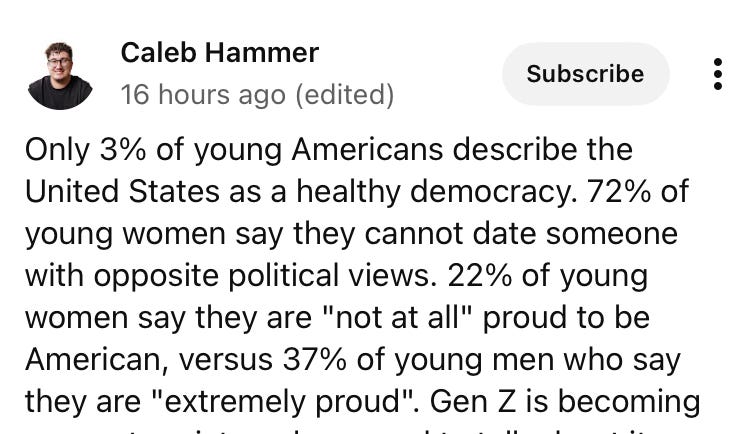
The ideological division and segregation of the United States population is a massive obstacle to rational policymaking but it’s no less an obstacle to the formation of marriages and families - for across the West women have tended to veer left while men have tended to remain center-right.
And that’s only part of the cultural problem. Because our body politic has been infected by ideology. These days it’s easy to imagine that we are a balanced country: some traditionalists and some reactionaries, balanced against some progressives and some utopians. But this misses the point: the traditionalists are the historical foundation of our society. They are producing the native children and the community vigor that supports the entire edifice. They are, in the broadest sense, the bread and butter of this country. If you venture into the marrow of American life (as I have some this summer: suburban North Carolina and coastal Delaware and upstate New York) you will find small and medium-sized towns in which many traditional principles are still the norm. Seen from the perspectives of these places, the driving ideology of progressivism at its deepest level (Critical Theory) is an alien transplant and a missionary religion of the elite. It’s not natural, and it has little cultural or historical basis in the United States. This isn’t a question of one party versus another. It is true that much of the Democratic Party now embraces Critical Theory. The ideas that racial disparities are due to social oppression, that sex roles should be eroded, that wealth and hierarchy and inequality are ipso facto immoral, that marginal sexual and gender roles should be celebrated, that films should reflect all of these values and public schoolteachers should teach, that America’s past is shameful and invalid and that it’s new, progressive, multicultural, and feminist future will be glorious simply because these ideas will be implemented, these are all diluted features of Critical Theory. They are an imposition upon the fabric of America as it has existed for generations, and its appeals to racism, sexism, homophobia, and other broad social complaints are merely the grievances to change society in the preferred direction. This is a matter of a general (although eroding under sustained cultural assault) working class consensus against a novel, elite value system which has only achieved any degree of popularity in the past two decades, and only through indoctrination and institutional capture.
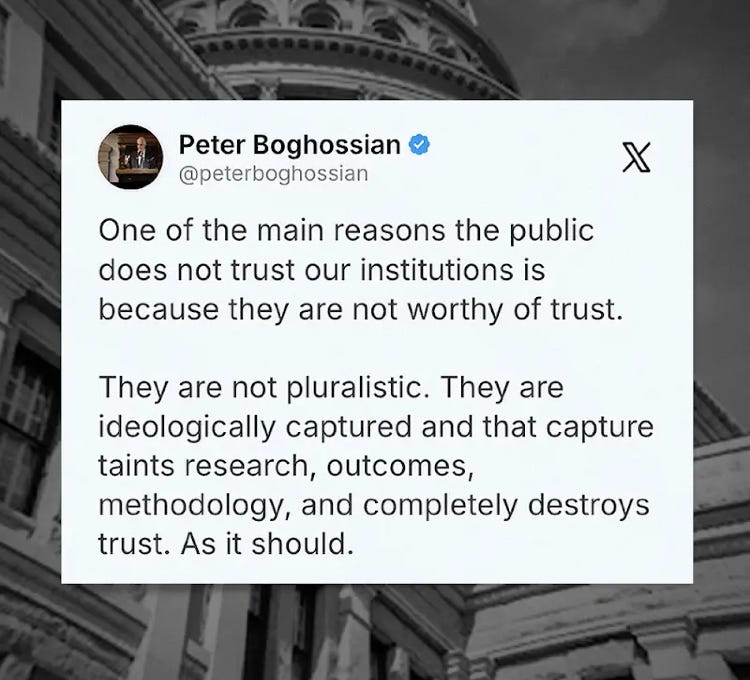
We could have honest policy debates about the real concerns of middle America: how to make communities safer and businesses richer and roads smoother and houses cheaper. But the tragic fact is that a huge swathe of our electorate has now been captured by this artificial ideology. They will respond to any advocate of Critical Theory, no matter how specious their arguments and shallow their credentials. Mayor Zohran Mamdani couldn’t be more extreme (without being openly communist) in his tweets or policy proposals: free buses, free childcare, possible forced repossession of private residences within the city.
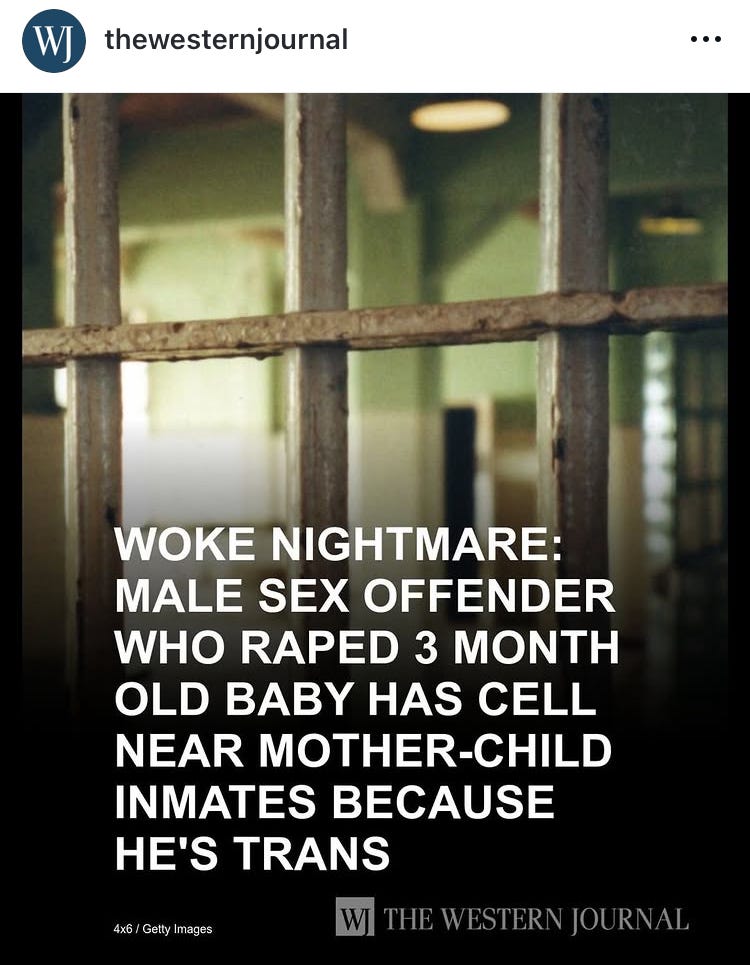
We’re no longer in a normal policy-making landscape.
San Francisco passed an ordinance establishing a Reparations Fund for eligible black residents. The city council refers to a African American Reparations Advisory Committee Report which recommends $5 million per qualifying resident (those who can prove descendance from slaves), plus a $97,000 guaranteed annual income per person.
This isn’t normal policymaking. It’s not policymaking at all. It’s a series of fantasy-laden or symbolic moves by untouchable insiders who are pretending to be leaders.
And that’s saying nothing of the waste (a light rail project proposed in Michigan? the infamous California project which is now budgeted at $230 billion, up from an initial projection of $33 billion which was voted on in 2008?) and fraud (Minnesota, Maine).
Even normal law enforcement cooperation with the federal government has now become impossible in hundreds of American jurisdictions.
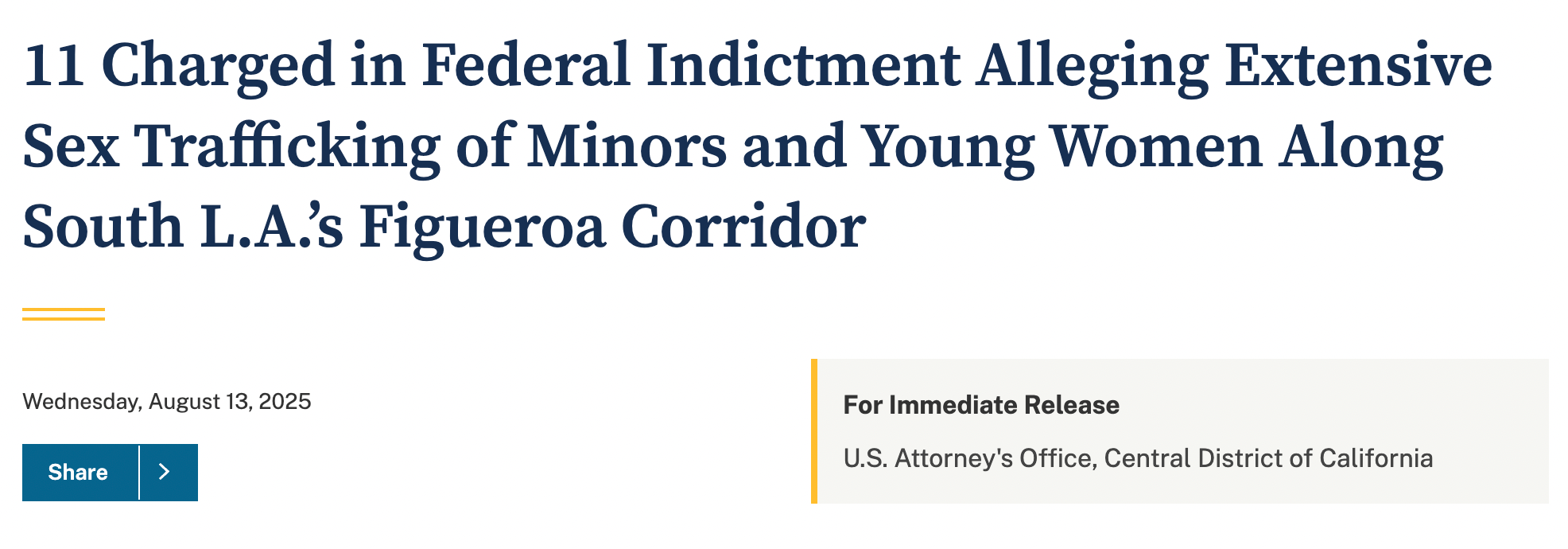
On the streets of Los Angeles, in the wake of an explosion in the migrant population and a determination to refuse normal cooperation with federal law enforcement agencies, child prostitution has now become a much more frequent problem. Chris Bray writes:
The New York Times story depicts a small and overwhelmed local police unit struggling to stem the tide of child prostitution in Los Angeles, but doesn’t mention that federal law enforcement has offered significant help, and has done so quite recently. The Orange Man Bad narrative exception makes the positive discussion of Trump-era federal partnership…problematic.
Similarly, the California Values Act of 2017, passed as a rebuke to Trump during his first term, forbids local police cooperation with ICE or HSI, but allows exceptions — including permissible cooperation in the event of sex crimes against children. The endless demonization of federal law enforcement by California and Los Angeles elected officials ignores the degree to which federal agencies have offered significant and sustained partnership with local officials against child sex trafficking. Idiot Mayor Karen Bass relentlessly depicts federal law enforcement agencies as cruel, hateful organizations full of bigots who just run around torturing helpless brown people for no reason…
All of these examples reveal the corrosive effect of ideology on political deliberation. When everything that your opponent does is bad - and therefore everything that your coalition does in opposition is good - it precludes any possibility of reason or compromise, and completely removes political accountability for the dominant party.

Nearly all of our rulers are “the rich” now, and their pretense of caring about policies or expressing humanitarian impulses or helping the working class should be understood for the naked and increasingly incredible manipulation tactics that they are.
Ross Douthat again, writes, “the American Constitution, in its very design, tends to break down when ideological conflict grows too strong. All those Madisonian checks and balances and veto points require some form of cooperation, but with ideological parties cooperation becomes increasingly impossible”.

The Structural Problem of Democracy
At a certain size and scale of state spending and administrative complexity, and after a sufficient period of time has elapsed from the initial founding of the system… sclerosis becomes the default state, interest-group conspiracies the default mode of governance, regulatory capture the default mode of governance, regulatory capture the default fate of attempted reforms, and any attempt to sweep the money changers from the temple will last, at best, a year or three before they find a way to rush back in.
-The Decadent Society by Ross Douthat
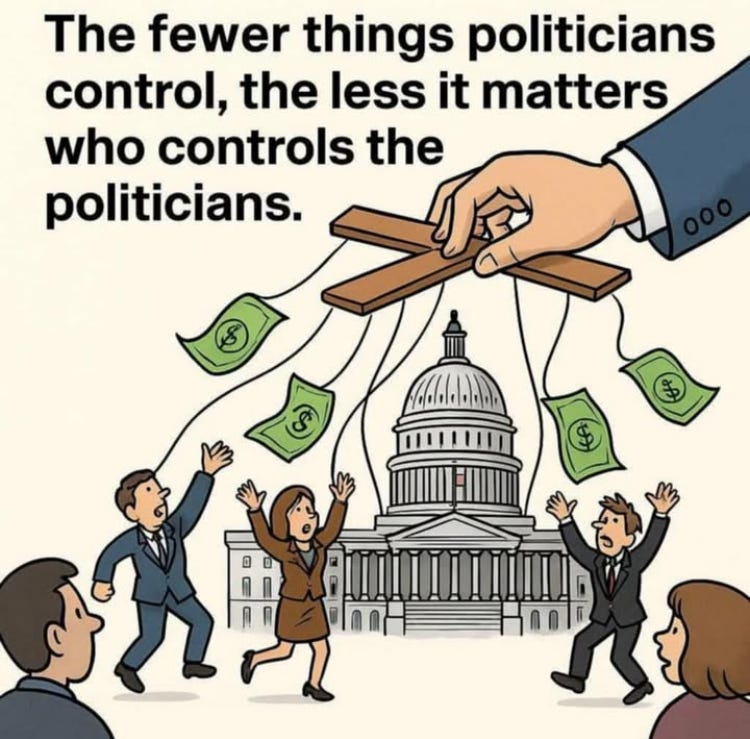
The progressive class embraces a toxic and subversive ideology to lend meaning to their lives and to display politically fashionable notions to others, and this process becomes self-reinforcing. The more fragile and ideological voters become, they more quickly they will abandon self-reliance and discipline and demonize political dissenters. The cultural problem with our system is an ever-increasing degree of self-indulgence and unrestrained dependence on society (by the unfortunate and lazy and mediocre and dishonest), fed by a progressive governing class which endeavors to protect its status and ruling institutions.
The structural problem is a result of the character of those institutions, and the fact that they are completely incompatible with the American alternative (described above), which most Americans still want to pursue to some extent. Reading that account of the traditional conception of American social liberty, you were probably struck by its rustic nature. How quaint, the idea that people should live lives of financial autonomy and communities should make their own decisions and arrange their own funding! This is the reaction of a reader who has lived his or her entire life under the shadow of the administrative state, who can scarcely grasp that kind of existential liberty, which was supposed to be the American birthright. Would it even work?
In his 1990’s-era book Government’s End, Jonathan Chait described the modern Western government as a “large, incoherent, often incomprehensible mass that is solicitous of its clients but impervious to any broad, coherent program of reform.” The issues have gotten far worse than when he wrote those words. In The Decadent Society, Ross Douthat uses the medical system in the United States as a case study for political dysfunction and sclerosis overall:
…the health care system as it exists is… a huge sprawl of of client populations and interest groups, all of which have a strong financial stake in the existing system, and all of which have spent decades building up the lobbying shops and inner-ring knowledge required to either frustrate or redirect reform.
The structural problem of democracy is actually a much bigger than merely political problem. It primarily doesn’t involve the division of power between different levels of government. It is a civilizational degeneration (often called “the managerial revolution”), which affects nearly every aspect of our lives. Ross Douthat diagnoses the cluster of tendencies as “decadence”: “a case study in what it looks like when an extraordinarily rich society can’t find enough new ideas that justify investing all its stockpiled wealth, and ends up choosing between hoarding cash in mattresses or playing a kind of let’s-pretend instead.” I personally think that the principle problem doesn’t lie in generating ideas, per se, but instead in an increasing ethic of selfishness and self-absorption, of which falling birth rates and fragmenting families and declining percentages of married adults are all merely symptoms. 1/6 children in the United States are now supported by child support payments. 40% are born outside of marriage. Within less than a decade, 40% of all adult women will be childless and unmarried. But Douthat’s identification of many of the associated problems is certainly perceptive. Jacques Barzun, who also wrote of decadence, said that in such eras “institutions function painfully” regardless of who’s leading or what they’re trying to do.
If you own your own home or work in an organization which still makes its own decisions or manage your own budget (free of pensions or disability payments or subsidies or transfer payments or other government benefits) or live in a free and vibrant community then I’m happy for you. But you should understand that people like you become rarer every year. All of the trends are arranged against the American alternative, towards greater bureaucracy and dependency and fragility. Employment is now mostly experienced in the context of large, bureaucratized organizations which are subject to the oversight of feminized HR bureaucracies and live in fear of civil liability. They often promote a kind of “corporate culture” which is nothing but a set of glittering generalities (“inclusion”, “family”, “opportunity”) but they are homogenous and - worse - machinelike and dehumanizing. Even CEO’s are now little more than managers. Education is now mostly experienced in the context of vast, semi-politicized bureaucracies, in which teachers and professors (and even principals and deans) have little power and must be very careful what they say or do. Healthcare is now provided almost exclusively by regional hospital groups (the only scale of organization able to bear the weighty cost of government regulations and credentialing requirements and submit Medicare/Medicaid invoices and maintain liability insurance) and run by financial entities.
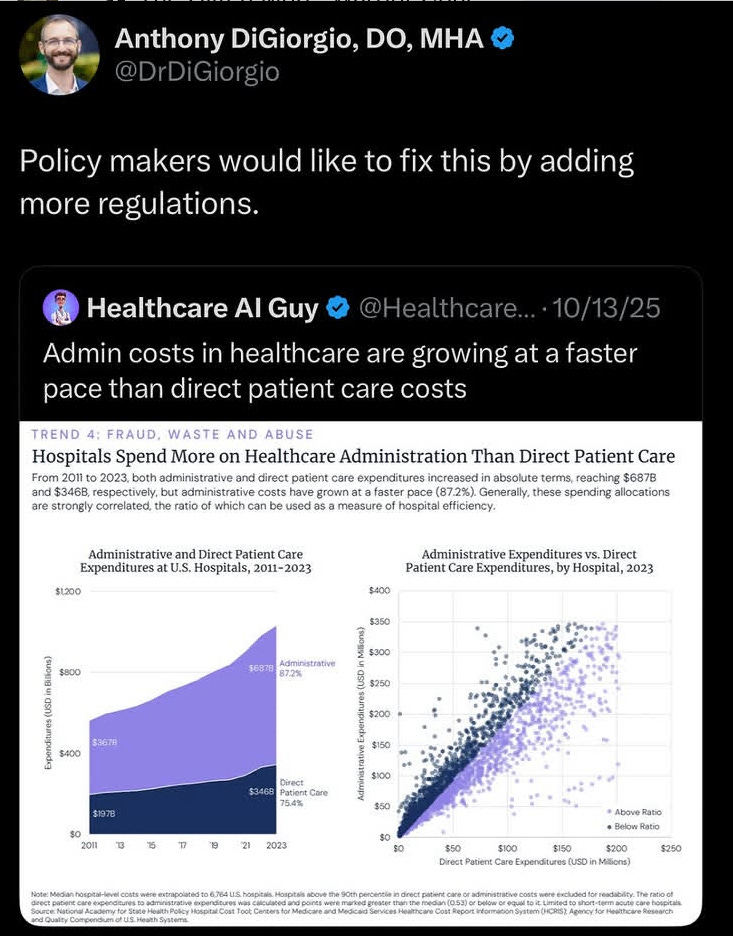
You’re lucky in this country if you’re able to keep 70% of the money you make. If you’re prosperous or successful it’s far less than that. Ever more of that money must go to subscriptions and insurance and fees of all kinds. All of these changes are directly tied to progressive ideology and its advance across the institutional landscape. The economic model we currently practice would like to see as many of us as possible indebted, renting, and ending our surplus income on gyms and films and smoothies and car loan payments. This is American society in 2026: a formerly free people being slowly devoured by a vast and complex Blob in which government agencies, bureaucratic rules, taxes, regulations, corporate interests, and liability concerns all increasingly limit the opportunity for people to live their lives freely.
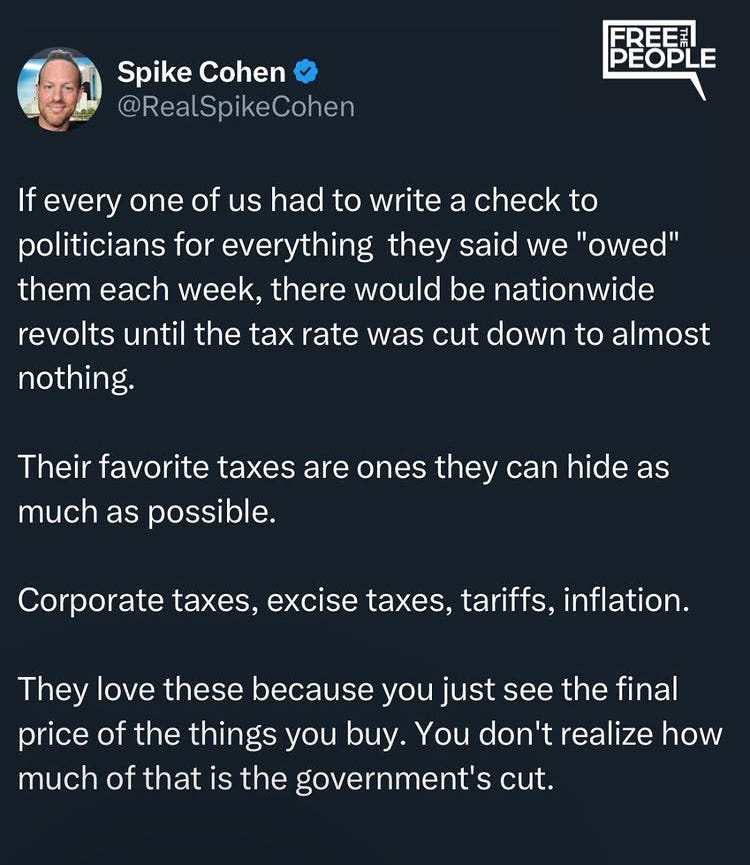
This is not a political structure which can be controlled through elections. It was never meant to be that, which explains the meteoric rise of the PMC during the past 70 years. They have essentially assumed the role of managing and governing our society. This account for the strange but pervasive sense of powerlessness on the left and on the right. You feel powerless because you are. Why do the protests of the left (Gaza, BLM, No Kings) never seem to accomplish anything? Why do the reforms of the right (always announced in the most uncompromising terms) never seem to reverse the progressive drift?
Take immigration. It’s a controversial issue, one that was made more so when the most anti-immigration (arguably the most anti-immigrant) president of the modern era was elected. You probably heard that there were some debates around indirectly paying for immigrant medical bills. This was the ostensible generative issue behind last year’s budget deadlock. Remember that news story? It’s now disappeared into the churn of the media cycle like so many ripples on a pond. You probably imagined that the biggest immigration issue for the Trump administration was centered around ICE’s activities in blue states, and the Trump deportation policies. What if I told you that even at the beginning of 2026 most deportees had been convicted or accused of more serious crimes within the United States (on top of violating immigration law)? What if I told you that Trump has - as of now - only succeeded in deporting ~550,000 people, roughly 1/20th of the total who arrived during the Biden administration alone? What if I told you that there was a huge, invisible system of bureaucratic programs and payouts (unavailable to citizens, or intentionally blind as to their recipients’ citizenship status) still intact, completely untouched by the debate?
You might begin to wonder why you haven’t heard about any of these programs on the news. You might begin to wonder how you could influence these kinds of policy decisions. The answer is, in short, that you can’t. They were established without any public awareness or comment and they are run similarly. They will never be trimmed or shuttered, just like the thousands of similar programs maintained by the administrative state. They are, in the truest sense, anti-democratic. Even if the people banded together and elected another hardline anti-immigration candidate (and then repeated this process for governor, congresspeople, and president) their efforts would be stymied by federal judges and unelected bureaucrats and religious and secular nonprofits… just as the current efforts have been. If all of that failed, huge street protests would be organized to stop the execution of federal law. Bombs would be planted. People would be shot. Buildings would be burned. And after all of that, perhaps 10% of the problem would be resolved. We’ve already seen all of those things happen, while the media tries desperately to keep the public focus and ire on Trump and ICE officers. That’s the pattern that we see every time real reform seems likely, because there are progressives who would rather abandon political norms and democratic institutions than surrender their revolution.
Radical Progressivism Outside the Overton Window

Why are so many people determined to believe that Charlie Kirk was a racist or hateful, when there’s no evidence to that effect? Why are there so many people who seem to believe negative things about Kirk and other dissidents without any real familiarity with their words or ideas? How has this narrow-mindedness metastasized into a worldview so venomous that a considerable number of people across America react with glee when a faithful and peaceful father is brutally murdered in front of his children… and still feel that
Immigration was the most important issue for American voters in 2024. Imagine all of the other issues (healthcare, state psychiatric medicine, utility regulation, child protective services hiring, police training, green investment, zoning regulations, public school funding) moving onward towards sclerosis and expansion while you’re focused on your one cherished issue, and now you might understand: you have no power here.
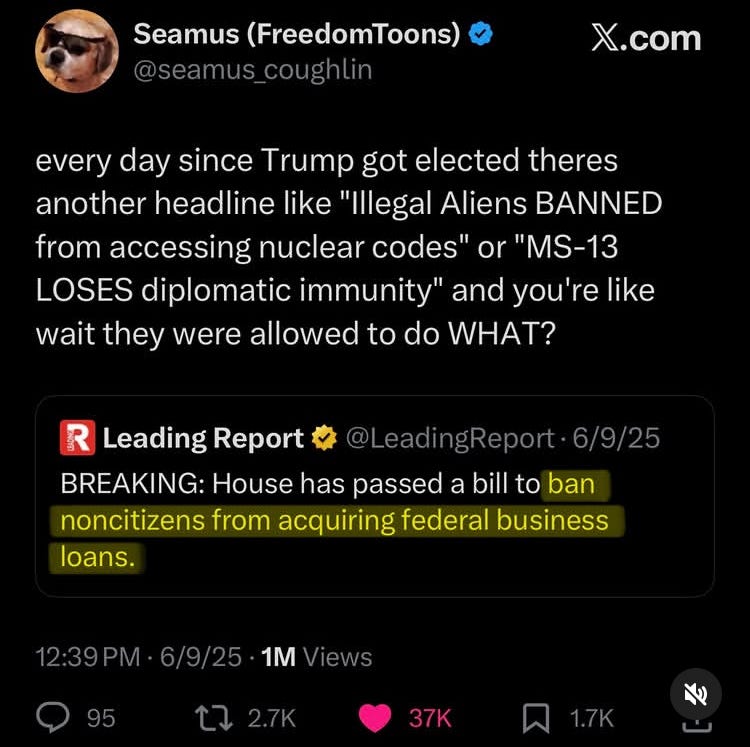
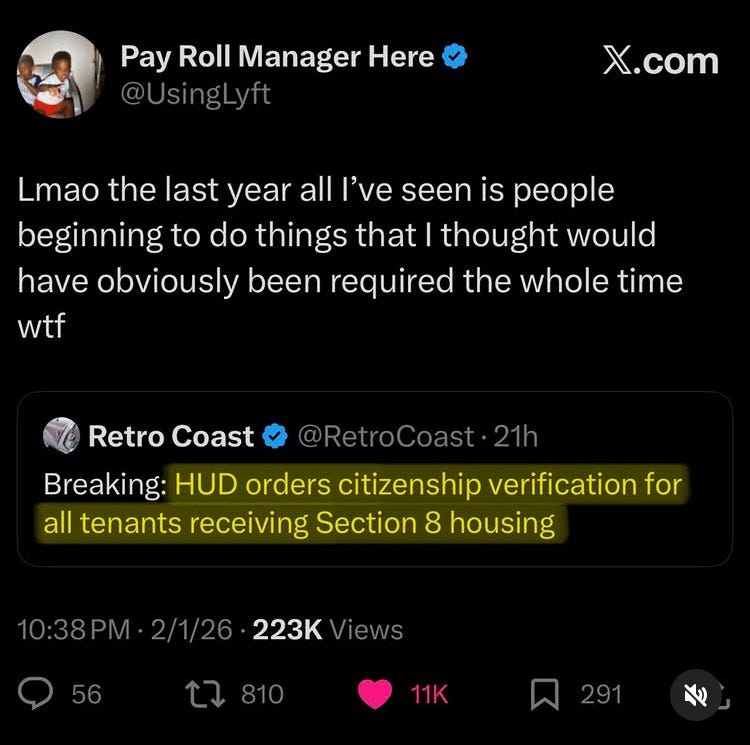
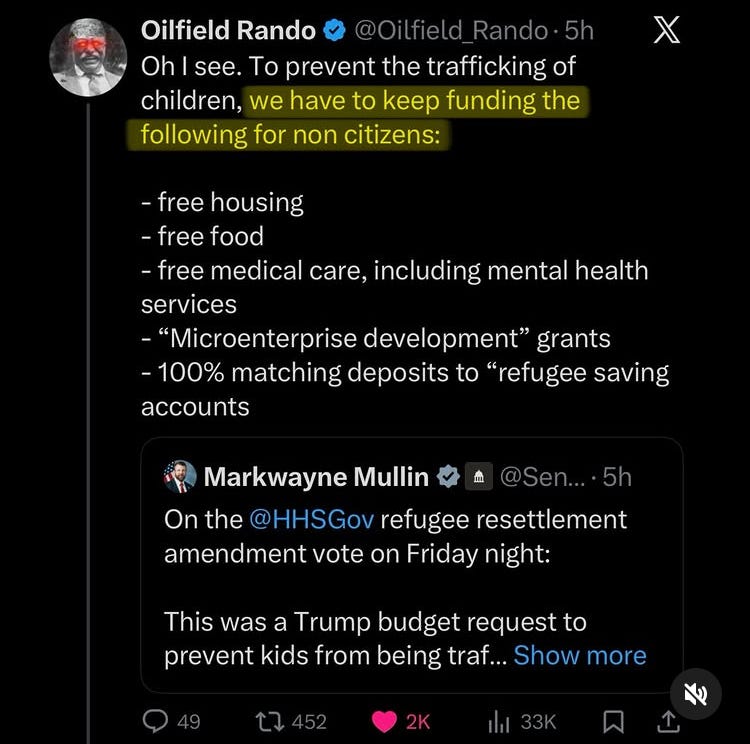
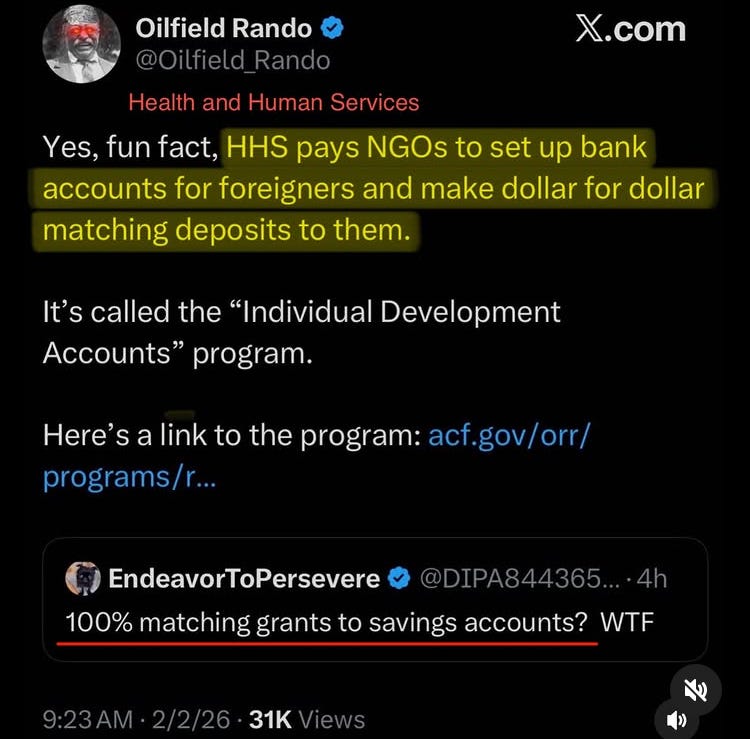
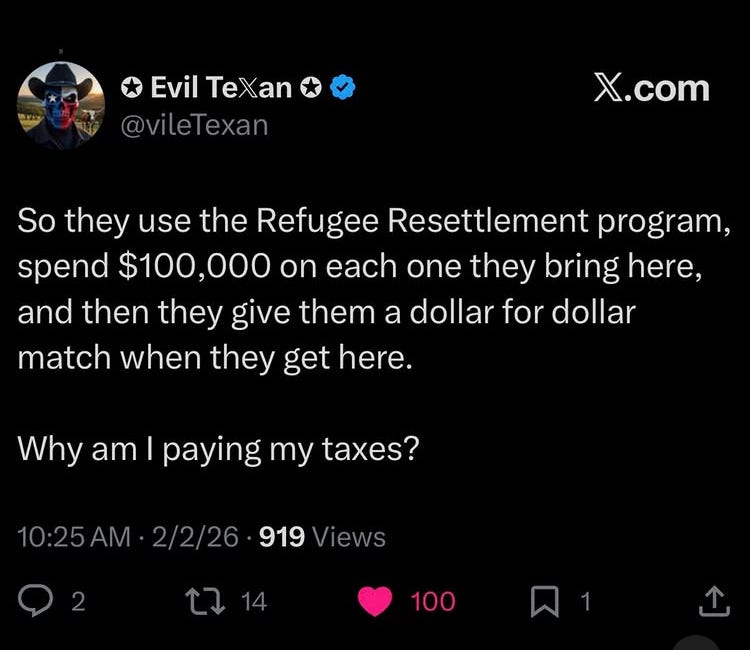
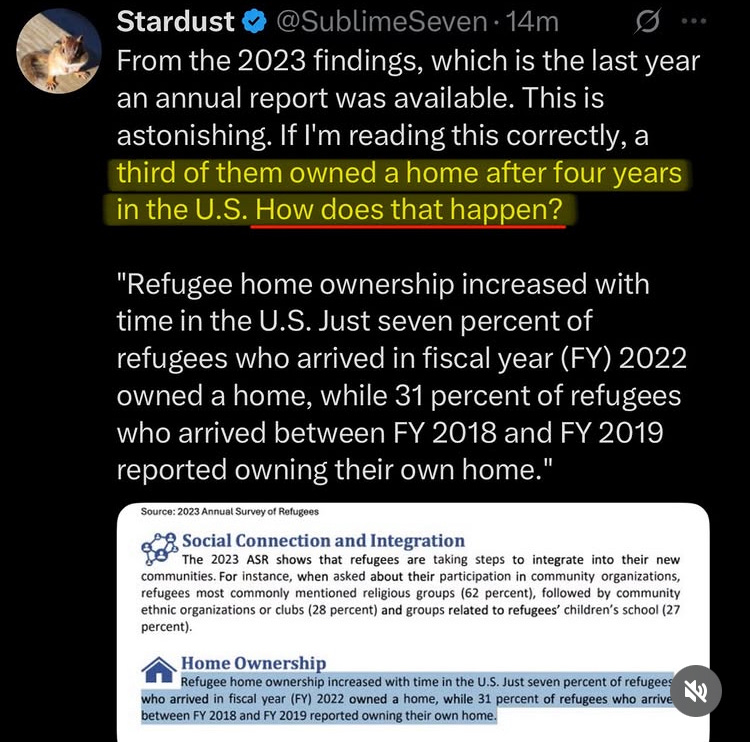
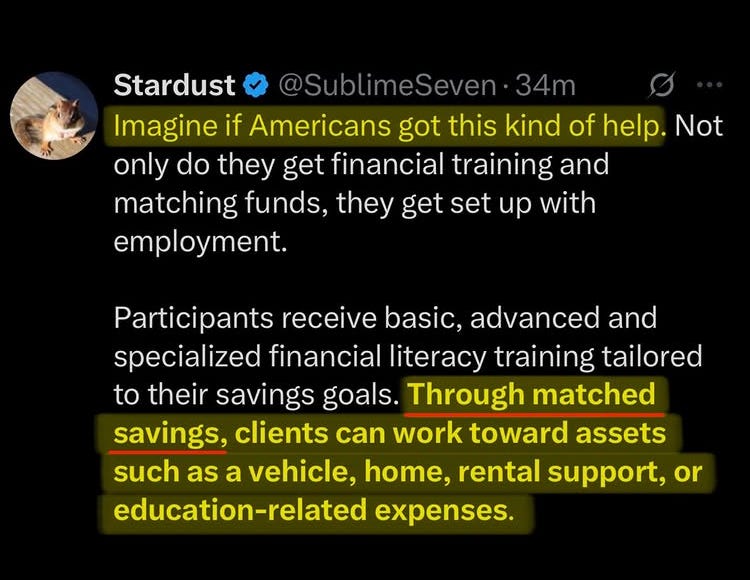
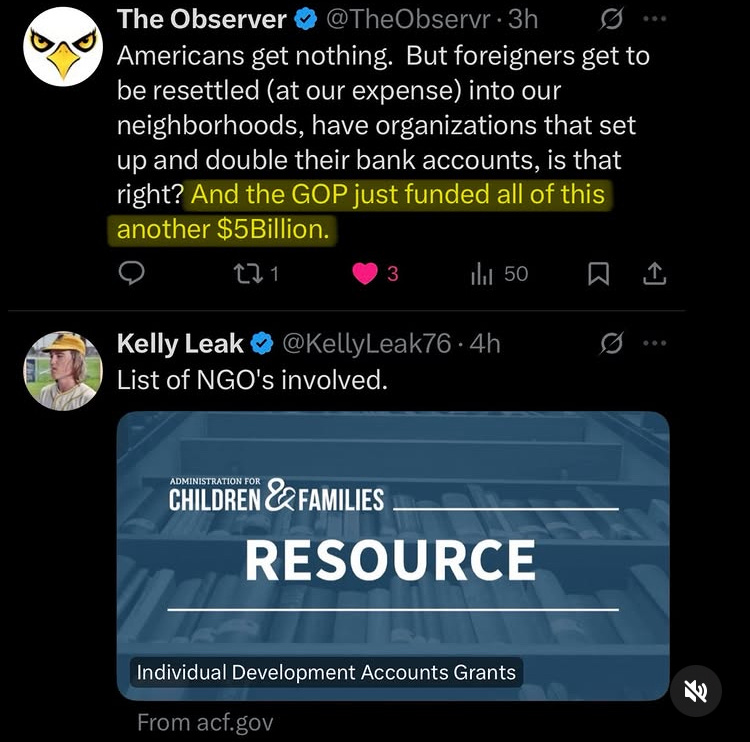
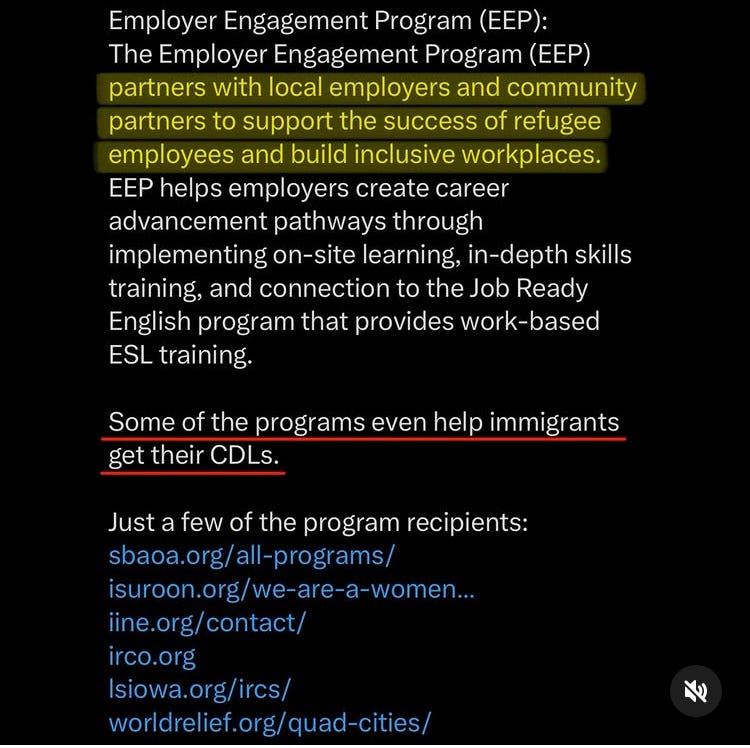
And my example focused on rightwing concerns about immigration, but good luck if you’re a progressive. You can get new programs established and taxes raised and regulations passed easily enough (the Zohran Mamdani administration’s early experience should make that clear enough) but that’s because these things are in the interest of the administrative state. But the administrative state has a silent, senior partner: international finance. Go and try to regulate them. Try to stop data centers being built or investment firms from buying up single-family homes in bulk or corporations from illegally fixing prices or Harvard University from investing its endowment in antisocial enterprises. Then you will also see that you have no power. You are a useful pawn, to enact the agenda of the administrative state. But after that agenda is enacted (after you have free housing and daycare and medical care and college, and it’s all incredibly shoddy and bureaucratized and we are three quarters of the way towards being the Soviet Union) you will look around and realize that you have no freedom or agency any longer. You have no liberty. And you’re living in a dying society.
And it is here where the cultural problem (the increasingly fragile and dependent character of our citizens, and their consequent willingness to trade liberty for benefits and “security”) and the structural problem intersect. This is where the toxic dynamic of democracy comes to the fore, the tendency that has been predicted by political scientists and philosophers since the days of Plato: groups can be leveraged against one another, and voters can be promised privilege and wealth in exchange for voting in and empowering political candidates.
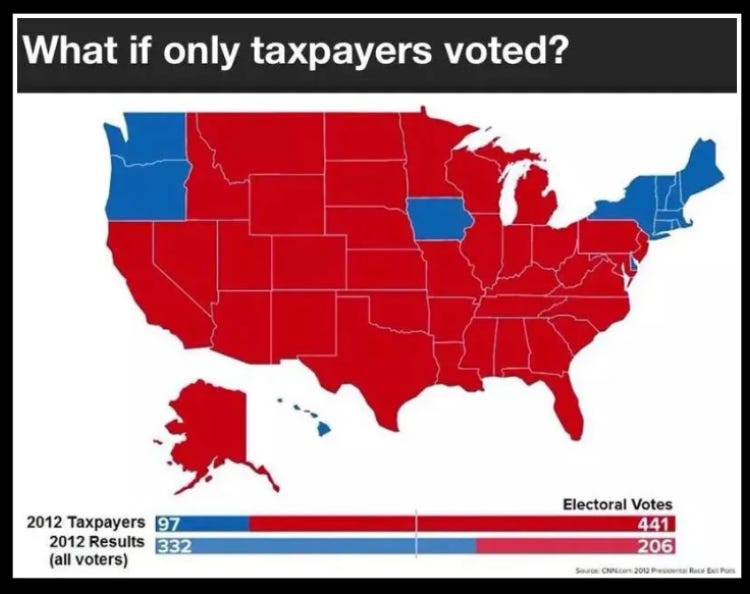
If you live in California, anyone who comes across one of the millions of mail-in ballots that are automatically sent out based on the rotten voter rolls maintained by that state can vote. Not only is identification required; cities and voting precincts are forbidden from requiring identification. This is by design, of course. All of this is by design. The political system doesn’t want near-universal and casual suffrage because of some noble idea of empowered citizens. It doesn’t want empowered citizens. It wants votes, because it wants power. And uninformed, emotionally captured, financially incentivized, or racially loyal voters are the best and cheapest ingredients for securing and consolidating that power.
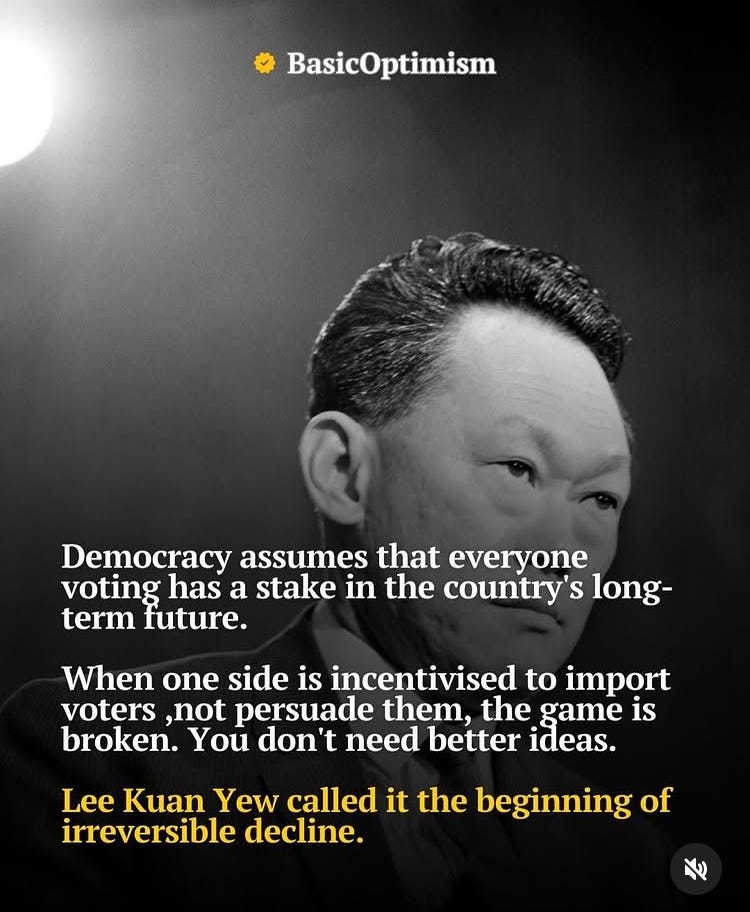
Lee Kuan Yew was the head of state of Singapore, a brilliant and thoroughly nonideological policymaker who probably remade his society as thoroughly as any leader in the past 50 years.
This is far from a straightforward matter of poor, urban government dependents voting for their champions. That’s been a reality in the United States for well over a century now. The old are now fully convinced defenders of the administrative state, since it generously subsidizes their lifestyles - even the richest of them - and pays for their medical care (at a cost of trillions of dollars each year). Farmers receive agricultural subsidies. Divorced wives and mothers receive state-backed alimony payments and child support and real property proceeds. College graduates lobby for debt relief (and were nearly granted it under the Biden administration, at the cost of billions of dollars taken from working class people who never decided to go waste their time and money chasing status and empty credentials). Immigrants (legal and illegal) receive generous benefits to subsidize housing costs and start businesses, as we’ve seen. Trans people receive government money to have sex modification surgeries, artists receive government money to paint, professors receive federal government money to teach and publish. The relationships that each of these groups has with the administrative state varies. Some of these programs are defensible, on a policy basis. But I promise you that if you look into them you will be shocked by the thicket of payments and government commitments to each of these groups. And all of these people vote. By the basic logic of human nature, as long as the government continues to finance their lives and endeavors (at the expense of workers - there’s no free lunch) it can expect their votes.
This is a problem with democracy, alluded to by Heinlein: everyone (more or less) can vote. That wasn’t such a bug when government was more radically limited, and ballots reflected the will of the people regarding major ground wars or limited agricultural reforms or visions for the frontier. But it becomes a serious issue when the “government” is actually a vast administrative state, intricately intertwined with HR bureaucracies and academic departments and nonprofits and financial entities. In that circumstance, the “right to vote” becomes an almost laughable.
Even if 80 million voters focused on one issue and demanded serious rollbacks and reforms, the needle would barely move. We’ve already seen that with the immigration debate. The ratchet strap only turns one way. The degree of progression can be slowed or halted or maybe even marginally reversed - but while we’re all focused on that one issue the administrative state is advancing across 100 more secret frontiers, while the media runs nonstop coverage of Nick Shirley (but not his reporting) or Nick Fuentes.
These are the dynamics that account for the descent into insanity that is policymaking in New York and Minnesota and Los Angeles. This is the terminal phase of the administrative state, when the productive society begins to feel so burdened and strangled and the working population becomes so distracted and feeble that serious issues begin to arise. And voting cannot fix them.
The Three Percent

John Adams supposedly said that only a third of the colonists actively supported the revolutionary cause against Great Britain. One third were loyalists, actively supporting or even abetting the Redcoats. A third were fence-sitters.
On the purist right wing, the “3 Percenter” movement makes the claim that only 3% of colonists actually fought for independence - the implication being that the number of people who would fight an oppressive government today is similarly slight (in reality, around 6-8% of colonists actively resisted or fought the British during the American Revolution).
But the exact numbers hardly matter. The founders of our country - who’d fought a violent insurgency and seen thousands killed and risked their own lives by rebelling and were therefore keenly aware of the steep price of liberty - would be amazed at our country today. And I suspect they would be appalled at our devaluation of individual liberty and political agency. They believed that these goods were of inestimable worth, and certainly not a fair trade for some medical vouchers and crumbling schools and endless business regulations.
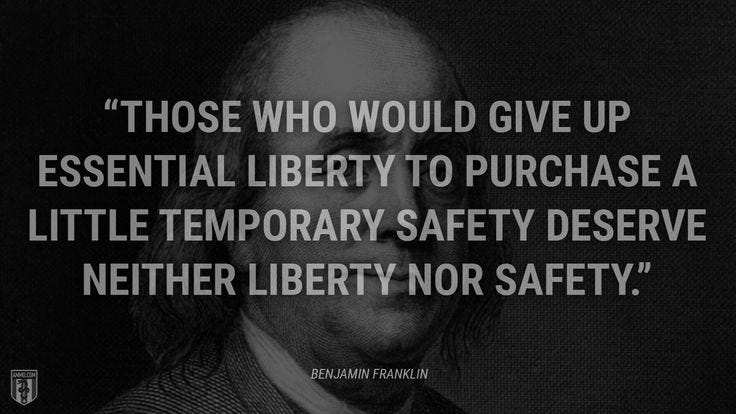
I like to consider a hypothetical: imagine that a foreign country somehow defeated the United States and overwhelmed our government - let’s say China. China is now the sovereign of the United States. It suspends the Constitution but promises to retain (controlled) elections and to assume all of the financial commitments of the formerly federal government. It fires some critics and patriots and forbids armed gatherings and explicit criticism (“hate speech”) of its policies, but otherwise American society continues to run along much as before.
Who would take up arms against our new master? Surely, for anyone who truly believes in the spirit of 1776, such a situation would be intolerable. I suspect that many people in America’s heartland and across the countryside would begin organizing and fighting immediately… but I also suspect that huge swathes of American society would not. They would become comfortable under the new regime. Ultimately, they’re more worried about their standard of living and their conveniences and careers than they are about an abstraction like “liberty.” I could even imagine a scenario in which, years after the conquest, the occupying government benevolently sponsored 4th of July celebrations in order to pacify the population and to gain some legitimacy. What would the speeches sound like? They would probably resemble the current Obama-esque offerings: bland proclamations about “democracy” and “unity” and the “spirit of the people.”
The fact is that none of those principles have much to do with the founding ideals of the United States. Our country was founded on an ideal of individual and communal liberty, and our Founders recognized that the government is nearly always the biggest threat to liberty. I can understand why our government doesn’t want to disseminate that message too liberally. But there will come a time when our government, administering a population of fragile and dependent citizens and crippled by ideological gridlock and structural handicaps, will become our oppressor. When that happens, will the professors and contractors and advertising executives and activists fight? Will you?
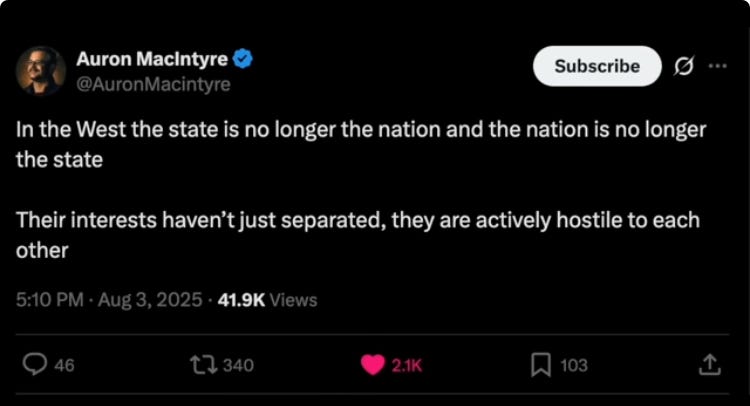
The fact that these questions probably seem misplaced and bizarre probably reflects the fact that our relationship with our government is much different than it was. The conception of citizenship is different. Even the idea of a “nation” is different. The vision that we’re encouraged to subscribe to is a kind of techno-feudalist atomization, a scheme in which “citizenship” is just an elevated administrative status and in which the government is a kind of mammoth service provider. And we (individual earners and consumers) are merely its clients and its poorly satisfied customers.
We Cannot Live With These People
You cannot be a freedom-loving American and flourish in a family and a community in the future world of the administrative state. This speculative near-future is often called techno-feudalism, and we see a preview of it in the policymaking in California and New York City and Toronto and London: masses of ethnically divided, fractious underclass, a comfortable and alienated managerial class, and a true financial and technological elite which uses the PMC to bolster its power. Americans want cars and the freedom to drive them. Ideologues of dependence want electric buses and light rail projects (which never seem to go anywhere or achieve very much - perhaps the point is simply to incrementally grow the Blob). Americans want to own their own homes and water their own lawns. Ideologues of dependence want urban hoi polloi, clustered within “towers in the park” or renting overpriced apartment units. Americans want productive careers focused on work and merit. Ideologues of dependence want empty titles, decades in college, and status-laden credentials… all determined by a complicated machinery of DEI and institutional validation. Americans want to earn and save money. Ideologues of dependence want money to be doled out by various agencies and NGO’s (only to the deserving and compliant of course). Americans don’t want billions of dollars spuriously spent on homelessness. We don’t want violent repeat offenders to be released. We don’t want a de facto immigration policy that permits a 20 million-strong underclass in our country. We don’t want failing public schools or green energy boondoggles or cities in tens of billions of dollars in debt. We don’t want homeless encampments on our streets and antisocial predators on our subway cars and buses and in our train stations. But this is what we have gotten and what we will continue to get under the current regime. The administrative state is already too large, too powerful, and too insulated from mechanisms of democratic accountability The voting public is too divided - ideology has poisoned our discourse and convinced around half of educated voters that green energy and bureaucracy and aid for immigrants are ipso facto policy benefits. In such circumstances a huge array of truly crazy policy proposals can become reality, which is indeed what we see happening.
There’s an element of complacency here, especially among the privileged and older voters. It’s easy to feel that things are more or less on the right track when you look around and see prosperous neighborhoods with essentially zero crime, public infrastructure projects and presidential libraries and a constant flood of new films and books and technological tools. Kids still go to school. Violent crime is falling (but only because the population is aging quickly). The nation is flourishing, is it not? Under such conditions, a kind of middle way and an affirmation of the bland, Obama-esque glittering generalities (trotted out on American Independence Day and other civic celebrations) is surely the best path. We simply need to avoid the extremes. Keep voting, keep working, keep investing, keep buying. The next generation will be different, certainly, but they will enjoy the fruits of this country just as the children of the 1920’s or 1950’s or 1980’s have. But statistics around dating, young homeownership, marriage, and business formation tells a different story. All of the structures and blessings of our society have a solid foundation of tradition and demonstrated effectiveness (really the same things), and we’re enthusiastically wiping these established certainties from our collective social consciousness.
I won’t make a comprehensive argument for the superiority of the American alternative here. But it is incompatible with an administrative state that’s increasingly overweening and complex and a cultural landscape that’s increasingly subverted. Whether you want to call it “subversion” or “progress,” the fact is that the agenda of the left makes no room for independent communities or strong families or individual agency as policy priorities. It can only succeed by successively eroding these elements, even when this is done in the name of “unity” or “citizenship.” We can’t live in cities run by Democratic Socialists who are determined to exploit the wealthy (i.e., the successful and productive) to fund their social welfare schemes. We can’t send our kids to broken public schools or have them taken by bureaucrats and ideologues. We can’t submit our family budgets and our small businesses to endless regulation or our speech to monitoring and secret penalty.
We cannot live with these people.
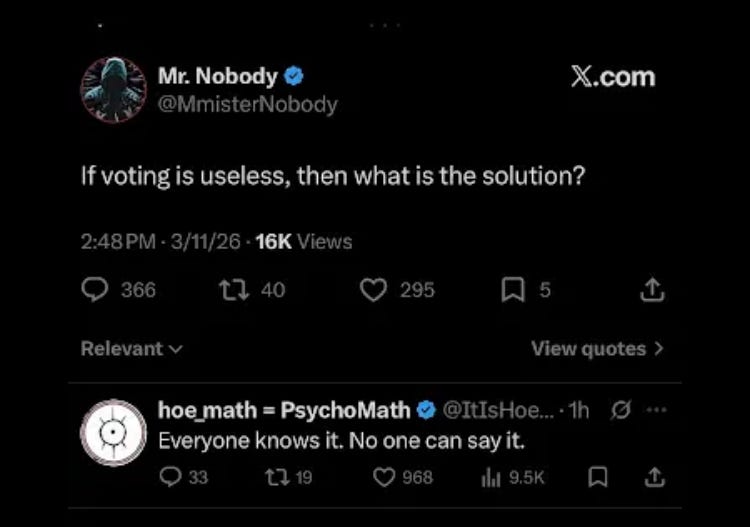
If voting and protesting and political organizing can’t fix this problem, then what can? I have good news, and bad news.
The bad news first: the system cannot reforms itself. Pain and hardship will be required. But adults understand that aspect of reality. The Founding Fathers decided to revolt against their sovereign, despite being ambitious and landed and privileged in the established order and despite having - in some cases - been British military officers themselves. They truly believed in the idea of liberty, as a foundational moral principle. They risked their lives and their fortunes to fight the mightiest empire on Earth. And we have been living off of that exorbitant moral trust for centuries now, while watching it dwindle. Revolution might not be required (it would be impossible these days anyway, in our cowed and feminized condition) but if it’s not revolution then it will have to be some massive social collapse or displacement.
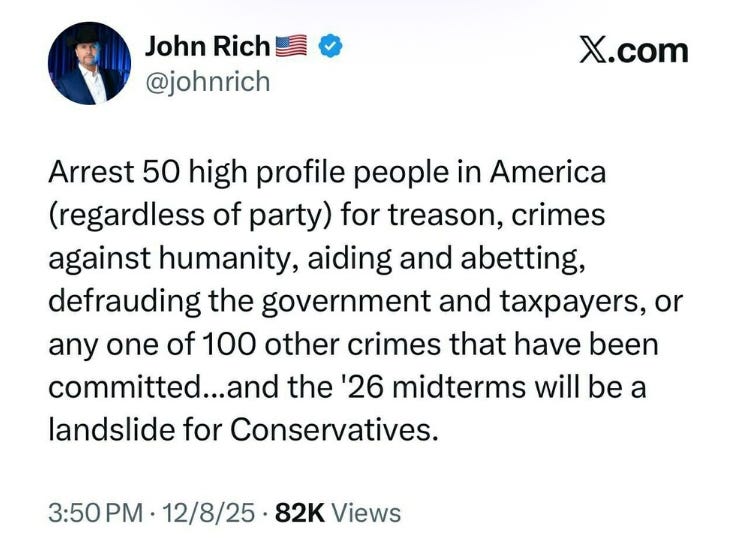
Educated people are now too divided by ideology. That means that a significant mass of them now enthusiastically embrace Critical Theory. They tend to be clustered in universities and hospitals and in large cities, but they have inordinate wealth and social power. This is the class that we rely on for leadership and cultural guidance, and the culture they have embraced is now deeply cynical and explicitly anti-American. That, combined with the structural features of the Blob and its anti-democratic and anti-republican tendencies, mean that reform is now effectively impossible. We shouldn’t give up or surrender to hedonism or nihilism but we shouldn’t imagine that our scattered and unpopular efforts will win the day, either. If everyone concerned about these issues was aggregated the total would probably be far less than the numbers of people in Section 8 housing or on food stamps, and it would certainly be less than the number of seniors receiving Medicare. Those client groups added together plus the ideologues plus the confused and uninformed plus the merely comfortable and self-centered (acquisitive, careerist) plus those who are un- or anti-patriotic plus the inertia of the entire administrative state: that is the totality of what we are struggling against. It’s not a battle that can be won.
But that is considering the question in terms of national unity (winner take all, elections, officeholders), which is an invalid framing. The fact is that our Founders already built a structure to address our political divisions (without knowing that that’s what they were doing) and to preserve the union while allowing for progressive utopianism and traditional American liberty. That structure is called federalism. No national revolution or reform is required - merely a reassumption of agency and control by regions and states and cities and counties.
Before I continue, let me say that I do not see some grand bipartisan political bargain or a series of constitutional amendments or a program of electoral reform leading us out of our mess. And it is a mess. Things might seem to be going well in suburbia, but the social fabric is fraying and the pressures are building. Our society is getting older, sicker, unhappier, and less free. There are hundreds of ways to measure these things, but most of the metrics point in the same direction: downward. What I suspect will happen is some species of social collapse, a bad recession or a war or a government debt or inflationary crisis. At that point, the Blob (which will by then be indistinguishable from the regime and from the financial industry) will react predictably: it will do what it perceives to be necessary to protect its own power. That might involve digital currency proposals or social credit scores or some new raft of administrative expansions (all done in the name of “helping people”). Europe is currently walking down that path right now and the only difference between ourselves and them is that they are farther along.

Given the decline in credibility that always accompanies these kinds of national emergencies, some areas of the country will demur. Counties, cities, and perhaps even states will refuse to recognize the federal government’s authority. This will be federalism through intransigence, much like the demands of the American revolutionaries before Lexington and Concord. Hopefully no Americans have to die. It’s not necessary. That’s the beauty of federalism: it provides hundreds of different laboratories for political and social experimentation and each coalition can explore and live out its own vision of the good life. It simply cannot impose that vision on everyone else.
In a country as large and wealthy and diverse as the United States, federalism allows everyone - socialists, libertarians, anarcho-capitalists, white supremacists - to practice their principles, rather than the abstracted and heavily online simulacrum of political engagement which we have today. Of course, every group must obey federal law, but that law is minimal and fundamental in our (intended) constitutional system. And no group can use the power of the electorate (save through the extreme and extremely difficult route of constitutional amendments) to coerce any other. This is a truly inclusive and pluralistic system, whereas our current one only uses those labels, while constantly enforcing more homogeneity and ideological conformity. No political party or interest group can maintain a pretense of automatic moral superiority and therefore shut down all debate and use the power of police and taxes to force millions of their interstate fellow citizens to adhere to their program. Of course, this vision wouldn’t be appealing to most Americans today. But that is because they’re weak - they want a large administrative state in place to maintain a false, feminized social consensus (even if that oppresses political minorities and creates huge levels of social friction). They don’t want the responsibility to succeed on their own resources or build their communities or to make these kinds of decisions.
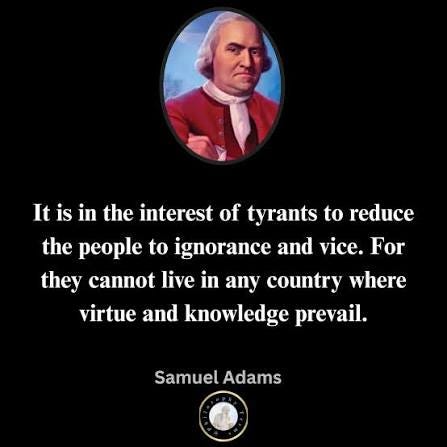
Think of it: Massachusetts can keep its exorbitantly funded prison system (more than twice as expensive per prisoner as any other in the United States). New York City and Baltimore and Chicago can keep their failing public schools.
This might seem like a less than optimistic scenario, of course. Who wants failing public schools? But that is the burden of liberty, after all. When voting on the local level, you really do end up with the government you (collectively) deserve. And if you desire another you can always move. That’s the point: rather than relying on a bureaucracy or a nonprofit or a social program to address your problems, you’ll have to contribute to your community as best you can and however it turns out will be the natural result of those efforts. But that means that when dozens of public schools in Baltimore cannot produce a single graduate testing at or above grade level in mathematics and reading (which is the case now), no federal “help” will be forthcoming. No reference to “systemic factors” will avail Baltimore residents, or elite voters. But how is that different, in outcome, from the situation we have right now? The administrative state has proven itself completely ineffectual at solving these kinds of problems (health outcomes, school performance, crime, poverty). It’s only made them worse.
Federalism allows every locality and state to adopt the policies that it wants for its people. This is a more democratic system (every voter has a much greater impact on the electoral outcome) and it introduces an element of political competition, which we already see in muted form as companies and workers flow into Texas and Florida from California and New York. This is the form of government we’re expressly intended to have. The Tenth Amendment states that: The powers not delegated to the United States by the Constitution, nor prohibited by it to the States, are reserved to the States respectively, or to the people. This means that every governmental function not explicitly enumerated in the Constitution as a federal function cannot be performed by the federal government. We should define the items fairly strictly, understanding that this is one of the most important bulwarks of liberty in our system. What are these functions? The main ones (aside from weights & measures, post offices, etc.) are: maintaining the military and declaring war; regulating interstate and international trade; levying taxes and coining money (including the power to regulate its value and to punish counterfeiters); establishing rules for citizenship in defending the border. That’s it. That is the structure and purpose, as designed, of our federal government.
Since federalism would allow an easier and purer implementation of all political programs and ideologies in the United States, one might wonder how it was ever eroded in the first place. That’s a long story, involving administrative state expansion, communist and pro-Soviet government infiltration, activism and judicial activism, and the elite dissatisfaction with federal importance in the face of the Great Depression and Southern state policies of segregation. But in neither of those cases was administrative state expansion ultimately beneficial and this expansion was always unconstitutional.
Nowadays, we can barely discern the shape of our glorious libertarian constitutional republic, celebrated on July 4th every year. I’m not advocating a revolution; I think a person should be extremely reticent about doing so and that, unless one is extremely desperate, it probably won’t improve his or her position or ultimately win him or her any liberty. But the challenges are coming. The debt spiral has an endpoint. The United States won’t maintain the global reserve currency forever. Ideology might drive us apart in a far more active and destructive way than as already happened. And with every day that passes our government becomes larger, less responsive, more sclerotic… and our people become feebler and more dependent. Most of them celebrate the 4th of July, understanding little of what it means.
And nearly all of them can vote.
Thanks for reading. Take care of yourself.

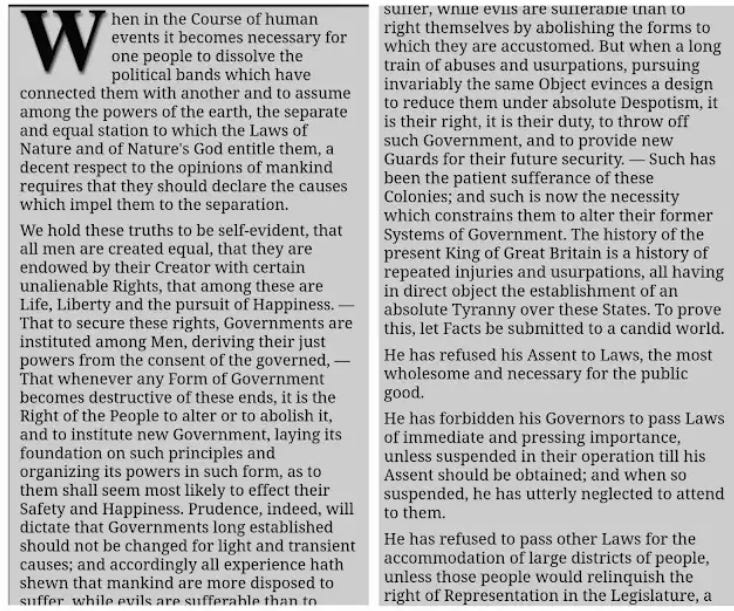
If you’d like to read more about what I believe could be done about our current political and cultural situation, click below:
What Can Be Done

I’m still in the process of editing and tightening this essay. There were reasons that compelled me to post it sooner rather than later. It will be corrected and expanded in time. Your input is greatly appreciated.
I can’t understand why we continue to supply various welfare programs to immigrants, let alone illegal ones. It just makes no sense at all.
The low hanging fruit of addressing illegal immigration (and welfare abuse) is to let it be known that ICE will demand a list of every non-citizen getting a penny of aid from every single agency and will actively work to capture and deport them.
And this is from a person who is broadly in favor of rational immigration!
50% of the world's population is of below average intelligence. That one concept explains almost everything we see around us.