

Fable-making
Juneteenth & the Strategy of Cultural Subversion

I use Juneteenth and Kwanzaa as case studies to explain the general strategy of popular cultural subversion.
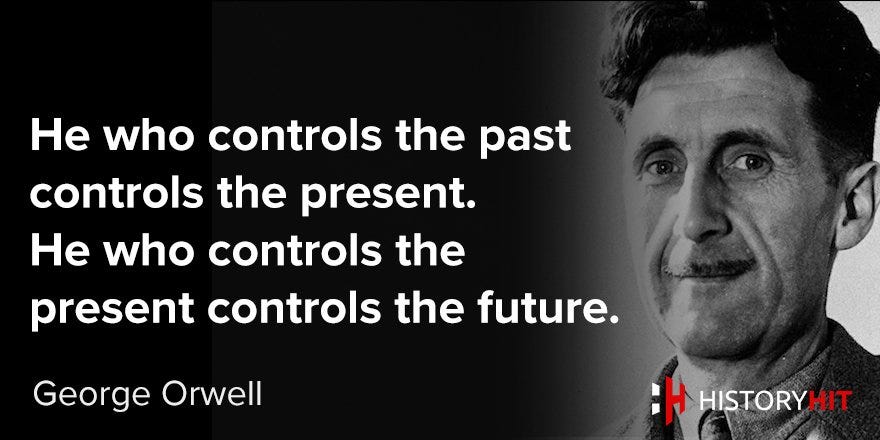
Juneteenth is upon us. It’s a federal holiday and a banking holiday, and it’s been relentlessly pushed and advertised by major corporations (looking to score virtue points with older white consumers), but it would be inaccurate to say that it’s a real holiday. It has little organic purchase in the culture, which is probably good. Any additional, authentic holiday focused on black Americans would doubtlessly involve a dramatic spike in the murder rate. And no one wants that.
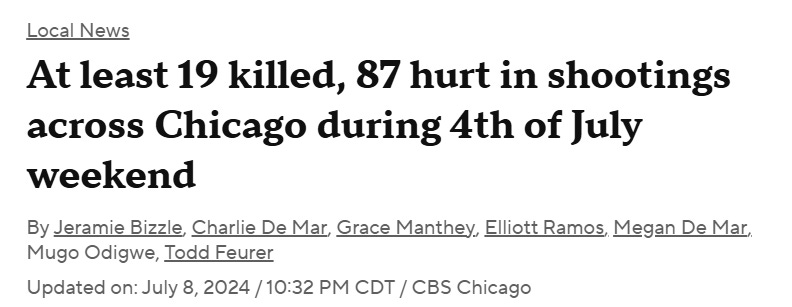


47 shootings…
So if Juneteenth didn’t arise organically, then why does it exist? There are two possible explanations. One is the official account: Juneteenth commemorates the date on 1984 that the Union army announced that slaves in Galveston, TX were to be immediately freed.
Why not the date of Emancipation Proclamation then? Or the ratification of the Thirteenth Amendment? Why is a minor emancipatory historical event which happened near the end of the Civil War (one of dozens of such events) now a national holiday?
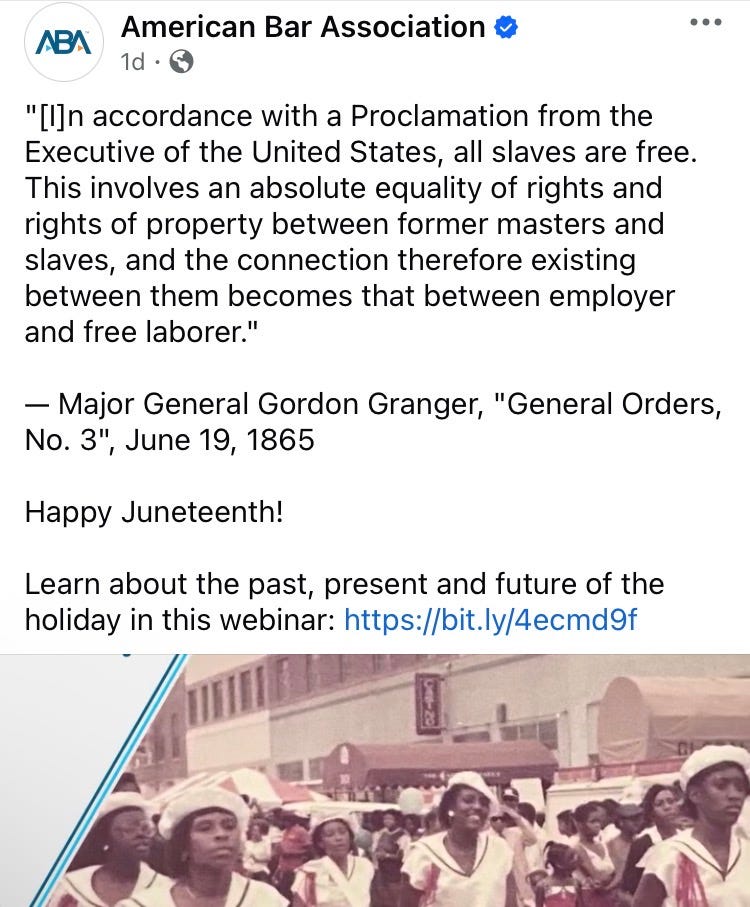
The American Bar Association is precisely the kind of professional organization which is particularly susceptible to leftist activist pressure and feminization: full of educated, ambitious, high-status people who are terrified of embarrassment and relatively ignorant about the realities of poor and working class America. The ABA and similar professional associations also have just enough (it doesn’t require many) passionate people who need to feel like champions of the vulnerable to compensate for their guilty privilege and psychologically fragile identities.
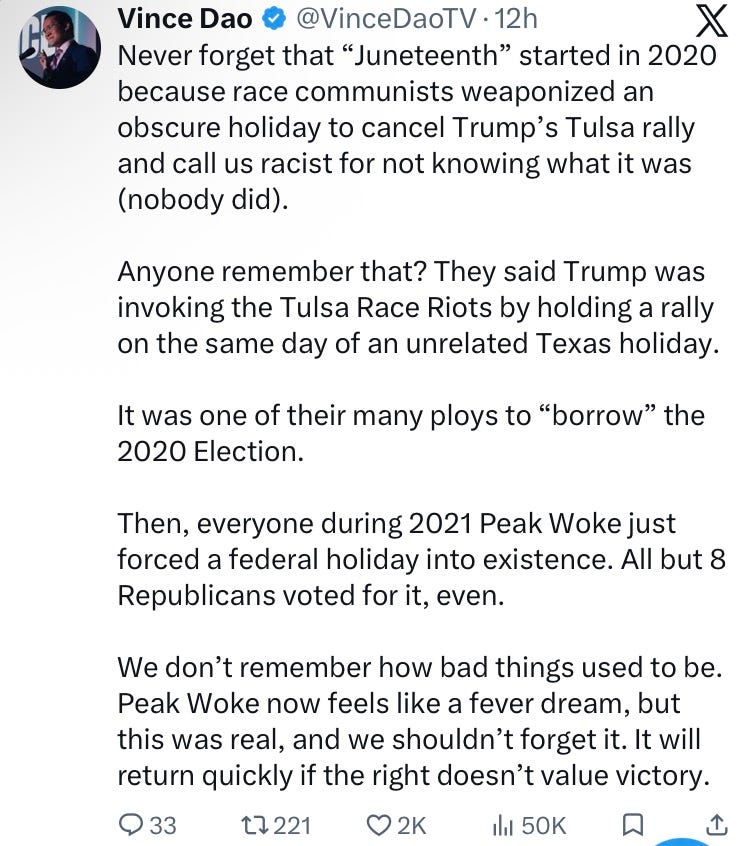
ALL BUT 8 REPUBLICANS… When you position yourself as promoting inoffensive, socially popular changes which are made in the name of “marginalized groups,” most elite people will be unable to resist. This is the hack that Critical Theory has been exploiting for 60 years now.
On could take officials at their word. But in this case (as with all such cases of recent intentional cultural nudging and reframing) it was not officialdom who originated the push to memorialize “Juneteenth.” It was activists. And modern activists are instinctively secretive and disingenuous about their true motivations.
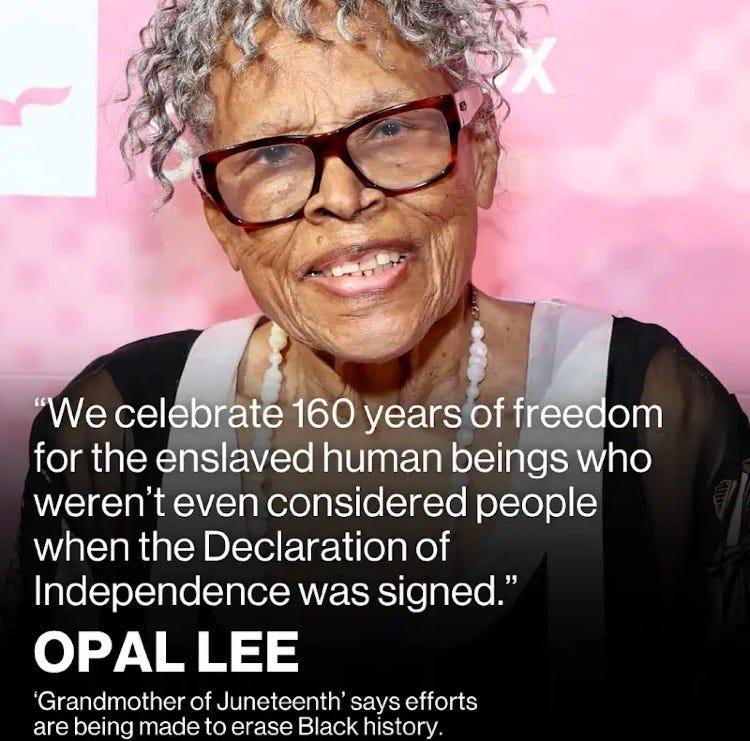
There are no efforts being made to erase black history. “Black history” and the progressive lens that many people disingenuously conflate with “black history” (an example of the so-called motte and baily tactic) have never been more prominent in Amrican education. I teach social studies in Florida, which has one of the most conservative curricula in the United States. There are two historical topics which are given the most emphasis and which must be taught in every K-12 school: the Holocaust, and American Slavery.
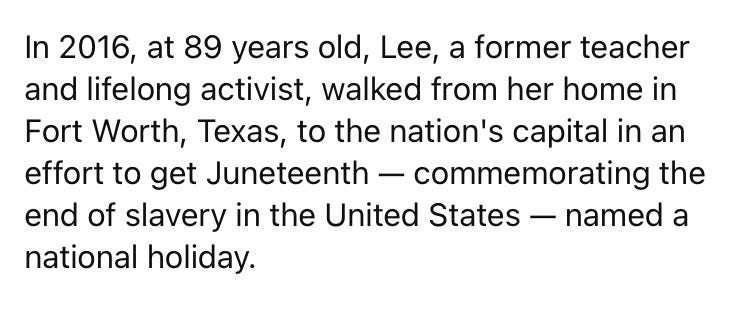
I am suspicious of any teacher who describes him- or herself as a “lifelong activist.”
Activists today see society as something to be manipulated and coercively managed into a better and more enlightened state, rather than as a diverse group of people to be convinced or induced. If I was an activist who wanted to cement a new “black” holiday into place in the American civic calendar, I would have several major considerations:
Make it far enough away from current “black” national civic events (Black History Month - which is in February - and Martin Luther King, Jr. day - January 18th - come to mind)
Make it occur on a date that is far enough away from other, more popular (and more authentically-rooted) national holidays and celebrations, so that it’s not overshadowed
Make it occur on a date when celebration is easy and natural
Labor Day (May 1st) and American Independence Day (July 4th) are the two national holidays which fall closest to June 19th. This accords roughly with considerations #1 & #2. Schools let out around 1-3 weeks before the holiday and America is well into its national summer routine by then (which, unfortunately, sacrifices an opportunity to further imprint upon children the uniquely monstrous - according to the education system - horror of American slavery). This accords with consideration #3. The proximity of Juneteenth to American Independence Day could be seen as a negative feature, by the standards of consideration #2. But I think this is actually the main motivation for the selection of the holiday.
Juneteenth gives activists an opportunity to implicitly criticize our national origins and divide Americans a mere two weeks before our Independence Day.
The activists in question are cultural Marxists and progressive professional fellow travelers that have been infected with a Marxist ethic of group identity and ‘power dynamic’ morality, i.e., any group which is “marginalized” (a definition that seems arbitrary but which is decided according to its political usefulness to the left and the status which can be gained from publicly supporting the group) is entitled to aid and support. This includes: massive wealth redistribution, systematic and legally-encoded clemency in the case of criminal convictions or suspensions or prison sentences, cultural favor, preferential selection in employment and education decisions, and intentional (though always unacknowledged) systemic favorable narrative biases on the part of cultural producers and government agencies.
Note: Juneteenth is a holiday explicitly focused upon and around black Americans (or at least those who descended from slaves) and so my examples in this essay will feature the category of ‘black people’ heavily. But the Marxist identity hierarchy has many categories of marginalized groups which aren’t black (although black people command a high position in the hierarchy): Muslims, “queer” people, trans people, immigrants, brown people, women, etc. Basically anyone who is not a straight Christian white man is given some kind of bonus status within the hierarchy. The fact that this has little do do with the real distribution of social privileges in the world today is no matter. This is an intentional political strategy to build a coalition that will function as “workers” did in Marx’s time, and use their artificial and culturally-inflamed sense of victimhood to destroy the status quo.
This favorable narrative bias can look like many things: preferentially selecting black actors and actresses for admirable roles (or white ones for contemptible roles) or replacing beloved non-black characters with black actors in films and television shows, intentionally omitting reference to race when reporting on lurid or violent public crimes (especially if they reinforce natural stereotypes), exaggerating the degree of historical or contemporary oppression faced by black people (which was BLM’s - and therefore the legacy media’s - entire messaging strategy), exaggerating the accomplishments or triumphs of historical or contemporary black groups or figures. We see all of these strategies used today on a constant basis.
Juneteenth is focused on the latter two items: exaggerating the historical abomination of American slavery (which was ethically repugnant, but which is exaggerated through emphasis and repetition and the complete absence of any historical context) and exaggerating the triumph of freeing black slaves in a single region of Texas in 1864. The activist strategy does not stand alone, however. Modern activists are devoted to change - the more infeasible and emotionally satisfying - and so the activist narrative (which is perfectly reflected in the 1619 Project) is not an independent, rigorous statement of facts.
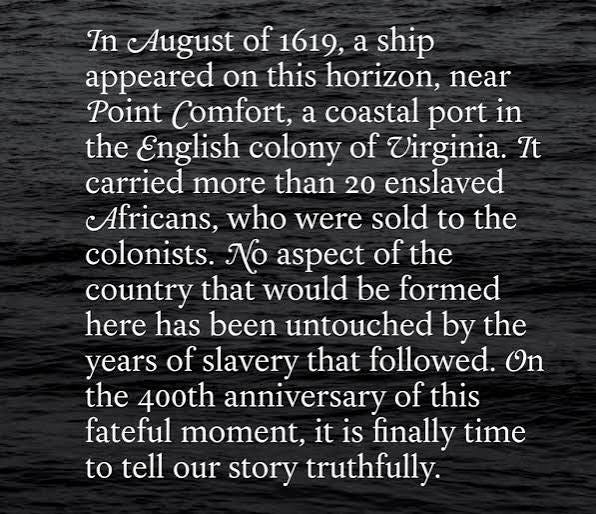
The New York Times colluded with a small team of neo-Marxist, historical activists to produce The 1619 Project, a shoddy and narratively suspect account of the origins of the United States. This has been feted by the managerial class and introduced in thousands of classrooms by now. It was rather less popular among professional historians.
“No aspect of the country that would be formed here has been untouched by the years of slavery that followed.” On the contrary, a vast span of the country - both chronological and geographical - would remain untouched by slavery, which was always a fairly niche reality in the context of the American nation. Slave productivity never accounted for more than about 5% of the nation’s GDP, most of the nation outlawed slavery very quickly, the trans-Atlantic slave trade was criminalized in 1808, and America fought its bloodiest war - 85 years, or three generations - after its inception - to end slavery for good.
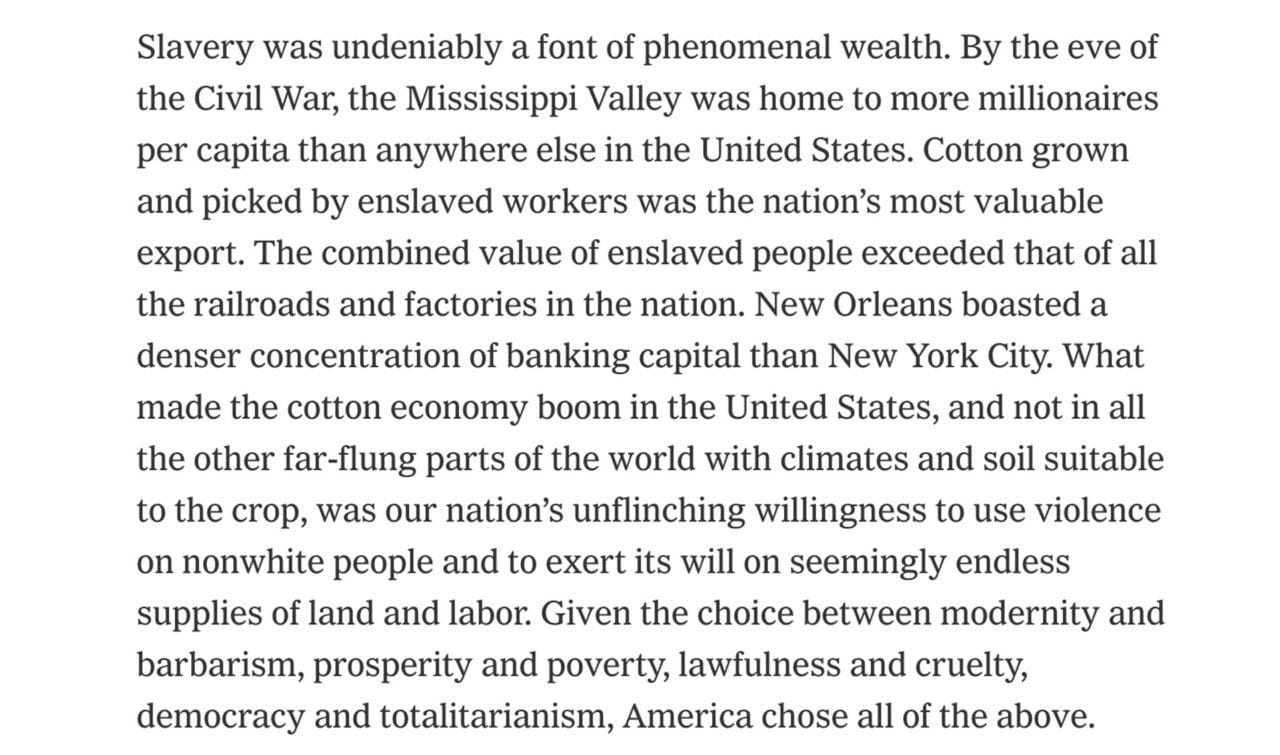
From the Chicago Public Schools statement on their curriculum and the 1619 Project. Most of this is not nonfactual, exactly - it’s distorted and misleading given the historical context, and it is misleading in one specific and consistent direction. This isn’t history; it’s narrative-building.
It is a directed, emotionally manipulative campaign to change the emotional valence of American values and self-image (in this case by changing our national holidays). The campaign wishes to move us away from a self-image in which we are a multiracial democracy and arguably the most successful society on Earth in which black people have been given their freedom almost completely due to the mercy and liberal sympathies of the white majority and have flourished almost exactly in proportion to their efforts and contributions. It seeks to move the American self-image to something like this: America was (and probably still is) a bastion of white supremacy, in which black slaves and their descendants were thwarted at every turn in their drive for freedom and wealth, and which are therefore entitled to their own separate (holy) identity in the American cultural landscape. The descendants of slaves are further entitled to even more massive accommodations, bonuses, and dispensations.
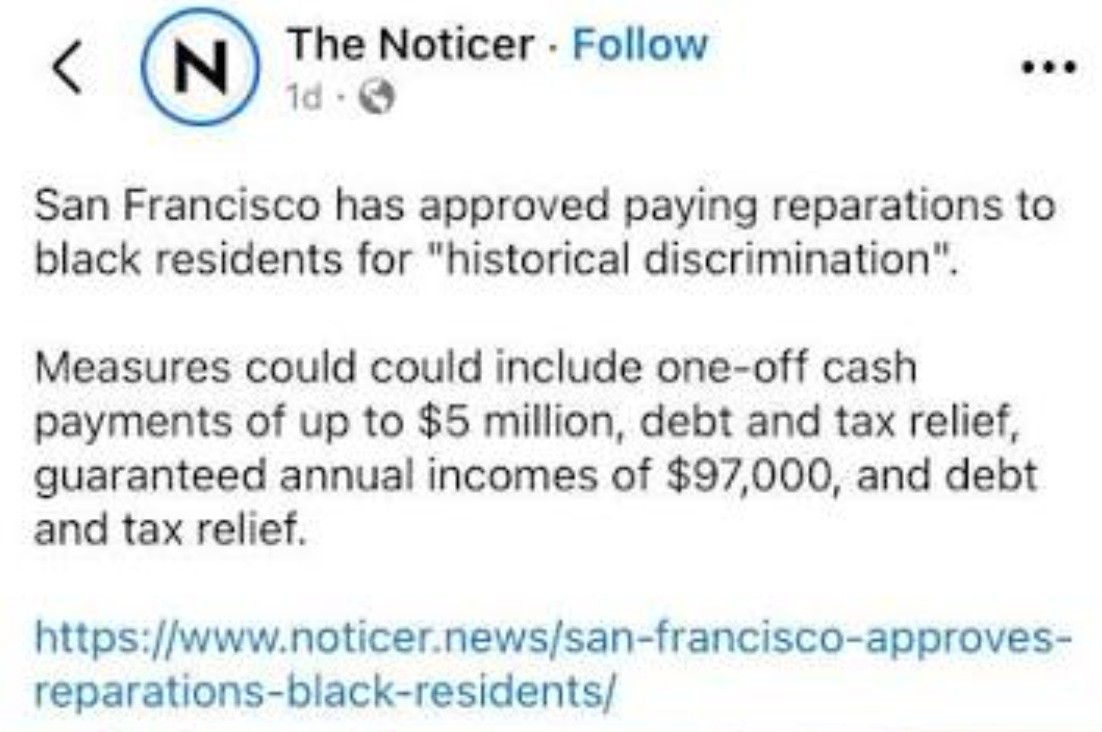
It should be noted that slavery was never legal or legally practiced anywhere in California.
The activist view is essentially one of identity politics. Black Americans are not black Americans. They are black people who live in America (and who enjoy higher standards of living than black people in any other country on Earth, now or since… but never mind). This explains the rash of black separatism - hard and soft - which has popped up in our country during the last 15 years, mostly in elite spaces (the ones most amenable to activist pressure, having been most thoroughly feminized): segregated graduations, arguments for cultural anti-white exclusion, the “Black National Anthem”, DEI, the 1619 Project, etc.

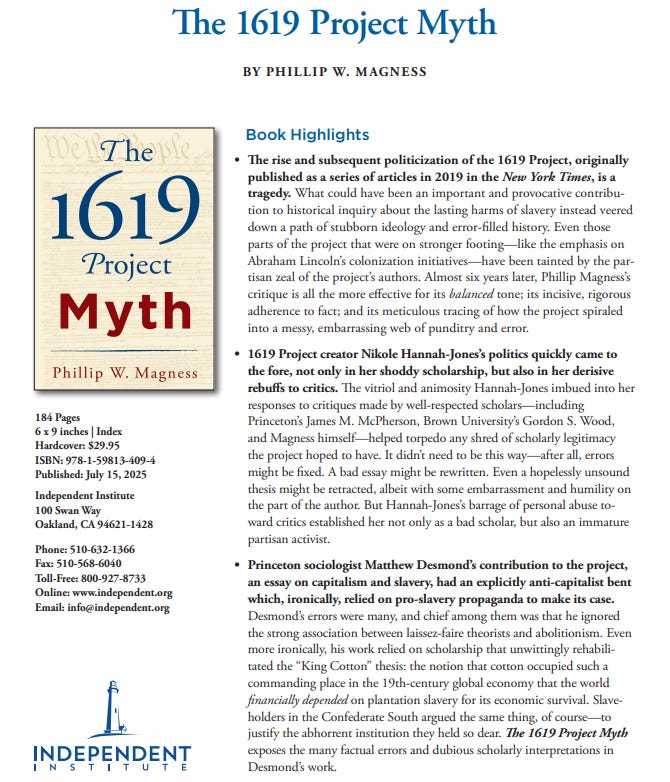
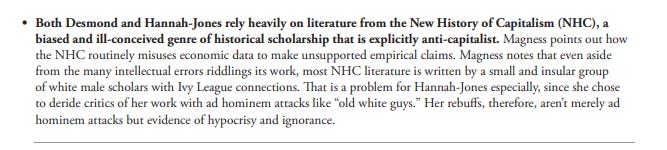
Aside from the chosen identity group vehicles (which are reliably those which can be framed as collectively “marginalized”) and the aims (which are always to edit or warp the public perception of some politically salient issue or cultural reality), the fingerprints of the activists are apparent in their strategies: they use broad, inoffensive language to build public support for a secretly radical agenda (the “motte and bailey” tactic), they twist facts and events to suit their purposes, and they use feminized social strategies of shaming, labelling, exclusion, and enforced conformity to silence dissent. This is a playbook which has been run for more than 50 years now. But as American society has become more egalitarian and liberal, the low-hanging fruit for activist progress has mostly vanished. The fruits been picked and eaten, which in the context of the metaphor means: the activists’ aims have been incorporated into law and institutional practice and their cultural ideas have become part of the mainstream. Most of this was achieved without any significant criticism or dissent.
But trans people are still disproportionately unhappy and mentally ill. Women are still disproportionately spending their time bearing and raising children (insanity!). Black people are still disproportionately poor (a fact not helped by the reality that only 24% of black women will ever get married at any point in their lives, and most of those marriages will be prematurely ended by the same black women), uneducated, and antisocial. Rather than taking stock and interrogating their basic assumptions - something that ideologies generally do not permit - the only conclusion which the activists can draw is that we need more subversion, more redistribution, more cultural change.
The startling thing to me about the entire sordid condition is not that activists are secretive and instrumentally dishonest. If you believe that a social norm of “intellectual honesty” is merely a relic of a capitalist, patriarchal, Christian virtue structure which has been used to reinforce existing power structures for decades you would not care too much about the principle of honest disccourse either - although they rarely admit that this is what they believe. Dishonesty can be endlessly recursive like that. A dishonest and manipulative person can simply never be trusted, even when they’re claiming the most sincere honesty. A comfortably dishonest person can lie about lies about lying, etc.
Two generations ago (before political agenda and likeability became the primary lenses through which to evaluate individuals in professional managerial class - or PMC - settings) we would have simply clocked such people and dismissed everything they said. But dismissing Nikole-Hannah Jones’ messages would entail throwing out the ideological baby with the normative bathwater, and that is completely unacceptable for the PMC. They need their cultural narratives. No, what is startling is that almost no one (nonactivist educators and journalists and members of the public and corporations) ever acknowledge that (1) there are activists, (2) they have an agenda, and (3) the agenda has shaped the messages that we’re all absorbing. These seem like pretty simple allowances to me. But on these points all I hear from the mainstream is deafening silence. Curious… no?
Remember the key features - you’ll see them everywhere:
Artificial centering - exaggerating the degree of historical or contemporary oppression faced by a group or exaggerating the accomplishments or triumphs of that group
Narrative control - reframing, distorting, or hiding facts in order to craft a certain useful and coherent story
Lexical redefinition - using broad, inoffensive language to build public support for a secretly radical agenda, or inventing/redefining words
Shaming & exclusion - using feminized social strategies of public moral disdain, labelling, exclusion, and enforced conformity to silence dissent.
It’s important to note that these dynamics are culture-wide. They function as a kind of organic response within the PMC. An activist might artificially center a group by inventing a holiday (Juneteenth, or Kwanzaa for example). Academics will exert narrative control by publishing historical accounts which maintain a pretense of technicality and objectivity but are heavily biased and intentionally omit inconvenient details. Other academics or cultural producers will jump on the bandwagon, and invent new and supportive terminology: BIPOC, for instance, or “umajaa” (cooperative economics - one of the “seven values of Kwanzaa”), or “emotional labor.” All of the new research and mainstream cultural products will quickly reflect these new terms, and they will come to serve as status markers in addition to carriers of meaning. Anyone who dissents or introduces contrary data or objects to institutional pressure or incomplete narratives will not be addressed or argued with. They’ll be labeled and shamed and, if possible, excluded.
When these strategies are used on behalf of “marginalized groups,” the endlessly considerate mainstream professional will find him- or herself unwilling to push back. This is how thousands of institutions can very easily come to adopt a new culture, ethos, and language within a decade.
Kwanzaa
There’s another made-up, pro-black holiday designed to rend the American civic consensus of color-blind, traditional patriotism: Kwanzaa.
Founded by Maulana Karenga (nee Ronald McKinley Everett) in 1966, Kwanzaa is a far more artificial holiday than Juneteenth (which at least has a solid grounding in American history and some minor significance among descendants of slaves). It is also less popular, but that didn’t stop virtually every public school that I attended as a child (and there were more than a few) from mentioning and promoting it. Even then I thought it was odd. Like myself, Karenga believed that a kind of intentional cultural strategy was required to empower his group (black Americans). Apparently Karenga overestimated the ease with which culture could be assembled and adopted, for despite the endless glossy educational posters and teachers’ flashcard packs, Kwanzaa has never caught on in any meaningful way. But somehow still we all know what it is - we learn about it in school.
Kwanzaa involves seven values, made up rituals, a small vocabulary of Swahili (which is a hybrid language formation of East African and Arabic languages, not even fully sub-Saharan African) words, and a flag. None of these elements is widely known or cherished today.
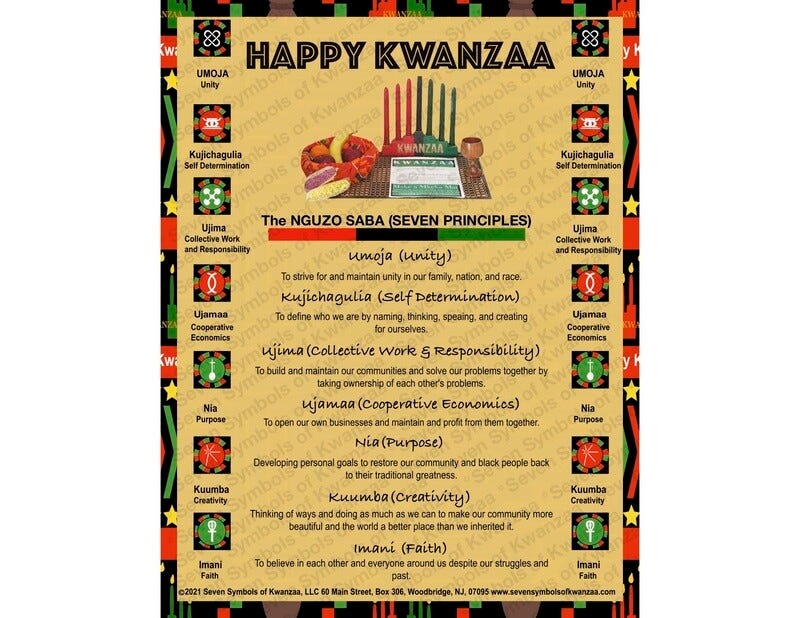
The corn, the crops, the unity cup, the ersatz Menorah, the Swahili words and the made-up symbols - does any of this read as sincere, coming from a violent, paranoid, suburban academic from California?
Unlike myself, Karenga was also a violent and antisocial grifter, who was convicted in 1971 of the kidnapping and torture of two women who worked with his organization. He and two accomplices held the women for days, beating, cutting, and interrogating them. He was paroled after only 4 years. In 1995 he sat on the organizing committee and authored the mission statement for the Million Man March. He remains national chair of Organization Us and executive director of the African American Cultural Center. He’s also currently employed at California State University at Long Beach.
None of those inconvenient details regarding the founder (the sole creator) of Kwanzaa is brought up when discussing or promoting the holiday. The Human Resources department at the last large company I worked for (before I became a teacher) posted a Kwanzaa series on its Instagram account, so I helpfully replied and included that information about its founder. It was quickly deleted.
Ironically, Karenga also wrote a great deal about feminism, which was warmly received by female academics (despite his verified past actions). Remember: the narrative is all-important. Sincerity, honesty, good behavior, compassion, usefulness - all of these are trivial in comparison.
If the academics and school administrators and HR managers and government employees who push things like Juneteenth and Kwanzaa into the cultural circulatory system (either from conviction, or a fear of confrontation or accusations of bigotry) are willing to overlook the capture and days-long torture of two women by the author of the holiday, and they’re willing to credit his feminist bonafides, what else are they willing to sacrifice? Truth, patriotism, and civic unity, certainly. To them these aren’t even social goods. They’re merely obstacles to their grand program of utopian cultural manipulation. We’ve seen enough campaigns like this throughout the twentieth century to know how they end: either they’re stymied, or they succeed in eroding the moral foundations of their society to such an extent that a new, hungrier group of people are able to take the reigns of power.
The Social Justice Killing Fields

‘Wokeness’-or ‘social justice ideology’-is a direct descendant of applied critical theories, which have tried to defenestrate all standards of objectivity and evidence, and all ‘meta-narratives’. This rule doesn’t apply to their meta-narratives, of course. One is expected to believe both that there is no objective morality or even truth, and also that trans rights (for example) are an objectively worthy goal (transphobes aren’t described as immoral, but they’re regarded as such nevertheless). One is expected to disregard all grand narratives, as symptoms of group power dynamics rather than testable claims about reality and
The first thing that power-hungry political operators do on the path to utopia is to eliminate (“liquidate”) the activists, whose discontent and silly view of reality make them an endless source of potential trouble. The activists are always dismayed and surprised by this stage of the revolution, of course.
But that’s what they get for believing untrue things, and for helping to perpetuate deception…. no matter how morally unassailable they believe their cause to be.
Thanks for reading! Take care of yourself.

Similar essays:
White Supremacy

This is a series of historical questions and sociological speculations, including many of my doubts about the racial-historical narrative that many people want to turn into a kind of unquestionable moral orthodoxy.
The Ignoble Savage

This essay features striking passages from the book Empire of the Summer Moon, by S. C. Gwynne, and explores what it might teach us about human cruelty, history, and civilization.

If Juneteenth has been celebrated by black Americans all along, one wonders why it was instated as a federal holiday, especially in 2020, during the communist efforts otherwise known as "racial reckoning."
Cut to 2001 or so at an artists' colony during Christmas, a woman says in that sort of morally superior incredulity, You've never heard of Kwanza?
She was older than I am, but no, I came of age in a more unified United States in the 60s and 70s, when black culture was pretty much its own thing apart from the music. But blacks were also part of the collective.
Anyway, we all love a collective day off. Who celebrates Labor Day as intended? Veterans Day? We are increasingly separated into groups and THERE lies MY grievance. It began in earnest in the 90s and there is only one telos for this, I'm afraid. To create separate warring factions.
I've been privy to the black activist class claiming that black Americans can't relate to the 4th of July. Therein lies the issue. That is a collective holiday. We should all be nationalists in this regard. (I've heard that the NYC mayor has canceled 4th of July celebrations/parades? I'm not sure, one never knows these days).
Anyway, any move on behalf of black activists to separate blacks from the rest of Americans with separate holidays and so on is merely perpetuating their so-called "marginalization" problem.
And I have noticed that this strident illogic courses through black narratives across the board.
Thanks for your essay. I find it interesting that you related these recently-manufactured holidays to the "non-binary" phonemonon without really discussing much about the common underlying thread, which is the Democratic Party. To truly understand all these things, we must grasp the political motivations of the people behind them. In its quest for power, the Democrat Party decades ago adopted a coalition strategy to stitch together non-White voters in order to overcome the Republican-leaning White majority, still the only well-defined majority bloc in the USA. But it's not enough: to win consistently, Democrats must fragment the White bloc. To do this, they use Marxist ideology to attract mostly-White fringe groups. More than that, they use their diabolical propagandists at every level of academia to convince vulnerable students that they are members of those groups; hence (for example) we now have 5% of all youth in the USA reporting themselves as "non-binary", a concept so formerly odd that essentially nobody had heard of it just a couple decades ago. To gain power, the Democrats will engage in literally anything to destroy our rational social fabric; one need only look at the constantly insane behaviors of their voters (say, in Minne-hopeless) to understand this. I describe the Democrats' deconstruction process fully in an article. It's long, but if you really want to understand how the Democrats are systematically destroying us, it'll be worth your time: READ: "There's nothing crazy about the Democrats' agenda"
https://daveziffer.substack.com/p/theres-nothing-crazy-about-the-democrats