

The Pygmalion Delusion
The Curious Case of Anna Stubblefield, and Implications for Our Discourse

“For the narcissist, reality is an aggression.” - Dr. Frank Yeomans
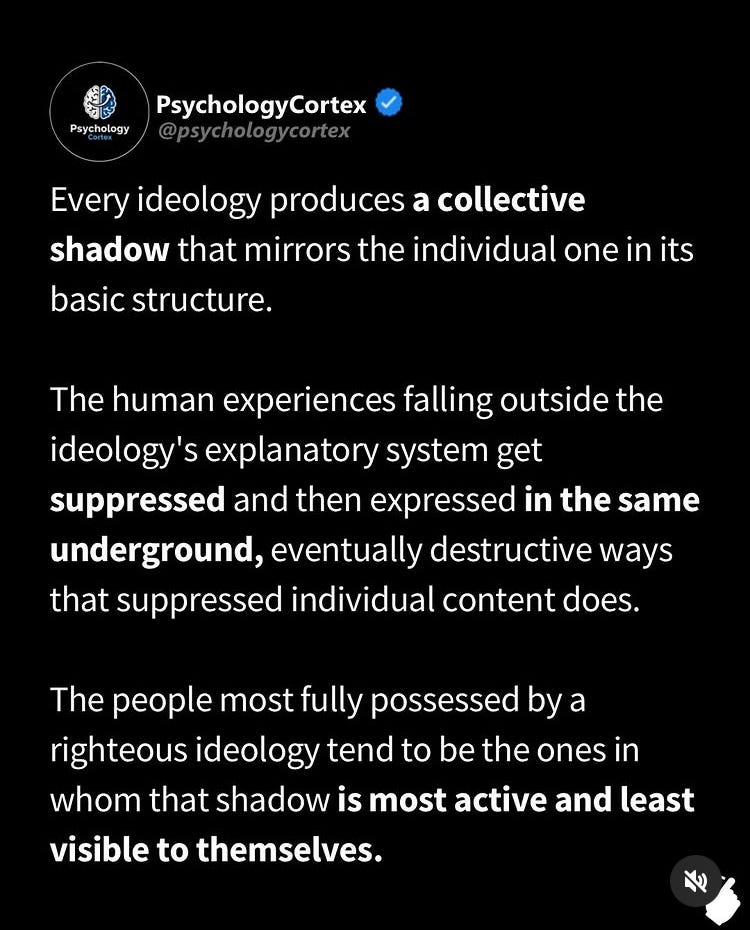
Educated progressive women seem increasingly prone to accepting unreal, morally and cultural popular and socially validating ideas, regardless of evidence or consequences. Dr. Anna Stubblefield is a curious case study of this tendency, which I’ve called the Pygmalion Delusion: the sculpting of a fantasy-based social model and then a complete psychic investment in the model such that no argument or objection can penetrate the mind of the sculptor.
The myth of Pygmalion is a lesser-known corollary to the story of Narcissus. In the myth, Pygmalion is a young sculptor who crafts a statue of a young woman out of marble and then falls in love with it.
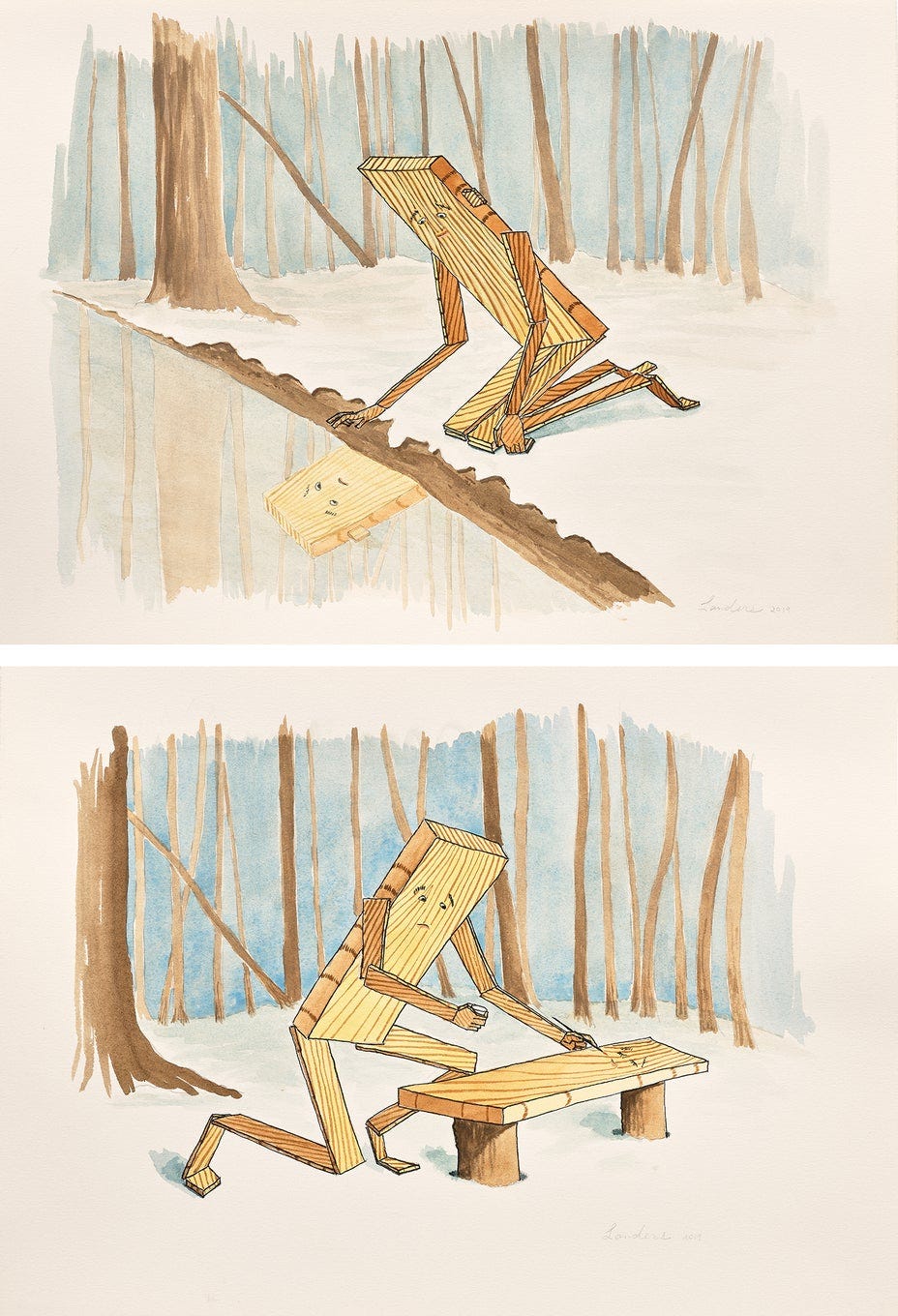
Narcissus and Pygmalion… but as planks of wood.
“Narcissism” is now a deeply familiar concept in psychology and pop psychology. “Pygmalionism,” alternately, doesn’t exist as a well-known term, but we see a shadow of Pygmalion’s downfall in every corner of our culture: people (mostly educated professionals) who become so enamored of ideas or policies or arguments that they become blind to reality. Just as with Pygmalion, this often seems to be so deeply-rooted, psychologically speaking, because of the way it makes believers feel.
The “Pygmalion effect” as a term has been repurposed by ideological and unscientific education activists. This is ironic, given that ideology is an excellent example of an analogue to Pygmalion’s beloved statue. The activists make the point that a teacher or a leader’s expectations can drive a kind of feedback loop which can determine ranked outcomes among disparate students/employees/group members. While there’s obviously something to this (any teacher would have to acknowledge this), it’s usually used - in the dozens of sources I reviewed for this essay - to argue for some kind of equity. But I would make the blanket claim that “equity” is far more exemplary of the Pygmalion delusion than are teacher prejudices. Human interact with each other based on incomplete information, and they bring their own preconceptions and experiences to the interactions. It’s important, as a teacher or an evaluator, to try to control for your own biases and to stay open-minded and attempt to be fair. But the myth of Pygmalion was driven by emotion and desire, and we see these elements operating much more strongly among the defenders of “equity” (an abstract concept which flatters the self-identification of millions of white professional women) than we do among biased teachers or supervisors. How many defenders of equity man their positions because it makes them feel kind or righteous or worthy (or how many refuse to countenance the objections because they would feel unkind or unfashionable or reputationally imperiled)? How many are willing to consider the reality that group disparities are not simply due to lack of access or opportunity, but might also reflect differences in innate interests and capabilities, even across groups? Probably not very many.
The Pygmalion delusion consists of the construction of an idea or an ideology or projection which gratifies some deep emotional longing. Because you constructed it, and because it makes you feel kind or special or important, it becomes central to your worldview and behavior. It’s entirely inflexible, and this fixed nature plus the deep feeling of certainty (plus the fact that’s it’s untrue) qualifies it as a delusion.
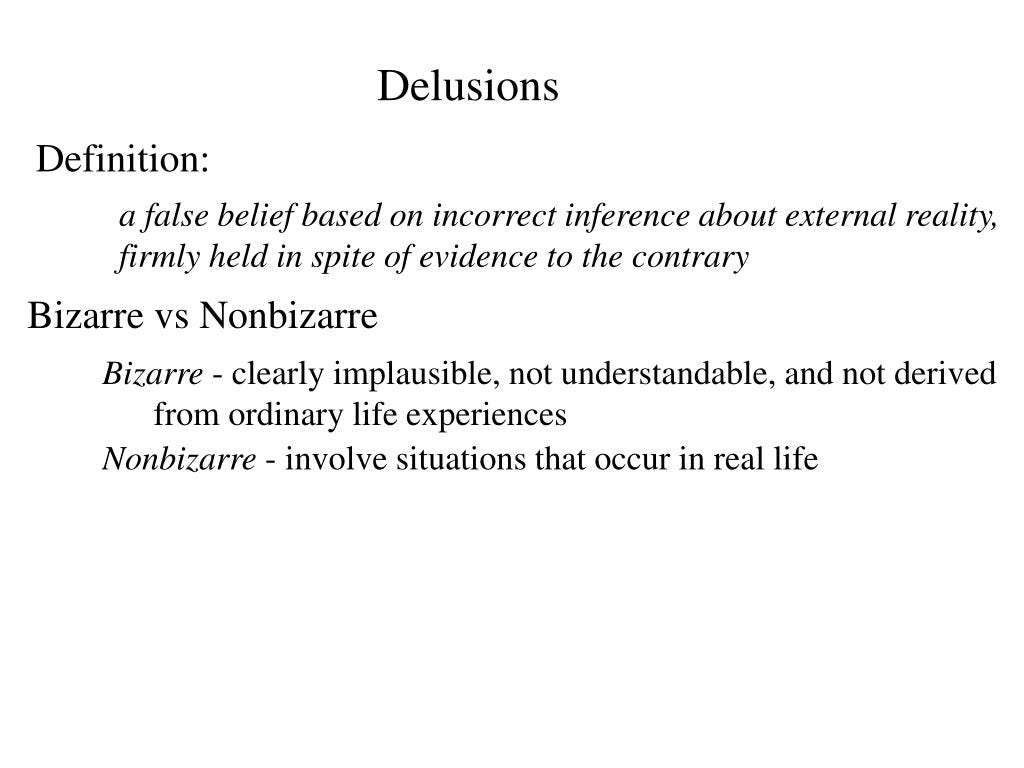
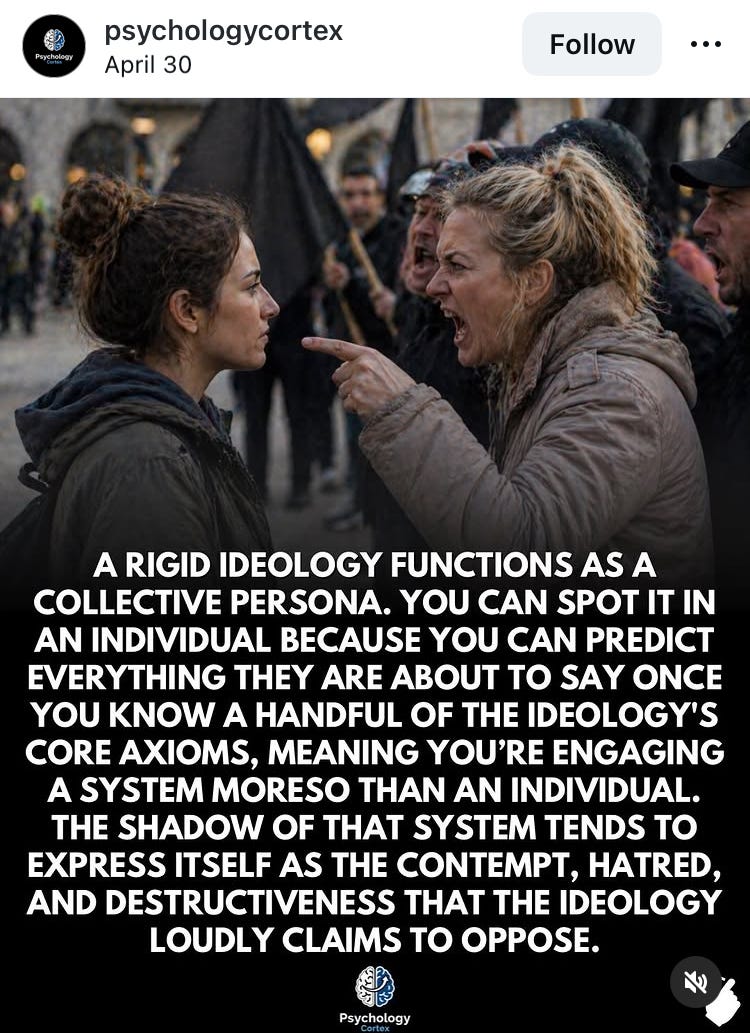
Most modern delusions are probably political/cultural in nature, or at least politically-flavored, although we don’t treat them as delusions because they’re not amenable to correction through treatment. We probably also avoid classifying these kinds of ideas as delusional because many psychologists share them. Whenever you speak to someone and lay out facts and data as to why they might be wrong and they hear and understand you but cling to their existing opinions anyway, you might be in the presence of delusion. This is one of the remarkable aspects of political polarization and cultural subversion: people aren’t forming ideas based on logic or data around kernels of emotion and value. They aren’t filtering life experiences or goals through a lens of belief. Rather they are beginning with a ready-made (moralistic) view of the world - assembled by others - and adopting it wholesale because it is psychologically gratifying. It makes their class privileges seem earned or makes them feel like good people or makes the hostility they feel towards dissenters feel justified. Because it’s not a rational worldview it’s very difficult to rationally argue the believers away from it, even in the particulars.
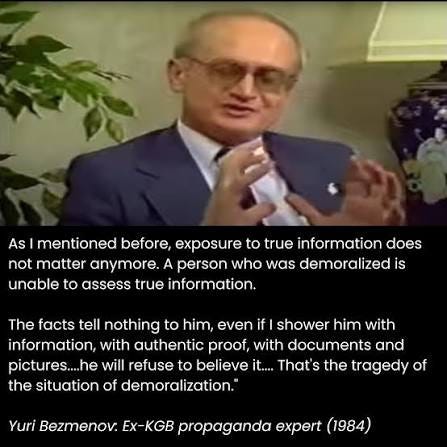
Yuri Bezmenov was describing a strategy of deliberate cultural subversion, but he made it clear that first the moral values of a country had to be eroded. In their absence, people would become susceptible to targeted suggestions, propaganda, and Pygmalion delusions.
To better explain what I mean, let’s examine the case of Anna Stubblefield, and the dangerous, passionate, stubborn moralistic assumptions and fixed beliefs which destroyed her career and her marriage, and victimized another man’s family.

Anna Stubblefield: former Rutgers University philosophy department faculty member, who focused on ethics (but committed massive ethical violations) and who spent decades exploring modes of discourse and critical thinking (but never applied any available tools to falsify/validate her own deeply held priors).
Anna Stubblefield (who is an educated and formerly heavily credentialed white woman) was a tenured professors of ethics at Rutgers University. At one time she was even the department chair. We can begin to understand her own curious (but not at all uncommon) Pygmalion delusion by interrogating her early life. During her childhood, Anna’s mother worked with a variety of individuals with physical and cognitive disabilities. Her mother apparently had a t-shirt which read “Labels are for jars, not for people.” This is a sentiment which exists everywhere in education these days (which is ironic, given the ever-increasing galaxy of labels and tests and metrics and signifiers used to allocate resources and generate work for special educators and school counselors and administrators): measuring, judging, ranking, or qualifying students is bad. It’s bad because it’s inequitable, because it can be discouraging, and because it offends the feminine sense of idealized sameness. One pervasive example is the widespread (rarely interrogated) impulse to give ‘disabled’ students extra time on tests. Of course, if you have a disability and this interferes with your completion of a test in the allotted time then that is what the test is measuring. But for the feminized world of education we must make special accommodations. We must adjust the starting line (the entire basis of equity) in order to equalize results and give administrators and medical providers more control over the outcome. This leads to a messy situation in which any student that has access to a doctor or a psychiatrist can essentially pay for a diagnosis (ADHD, ASD, anxiety disorders, etc.). Consequently, something like 40% of Stanford undergraduates now bear the label of “disabled.” But the impulse is never questioned or debated (and neither are the dozens of other equity-centered educational policies which comprise a huge portion of modern educational practices). It’s simply assumed that these kinds of changes are good because they help the disadvantaged get closer to parity. No one ever asks: why should this be a goal of the educational system?
And of course, it could just as easily be said that measuring, judging, ranking, or qualifying students is good if it is done in the proper spirit and with the proper resources and encouragement, because it will push the lazy and struggling and underachieving to exert themselves more and strive to distinguish themselves. But this kind of standards-based, results-oriented, competitive ethos - which understands that inequities are part of life on Earth, and which instead celebrates excellence and pushes kids to pursue their goals as vigorously as possible - is fairly unpopular these days. Ideologically (in teacher’s colleges and among school administrators) it is completely unacceptable.
Young Anna had her father build her a pair of crutches so that she could mimic the disability of polio victims or cerebral palsy sufferers and she walked around blindfolded for hours. Her mother taught her to write braille and form some words in ASL. In this excellent analysis of the case (from which I gleaned much of the details) neurologist and psychiatrist Andrew Van Der Vaart speculates that perhaps playing at disability was a childhood strategy by Anna to secure love and attention from two busy, professional parents, particularly a mother who seemed to derive a great deal of validation and purpose from ministering to the disabled, while in many cases pretending that they were not actually disabled and that society was the problem. Sandi McClennan was Anna’s mother. Aside from looking very similar (it’s clear that Anna identifies strongly with her mother Sandi), it seems fairly obvious that Sandi also erected her own psychologically crucial Pygmalions. She was a psychologist and an early proponent of facilitated communication (FC), as well as an activist, and a fairly well-off social progressive and feminist.
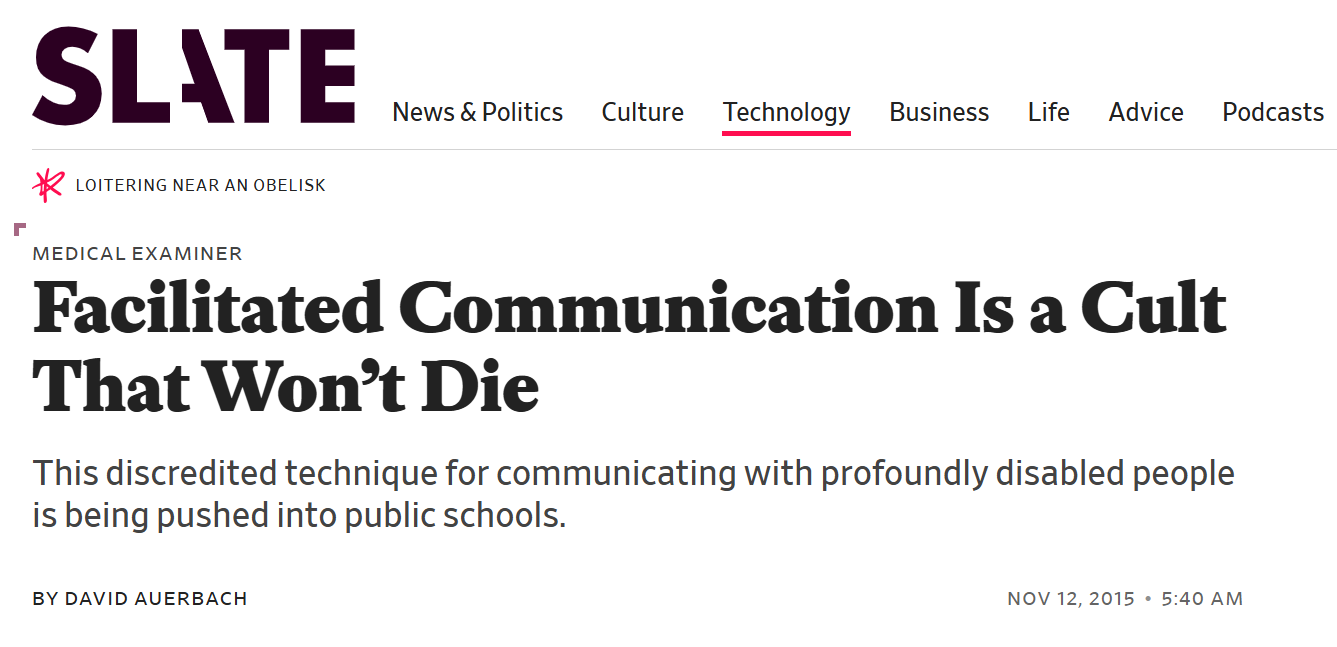
And who, exactly, is pushing it? Rigorous thinkers? Realistic educators who understand the limitations of achievement and instruction and simply want to push their students to do and be better… or utopians determined to edit the world to compensate for their own insecurities and yawning psychological voids?
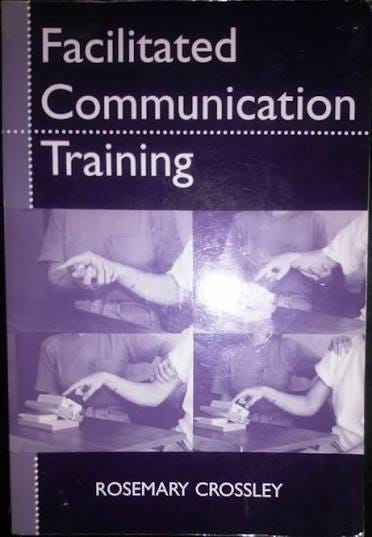
Facilitated communication (FC) is a controversial method by which caretakers can use diagrams and letter cards to assist communication by nonverbal people. Some people have some kind of morphological irregularity in the mouth or the palate, of course, but they still retain all of the normal cognitive equipment for speech generation and recognition. But such people could usually create some kind of setup to assist their own communication. They could, for example, carry around a notepad and write their messages. FC purports to assist those who are nonverbal due to some additional disability. The scientifically suspect element of FC appears in the facilitation, for not only is a letter/symbol visual scheme erected, but the “facilitator” moves the (ostensible) “communicator’s” arm/hand/digits in order to “assist” their selection of coherent message elements. In some techniques this consists of stabilizing the elbow. In some it involves grasping the wrist (supposedly to ‘steady’ the communicator’s hand… although tremors or spasticity are not normal features of communicators’ common disabilities, and could probably be corrected by simply using a larger letter/symbol board). In the method that Anna used with Derrick, the facilitator’s hand wrapped around that of the communicator, allowing only the index finger to point forward. It bears noting that this is the technique that Anna’s mother used. She was also a “trained” facilitated communicator. She was never accused of sexually assaulting one of her disabled patients but was certainly infected by the same patronizing, rigid mindset of ideological sympathy as her daughter. FC has been repeatedly invalidated by research, yet it never really dies: like equity as a driving principle, whole language literacy education, the gender wage gap, radical feminism, multiculturalism, and the impulse to manage society and impose progressive reform, FC originates in an emotional and psychological assumption, and so there is no amount of peer-reviewed studies which could invalidate it in the eyes of believers. It is true because it is morally right…. even if it’s incorrect. And this means that critics and opponents are morally wrong - ignorant at best, contemptible and vicious at worst.
By 1994, the scientific consensus held that FC was not a valid practice. The “facilitators” were actually the ones communicating. This is a trivially easy hypothesis to test, of course, and the idea that hundreds of psychologists and educators and ethics professors never saw fit to verify their assumptions really highlights the rarity of critical thinking among the modern professional managerial class. The FC community was manipulating (unknowingly, probably, in most cases) the “communicators.” Sandi and then Anna both rejected these studies and conclusions and continued with their practices. When teaching about FC in her college lectures, Anna wouldn’t even mention the scientific objections. Her mother Sandi said (of FC advocates) “[we] knew that nonverbal people had things they wanted to communicate, and they just needed to provided the means to make that physically possible.”
We see the moral/ideological assumptions dripping from Anna’s statements. She was raised to value the idea of tikkun olam (a Hebrew phrase meaning “to repair the world”). “I was fascinated by the way that it’s not the impairment, it’s the environment that creates impairments for people. Growing up I got that message very powerfully.” Tikkun olam often means - when it’s used today - the same thing that “compassion” does, when used by educated progressives. It’s similar to the Hate Has No Home Here signs that one sees on lawns in richer safer neighborhoods: I have a certain idea about social reality and it both benefits my class and makes me feel like a good and noble person. Anyone who disagrees with it is an enemy, and not to be dialogued or dealt with. It’s a moral attitude which leads to flawed educational policies, social programs which disincentivize marriage and employment, and repeated immunity for criminals and illegal immigrants. It is a projection of a class-based, psychologically compensatory narrative onto the reality of the world. In Anna it grew into her own personal Pygmalion statue: nonverbal people (and the specifically Derrick) have something to say, and I’m a wonderful person or helping them (him) to say it. Anna believes that intelligence is a social construct (of course she does) and that it is society’s constraints and norms which oppressively impose deficits and disadvantages on others, something which profoundly betrays a lack of understanding about what general intelligence is. In a class she taught on intelligence, later described by her in an interview, she taught that “the notion that if somebody can’t speak, it must be because they’re too stupid and there’s just nothing going on in their head, just is not the case.” As we’ve already noted, some nonverbal people do have things to say. But how can you tell which is which? It’s actually rather easy, in most cases. If a person is unable to form words, point independently at symbols to construct complex messages, draw, write, or find other ways to communicate then perhaps they are “too stupid.” Certainly some people are too unintelligent to speak or form communicable thoughts?! But in the world of Anna and her mother, this possibility simply doesn’t exist. It’s been excised from the landscape of potential realities.
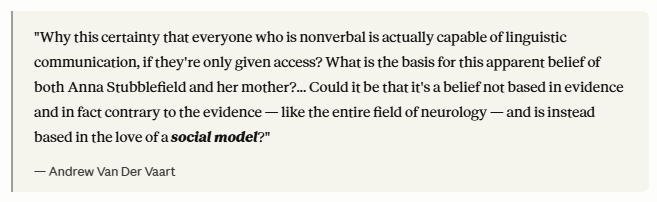
This is a profoundly unscientific worldview. In its details, it’s anti-scientific (going against neurology and physiology and psychometrics, etc.). But it is utopian, and unconstrained. Andrew Van Der Vaart says that this is a “particular social model in which intelligence, which would include verbal capacity, is a social construct.” In such a world, he says (somewhat exaggeratedly) that, absent our fixed labels and metrics, “anyone would be able to do anything if they just dreamt it (or something).” This is more than optimistic. It can quickly become delusional when it satisfies a deep psychological need.
The Lie of The Unconstrained Vision

I was going to write about trade-offs today… and then I realized that the lack of acknowledged trade-offs in our political conversations are often part of a larger issue: the triumph of ideals and theory and rigid assumptions over reality and history.
All of this sounds suspiciously similar to the ideas of Critical Theory, especially the Queer Theorist belief that it is meaning and categorization that is the limiting (and oppressive) variable, and by eroding and dissolving all rules and norms and definitions, igniting a process of eternal and chaotic cultural “revolution” (which sounds hellish to driven and organized people, and rather wonderful to disorganized and borderline ones). Audre Lorde wrote that “revolution is not a one-time event." She also wrote that “the master's tools [science, empiricism, meritocracy] will never dismantle the master's house. They may allow us temporarily to beat him at his own game, but they will never enable us to bring about genuine change. And this fact is only threatening to those women who still define the master's house as their only source of support.” (Note that Audre Lorde was a privileged immigrant from Grenada and a lifelong writer and academic who probably never built a physical structure or completed a hard day’s work in her life. Her entire material “source[s] of support” originated in the labor of men. Her conception of change and support and revolution was purely symbolic, the abstraction of a leftist Manhattan literary intellectual. Also, her metaphor - while stirring - is silly. ANY tools can dismantle any house. That’s included in the neutral character of tools, which should be considered by anyone claiming that things like ‘logic’ or ‘civil equality’ are actually inherently oppressive constructs.)
These kinds of delusional Pygmalioneqsue structures are everywhere one cares to look, especially in feminized bureaucracies. They’re almost unavoidable nowadays.
In the world of radical education activists, the possibility that a lot of racially unrepresentative kids might simply be lazier, more disruptive, and less academically-inclined doesn’t exist. It can’t. In the world of bail reform advocates (many of whom are funded by international nonprofits in secretive fashion), the idea that many poor criminals are poor and criminal precisely because of their own developed habits and choices and behaviors can’t exist. It can’t even be contemplated. The idea that women are simply less suitable for a range of important jobs, or that autistic people might suffer diminished social and financial outcomes, or that obese people will have to manage as best they can in a world of conventionally-sized built objects - all of these are resisted vigorously, reframed in emotional and moral terms, and stigmatized totally.
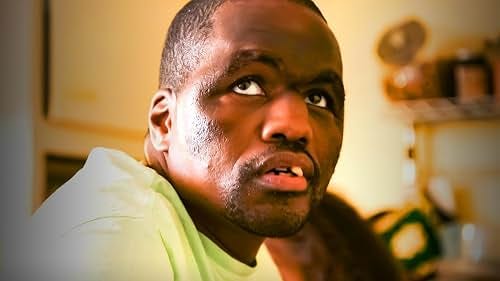
Derrick Johnson, published academic and presenter. Also a man with the lifetime cognitive ability “of a toddler.” He was exploited and abused by Dr. Stubblefield.
Derrick Johnson (a disabled black man) lives with his family - his mother and his brother. He’s close with and depends upon them for all of his care and interaction with the world. He’s never spoken a coherent word. He was born with cerebral palsy and suffered a series of massive seizures, as well as hydrocephalus, as an infant. He was diagnosed as severely disabled at age two, meaning that he would always need assistance feeding, cleaning, and dressing himself. He seems to enjoy gospel music and fried chicken and time with his family. On the axis of social and physiological privilege Derrick and Anna are about as far apart as any two people can be. But this pitiable, dependent condition didn’t deter Anna. On the contrary, she found a profoundly disabled black man to be the perfect foil for her psychological projections.

Don’t worry - I didn’t glean any information about this case from the New York Times, a paper which was critical of Stubblefield in this instance but which is often quite receptive to these kinds of nonscientific, activist-driven narratives, loving as it does the leftist idea of marginalized or disabled people being constrained or disadvantaged by society.
In 2009, Derrick’s brother John ended up in a class with Dr. Stubblefield while doing his PhD studies. Anna presented videos and lectures to the class regarding FC (which wasn’t unusual) and John became interested in the practice. When Anna found out about Derrick, she offered to meet him and the family, and to attempt facilitating. She moved rapidly from photos to letter cards to a keyboard in one session, commenting of Derrick, “it was clear he knew the alphabet and could spell simple words. He was a fast learner.” This despite Derrick never having being given any phonetic education (and never having spoke or apparently read a word in his life).
After a few months of John bringing Derrick to Anna’s office at the university every other week, she started to travel to Derrick’s family home for sessions, which became increasingly frequent and involved. As the months went on, Anna became increasingly possessive of Derrick, telling his mother that he didn’t want her present during their sessions and telling her not to “mother him.” She eventually claimed that Derrick didn’t like beer (based on a casual joke that John made to him) but instead preferred red wine - which just so happened to be her favorite. You don’t exactly need a lexicon to express a preference or distaste for certain foods, but Anna told the family that he’d “told” her that he was a vegetarian, despite having an enthusiastic reaction to chicken his entire life (everyone likes chicken). While in the car together, Anna switched off the gospel music that Derrick’s mother was playing, claiming that “Derrick prefers classical music.” He’d always loved gospel music in the home and church, dancing - kind of - happily, but apparently his tastes had shifted and come to perfectly mirror those of his facilitator. In what is undoubtedly the most hilarious anecdote, and one which Anna definitely included in her account because it could be considered some kind of data point for the validity of FC, Derrick apparently was asked what he liked to be called, whereupon he typed “dman.” To Anna, this was pronounced “D’man”… but the family called him “D-man.” Derrick’s mother said that a beloved teacher earlier on in his life had called him D-man, and Anna seized upon this apparent expression of isolated knowledge as evidence that the person forming all of these typed messages really was Derrick - Derrick the vinophilic vegetarian classical music-lover. I have serious doubts that the family, particularly the brother, never called Derrick “D-man” (not D’man for goodness’ sake) in her presence, but that is her assertion.
Which brings me to a brief aside. Testing the veracity of Anna’s FC practice would be trivially easy. She believed that Derrick could recognize picture cards. He could even type out sentences, with correct spelling! So all she would have to do is blind herself (experimentally) and present John or some other assistant with a large stack of picture cards. Ask him to pull one out at random and present it to Derrick with herself out of the room. Then replace the card, have her come in… and facilitate. If Derrick could recognize picture cards and describe them verbally (with assistance) then his mind would provide the information and her facilitation would be solely that. That is certainly what she claimed to be the case. But she never tested it - an senior academic philosopher from a large, mid-tier university was so dismissive of the scientific method and the fundamentals of critical thinking that she decided to pursue a different epistemological strategy: she felt that Derrick had a lot to say. She seemed to be helping him do that. This was intensely rewarding for her (no doubt fulfilling whatever psychological deficit caused her to fixate on disabled people from a young age and burnishing her own smug savior complex)… and so she simply believed what she wanted to. John, Derrick’s brother eventually performed a variation on this experiment himself, suspicious that his brother was supposedly messaging Anna-esque things like “It’s so wonderful to finally be able to communicate.” He asked Derrick about Sally and Georgia, two people who Derrick had known for his entire life but Anna did not. The answers that John received were badly incorrect.
Things started to crumble when Anna began to actively interfere in Derrick’s life and family relationship. “He” wrote a paper on disability, which Anna gleefully arranged to be published. (This is the ultimate terminus of the equity delusion: Dr. Thomas Sowell is suppressed and derided; a man with the cognitive level of a 3-year old is a published academic contributor). He wrote a one-page address to a Society of Disability Studies panel, which was delivered by his brother. One brief excerpt from his presentation: “The right to communication is the right to hope” and “don’t minimize how humiliating it can be that people jump to the conclusion that I am mentally disabled.” Disability simply doesn’t exist in Anna’s world. Anna began bringing him books (Maya Angelou being among her - I mean his - favorite). She discovered that “he read like a savant - ten pages every minute.” I can also turn a book’s pages at that rate while looking at them, for the record, although it would be a falsehood to say that I can “read” at that speed. Anna arranged for Derrick to sit in on a 400-level African American literature course at Rutgers, and she dragooned a young grad student to “help” him with his reading and his homework. Later, when questioned by the police, the student One wonders what Derrick thought of all of this nonsensical activity. His family seemed to think it was odd and silly, but probably harmless. But Anna moved from scolding Derrick’s mother for “babying” him, to demanding she leave the room during their sessions (she “distracted” him) to telling the family that Derrick wanted to move into an adult care facility… despite the fact that he couldn’t bathe or feed or dress himself. Anna assured them that he was a lot more capable than they realized (they’d only lived with him every day of his life after all). For God’s sake, he could read ten pages a minute!
Then she announced to Derrick’s family that they were in love. Seeing the shock and dismay on the family’s face, she further announced (rather cruelly, it seems) that they had “made love.” “Derrick is a man in every sense of the word.” One gets a pretty good idea that Anna was playing out some psychodrama against Derrick’s mother at this point, trying to wrest control of her source of emotional validation and identity fulfillment (Derrick) fully out of the clutches of the sadistic, selfish woman who’d patiently cared for her profoundly disabled son for decades. The ethical gulf between these two women is shown by Derrick’s mother’s instant query: “what about your husband and your kids?”
It’s difficult to assess how much Derrick was actually hurt by the events that followed. The guy doesn’t say much (although his family did report distress and confusion after the sexual encounters which Anna proclaimed). But his family felt elated, suspicious, horrified, and then betrayed over the months that Stubblefield worked with him. John naturally felt guilty - after everything had come out - about. The mother also felt ashamed at her credulity. She would explain it thus: “Tell a mom something their kid can do and they’re going to be ready to believe it.” But then she grew angry.
Criminal charges would follow. Derrick’s family filed a $1 million civil suit and Rutgers University terminated Professor Stubblefield. Anna’s marriage collapsed and her relationship with er kids was badly damaged.
But we should emphasize several key points of this entire debacle:
A privileged, educated person became enamored of her utopian mental model of reality, and then applied it to someone she could feel superior over and get ego validation from “helping.”
She never wanted to really know whether her model was correct, because it felt correct and because it was necessary that it be correct so that she could gain psychological fulfillment.
The model was never valid, and so rather than helping the person she’d emotionally latched onto or improving the world (tikkun olam, remember?) she only deluded herself and caused damage to others.
We see this sequence everywhere in the opinions and protests and voting patterns of the managerial elite. Progressives (mostly women) find some group or cause that they don’t understand, and frame their position as one of “compassion” and “support” and “centering.” But the truth is that they don’t care about these groups or causes. They only care about how engaging with the ideas makes them feel. That is why they never accomplish anything good or lasting, and why capable members of those groups regard these people with suspicion and dislike. Anti-ICE activists don’t want illegal immigrants to be incorporated into American society legally. If they were, they’d have to find another group for which they could play political devouring mother. Leftists don’t want the urban black proletariat to be fiscally prolific and culturally conservative (the combination that always yields success over the generations in the United States). Feminists don’t want women who are happily married and raising children. Educational equity fanatics don’t want underperforming kids to be pushed into discipline and rigor. All of these things would be good for those groups, but they would deprive the millions of grasping Pygmalions of their external locus of attention and validation. Without BLM and anti-ICE protests and Planned Parenthood and teacher’s unions, leftists would have to improve the world the way everyone else does: hard work, interpersonal decency, private generosity, and the long and slow grind of social organization. Those things are hard, and they don’t yield the same ideologically-tinged thrill as does play-acting in an imaginary stage play in which one is saving the world and fighting great evil. By embracing falsehoods and gratifying their own egos, they become the great evil. Just look at Anna Stubblefield. Who’s the villain in that story?
Anna Stubblefield created a Pygmalionesque psychic image of a world in which intelligence wasn’t real and adults who’d never spoken simply needed a hand. Then she sculpted a statue of a sympathetic, brilliant, cultured black man who occupied the body of Derrick Johnson. But the sculpture was always only a projection, and a strategy for her own psychological compensation. I want you to consider the many popular political ideas floating around out there among professional women which are based in a kind of immutable emotional assumption (immigrants aren’t dangerous or costly, women are in every respect as capable as men on average, therapy is important and effective, punishing racial minorities for crimes at the current rate is unjust, standardized tests scores don’t reveal any cognitive hierarchies, all ethnic groups are equally competent at every important task, trans people are the sex they imagine themselves to be, poor people are simply poor because of structural barriers and inequities, etc.). All of these ideas take a sympathetic group or category, elevate them artificially (convicted criminals are actually better people than we think, poor people are actually more competent and responsible than their earnings would indicate), and then defend that elevation with the zeal of the fanatic, deploying every feminine strategy of social aggression against anyone who might doubt or contradict them: ostracism, exclusion, appeals to authority, administrative sanction, bullying, self-righteous anger, redefinition of words. Where these ideas are popular, other ideas are almost never expressed. That’s not accidental, and it’s not a true social consensus. These modern Pygmalions are so attached to their social theories and the sense of psychological importance and social virtue that they grant that they will not listen to counterfactual arguments. If you’ve ever had a discussion with one you will probably agree: they can’t. There seems to be a kind of anosognostic blind spot built in and reinforced by ideology, credentials, and a very feminine species of moral certainty. Any of those emotional assumptions could be correct, of course. I’m not claiming that they’re all wrong, although I suspect that most are. But their defenders don’t believe them because they’ve considered the alternatives or because they have reviewed evidence. They believe them because they are starting from a place of moral certainty. They are deluded, and these delusions are highly socially contagious.

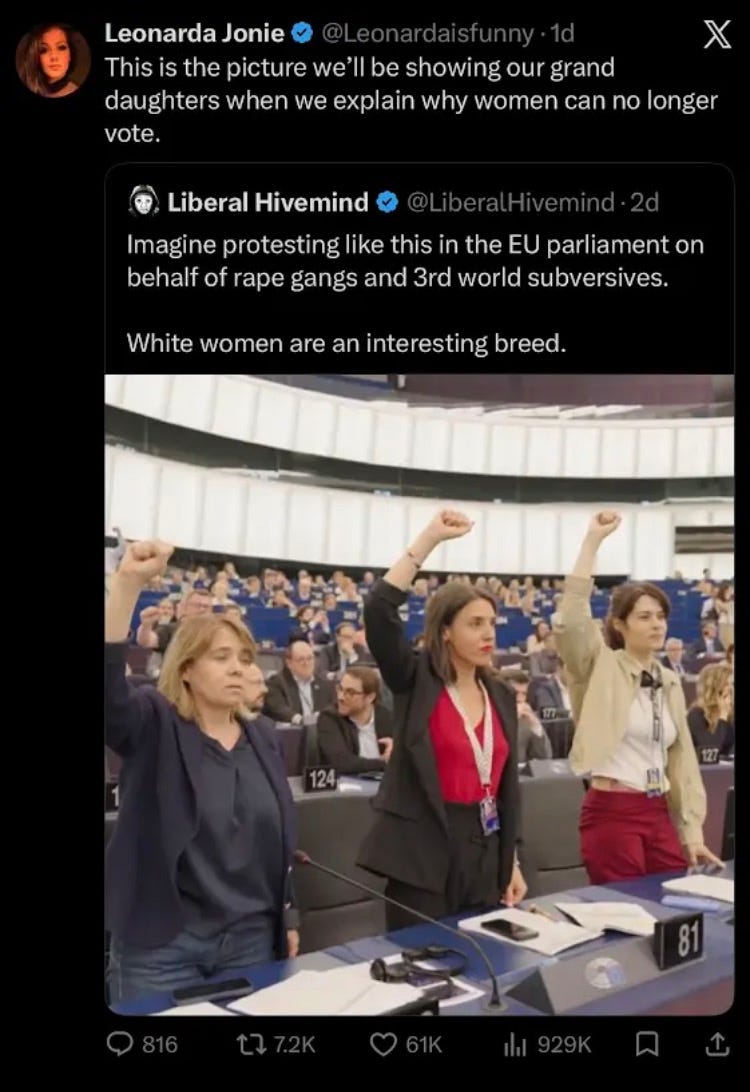


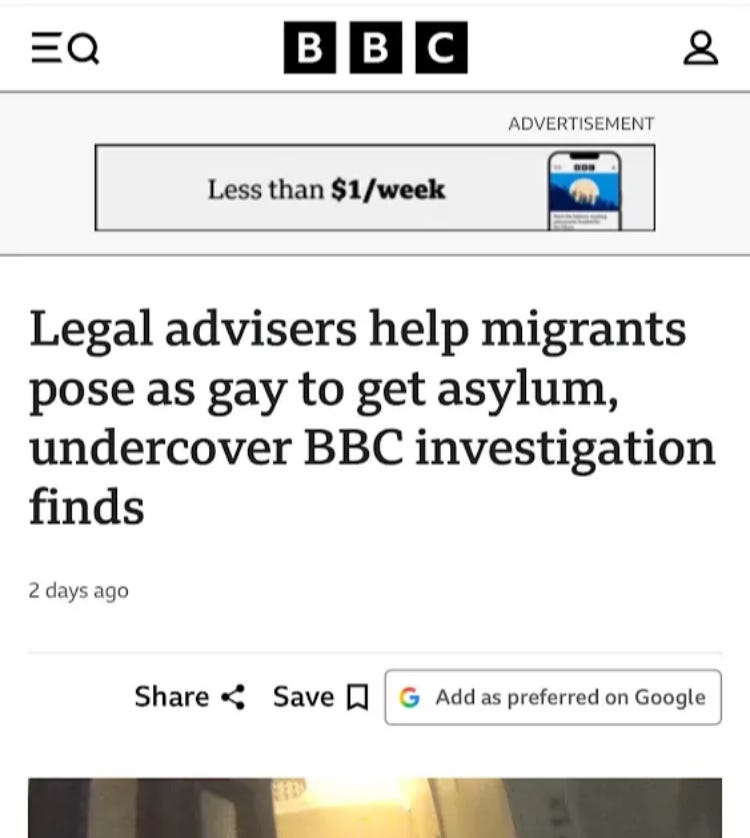
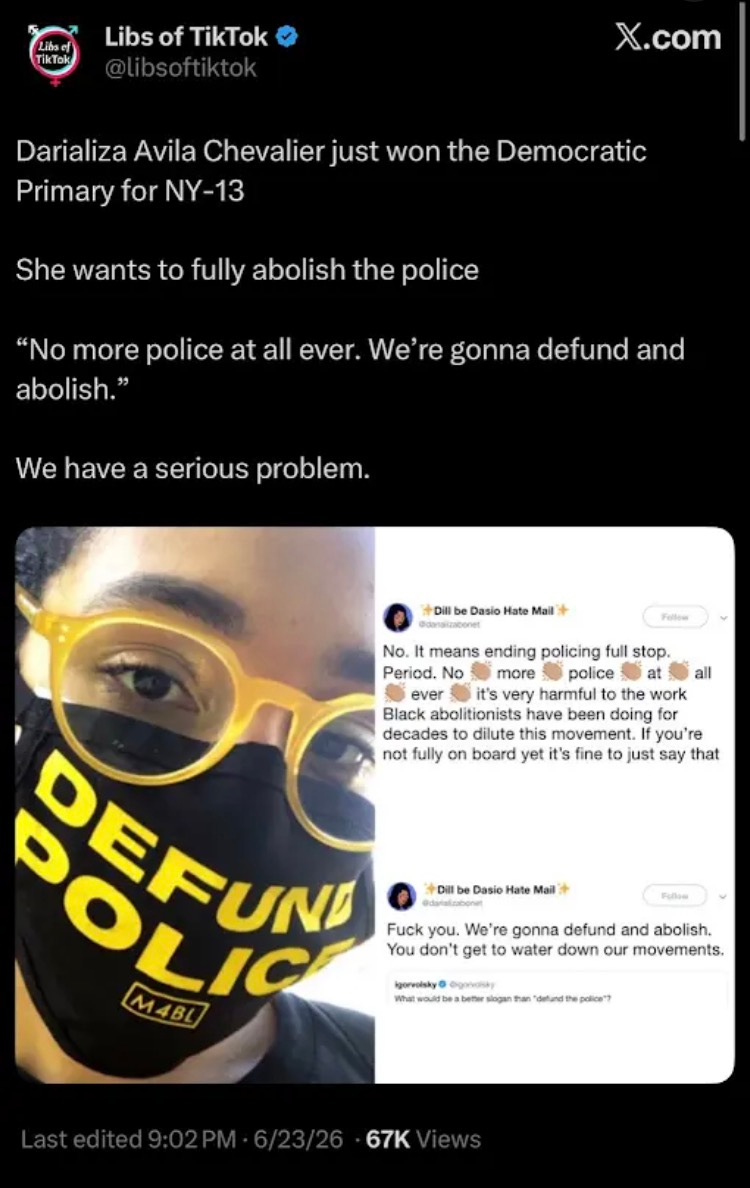




Giving people help and endless sympathy because it makes you feel good often traps them in cycles of dependency and resentment.
One unfortunate result of all of this frantic fantasy-building is that the believers themselves don’t find fulfillment. Building a life is difficult enough. Moving through life believing that you’re the champion of a group of people who find you strange and off-putting is not an adaptive strategy for happiness, even if it can give you a sense of purpose in the short- to mid-term. Again, if the “champions” were really helping their chosen groups then they would find some real utility. But they’re not. They’re imposing an artificial social model onto them and then trying to force them into it. Does the black underclass want to live in a socialist country… or do they want to be free and wealthy? Do K-12 students want emotional support and political indoctrination and lessons in “tolerance”… or do they want to learn the things required to get careers and make money? Do the mentally ill want to live in filth and suffer the grips of psychosis in subway cars… or do they want institutional support and compassionate constraint?
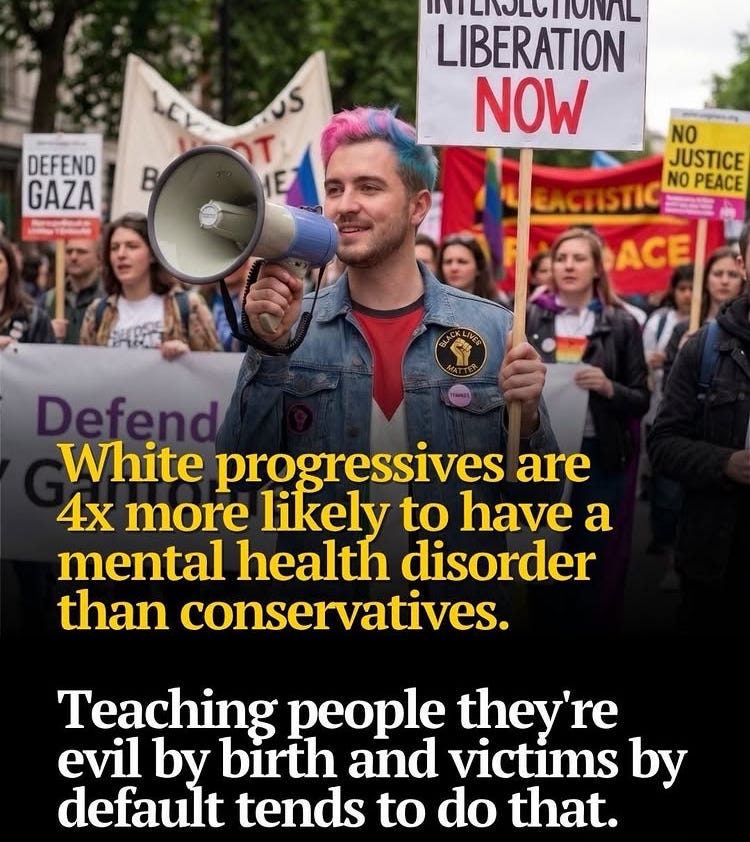
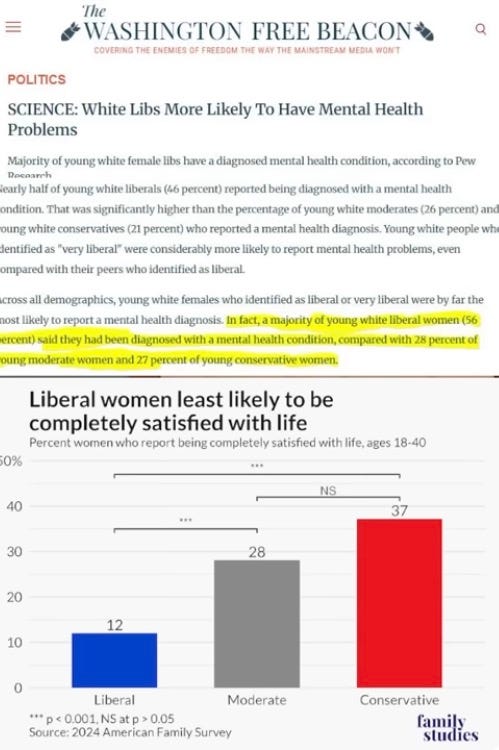
Because of all of this scapegoating and cognitive dissonance, and because people with Pygmalion delusions seem prone to basing their sense of purpose and identity on something outside of themselves (which isn’t real), sufferers report lower rates of marriage, childbirth, career satisfaction, and mental health. None of this should be suprising.
And if you doubt the political connections that I’ve drawn - if you don’t see a general attitude and emotional approach to belief and disagreement which is shared in the case of Anna Stubblefield and these controversial issues - just consider this: when Anna Stubblefield was a publishing academic, she never openly engaged with the critics of FC. Instead, she advocated that their ideas be considered “hate speech” and dismissed outright- without ever being considered.

…From a research paper by Dr. Anna Stubblefield.
Thanks for reading. Please take care of yourself.

Similar essays:
Performative Compassion & Suicidal Empathy

Performative compassion, or the often unconscious drive to display virtue and feel virtuous by applying absurd levels of forbearance and ‘understanding’ to different groups, is increasingly common in our civilization. While this development is closely linked to the institutional empowerment of women (and the feminization of powerful men) I want to explore the psychological origins and implications of this strange drive. As an irrational and compensatory urge it is no amenable to evidence or argument, and the more extreme and absurd the displays the more satisfying for the performers. We can only address this pathology by discussing it openly and directly. The first thing you must know is that this isn’t compassion (or empathy) at all. In many ways it’s the opposite. Suicidal empathy is rooted in very similar places. It is performed to gain social status and fill psychological and emotional voids… and it is not empathetic.
Oppressors

As for my people, children are their oppressors, and women rule over them. O my people, they which lead thee cause thee to err, and destroy the way of thy paths. Isaiah 3:12, KJV
A Tsunami of Digital Resentment

I’m concerned about bigotry. I’m not concerned because I look at groups at mathematically coherent entities where balance can be achieved by discriminating against group A in favor of group B. I don’t think society or policy-making works that way. I’m not worried about the focuses of the bigotry as much as I am about the bigots. This is a curious thing to say but it’s something we all seemed to intuitively register until about a decade ago.
> We must adjust the starting line (the entire basis of equity) in order to equalize results and give administrators and medical providers more control over the outcome. This leads to a messy situation in which any student that has access to a doctor or a psychiatrist can essentially pay for a diagnosis (ADHD, ASD, anxiety disorders, etc.).
Gods, but this shit drives me nuts. As someone who definitively has ASD, and has at least the symptoms of ADHD and Major Depressive Disorder (though that could just be the ASD expressing itself as well) and gets... strangely obsessive about things at times, (though that's possibly just a learned behavior), I have spent my entire life fighting to *not* be defined by any of that. To actually *overcome* the ways in which that affects me. I had no special accommodations in high school, was in the Gifted program, took Honors classes, and graduated 13th in a class of some 400+ students. I made it into college, and back out of college -- with a degree, mind you -- without any extra help beyond going to the same tutoring sessions offered to all of the students.
I have a career in IT, though I've tried to leave IT on multiple occasions, having gone through four separate trades programs at the local community college. I could, if I were so inclined, go be a welder, or a machinist, or a truck driver again. I couldn't go be an EMT, despite having gone through that program as well, because I let my license lapse during my divorce. But I will probably just stick with IT at this point. I don't ask for any special treatment at work, beyond sometimes needing to spend a bit of extra time defining parameters for larger projects (so that I don't go down the OCD rabbit hole and focus on the wrong thing) and a bit of extra solitude in my office setup so I don't get distracted while I'm trying to work. Given that I have about twice the output of many of my teammates (that obsessive quality actually *can* be harnessed for good!) my PM and his boss find this to be a perfectly acceptable trade-off.
I am so tired of people claiming to be ASD as an excuse to be lazy, or to be assholes. Yes, I legitimately have a hard time picking up social cues sometimes, and there was a long time where I was not good at knowing when I should not say certain things, even if they were true, or when I should not act in certain ways. But I put effort into **learning how to not be that way**. A *lot* of effort. I can almost pass for a normal human being, these days.
And yes, there are obviously people who express a different flavor of ASD, some of whom are very severely disabled. And in some of those cases, they would likely benefit from special treatment in school, if only to learn how they need to compensate. It would make sense to give someone with ADHD extra time on a test... if they were given the test in two parts, with the first part being taken and graded at the same time as everyone else, and then an overall score given once the second portion was completed. No, I have no ideas about how that would be factored into an actual final grade or class standing, but it *is* helpful for a person to know how they actually compare on equal footing, even if they are capable of the same final output when given extra time, or a solitary room, or whatever. Nobody is doing people with ASD any favors at all when they shield them from knowing that they've done something socially unacceptable. They cannot *possibly* learn how to *not* do that, if people don't let them know.
There's a scene in "Wargames" https://www.youtube.com/watch?v=_lBFk-PDmbI that I consider to be the single best depiction of someone with ASD in any audiovisual media anywhere. For several reasons. First, because it's *absolutely* dead-nuts accurate. But second, because of what it actually depicts.
Jim: "Remember you told me to tell you when you were acting rudely and insensitively, remember that?"
Malvin: *nods vigorously*
Jim: "You're doing it right now."
Malvin: *looks at him rather blankly, but silently walks off with his head down to go do something else*
It... it implies that Malvin was *self-aware enough* to *realize* that he needed to learn how to *not be like that* to actually *ask for help*. It's been a long while since I actually watched the whole movie, but I get the impression that Jim and Malvin are probably in college, or possibly *were* in college and graduated and went to work *at* the college in the CS department -- which is a thing I have seen rather a lot of in the IT world -- and that's about the same age that I *also* actually realized that I needed that same sort of help. I was lucky enough that I had someone like Jim who was willing to provide that sort of correction as well. I was, admittedly, not as bad as Malvin is in that scene, but it was definitely noticeable and affected my life. It would not have improved the overall quality of my life if I'd been protected from learning those skills.
Sorry for the wall of text, but this is a thing I have... lots of opinions about. ;)
“ fiscally prolific” = constrained, perhaps?